
Dinosaurs have always fascinated humankind, igniting our imaginations with their awe-inspiring sizes and shapes. Among these magnificent creatures, some stand out not just for their grandeur but for their extraordinary history and discovery. One such dinosaur is the Patagotitan mayorum, a true giant of the prehistoric world that dwarfs even the largest land animals today. Let’s delve into the incredible journey of this colossal creature and unravel the mysteries that surround it.
The astonishing discovery of Patagotitan
The story of Patagotitan’s discovery reads like a thrilling adventure. In 2010, during an ordinary day at La Flecha ranch in Patagonia, Argentina, a ranch worker named Aurelio Hernandez stumbled upon a peculiar sight: a massive femur bone jutting out of the ground. This unexpected find prompted him to inform the ranch owner, Oscar Mayo, who recognized the potential significance of the discovery and reached out to paleontologists from the nearby Egidio Feruglio Paleontological Museum.
Excavations commenced in 2012 and continued over several years, ultimately uncovering more than 200 fossils. These fossils belonged to at least six individual Patagotitans, found in three distinct layers of sediment, suggesting that these dinosaurs did not perish simultaneously but rather at different intervals. This intriguing detail raises questions about the environmental conditions of the region during the time these majestic creatures roamed the Earth.
- One theory posits that the area may have once hosted a lake that gradually dried up, leading to the dinosaurs’ demise from thirst.
- Another theory suggests that flooding events buried the dinosaurs in rapid succession.
In 2017, the dinosaur was officially named Patagotitan mayorum, with “Patago” referencing its discovery location and “titan” linking it to the mighty Titans of Greek mythology. The species name “mayorum” pays homage to the Mayo family, the ranch’s owners.
The monumental life of a Patagotitan
Dating back to approximately 101 million years ago during the Cretaceous period, Patagotitan was part of a thriving ecosystem characterized by fertile plains and lush river valleys. These colossal herbivores thrived on a diet of vegetation, which was abundant in their habitat. Their unique teeth were perfectly adapted for stripping leaves from trees, allowing them to process vast amounts of plant matter.
To sustain their massive bodies, Patagotitans likely consumed over 250 pounds of vegetation daily. Their long necks played a crucial role in their feeding strategy, enabling them to reach for food high in trees as well as graze on ground-level foliage. As they munched on vegetation, they inadvertently contributed to their ecosystem’s health by dispersing seeds through their droppings, a vital process for maintaining biodiversity.
Scientists believe that the immense size of sauropods like the Patagotitan was an evolutionary adaptation to maximize their nutrient intake. Their long digestive tracts were essential for breaking down the tough plant material they consumed, a process that could take up to 10 days. However, one of the biggest mysteries surrounding Patagotitan is why it grew larger than its sauropod relatives, such as the brontosaurus and diplodocus. Potential environmental factors or specific adaptations may hold the key, but research is ongoing.
Controversies surrounding Patagotitan’s size
Patagotitan belongs to a fascinating group of sauropods known as Titanosauria, which not only includes some of the largest land animals ever but also flourished until the catastrophic asteroid impact that ended the age of dinosaurs. With over 100 recognized titanosaur species, this group stands out for its diversity and evolutionary success.
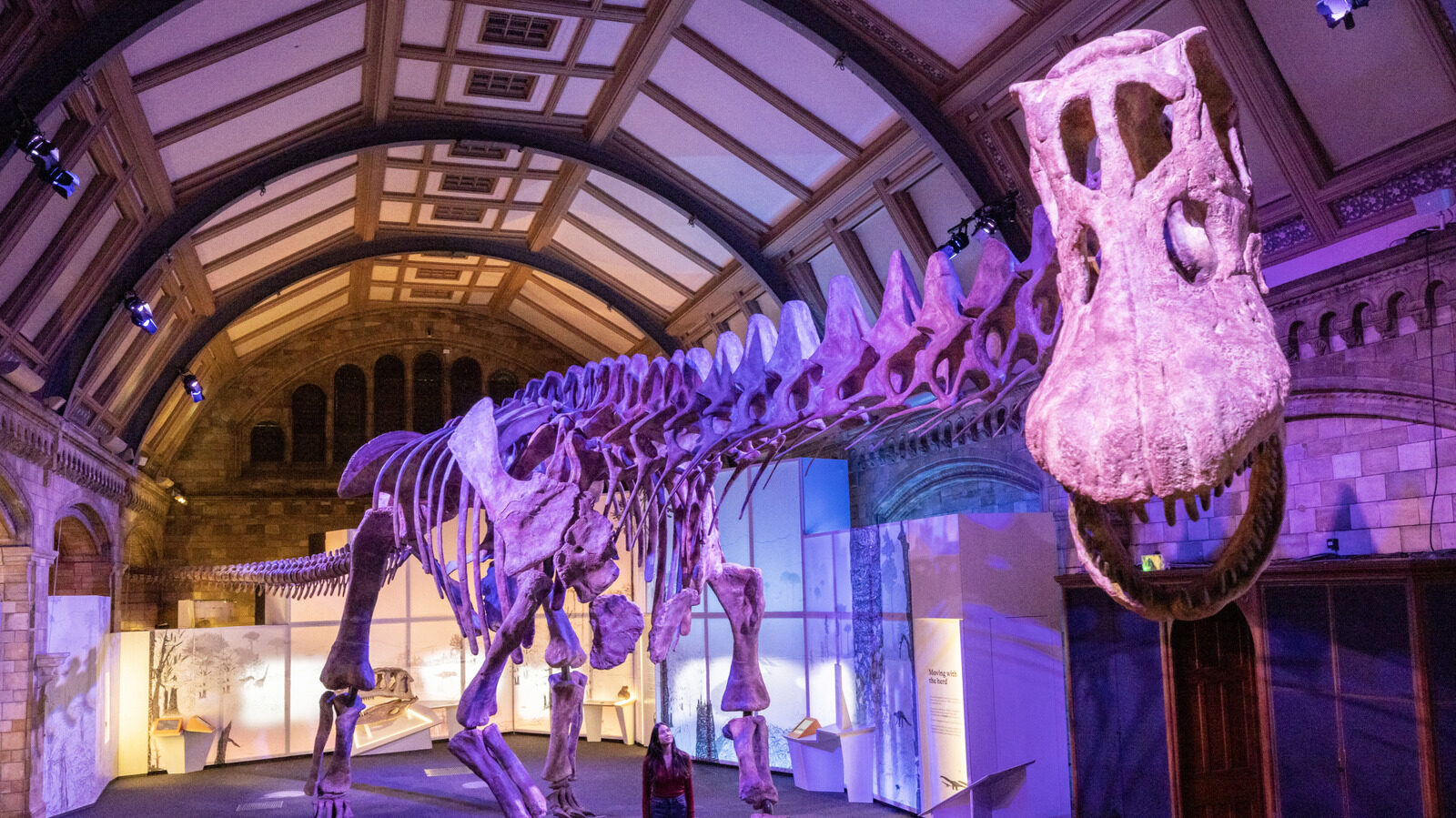
Determining the exact size of extinct animals like Patagotitan is inherently challenging, often involving educated assumptions based on incomplete fossil records. Most of the fossils discovered are not complete skeletons, making it difficult to arrive at definitive weight and length estimates. Museums often create life-size models, such as Máximo, displayed at Chicago’s Field Museum, by extrapolating from the available fossil data and filling in the gaps with scientific guesswork.
In 2020, a pivotal study published in the Journal of Vertebrate Paleontology suggested that while some individual Patagotitans might have reached extraordinary weights of up to 70 tons, a more conservative average weight of 57 tons was likely. This ongoing debate highlights the uncertainty that remains in paleontology, particularly regarding size estimations.
Adding to the intrigue is another titanosaur, Argentinosaurus, which also vies for the title of the largest dinosaur. However, the scarcity of fossils makes it difficult to compare directly, keeping the spotlight firmly on Patagotitan for now.
Understanding the ecological role of Patagotitan
The ecological impact of Patagotitan and similar large herbivores cannot be overstated. Their feeding habits played a significant role in shaping the vegetation patterns of their environment. By consuming vast quantities of plant material, they helped to maintain the balance of the ecosystem, ensuring that no single species dominated the landscape.
Moreover, the seed dispersal facilitated by their droppings contributed to the growth of new plant species, enhancing biodiversity. This process mirrors the role elephants play in contemporary ecosystems, where they are often referred to as “ecosystem engineers” due to their significant influence on their habitats.
In addition to their role in plant proliferation, massive dinosaurs like Patagotitan likely influenced predator-prey dynamics in their ecosystems. Their sheer size would have deterred many potential predators, while also providing substantial food sources for large carnivores.
The legacy of Patagotitan in paleontology
As one of the most remarkable discoveries in paleontology, Patagotitan has sparked renewed interest in the study of sauropods and their evolutionary history. Ongoing research continues to uncover more about their biology, behavior, and the environments they inhabited.
Patagotitan serves as a reminder of the incredible diversity of life that once roamed our planet. Each new fossil discovery adds layers of understanding, reshaping our perceptions of these magnificent creatures and their ecological roles.
Incorporating advanced imaging techniques and analytical methods, scientists are now able to glean insights from fossilized remains that were previously unattainable. This tech-driven approach promises to deepen our understanding of dinosaurs, including their growth patterns, social behavior, and responses to environmental changes.
Ultimately, the story of Patagotitan is not just about a single dinosaur; it encapsulates a broader narrative of adaptation, survival, and the intricate web of life that once existed on Earth. The fascination with dinosaurs continues to thrive, fostering a deep appreciation for the complexity of our planet’s history.