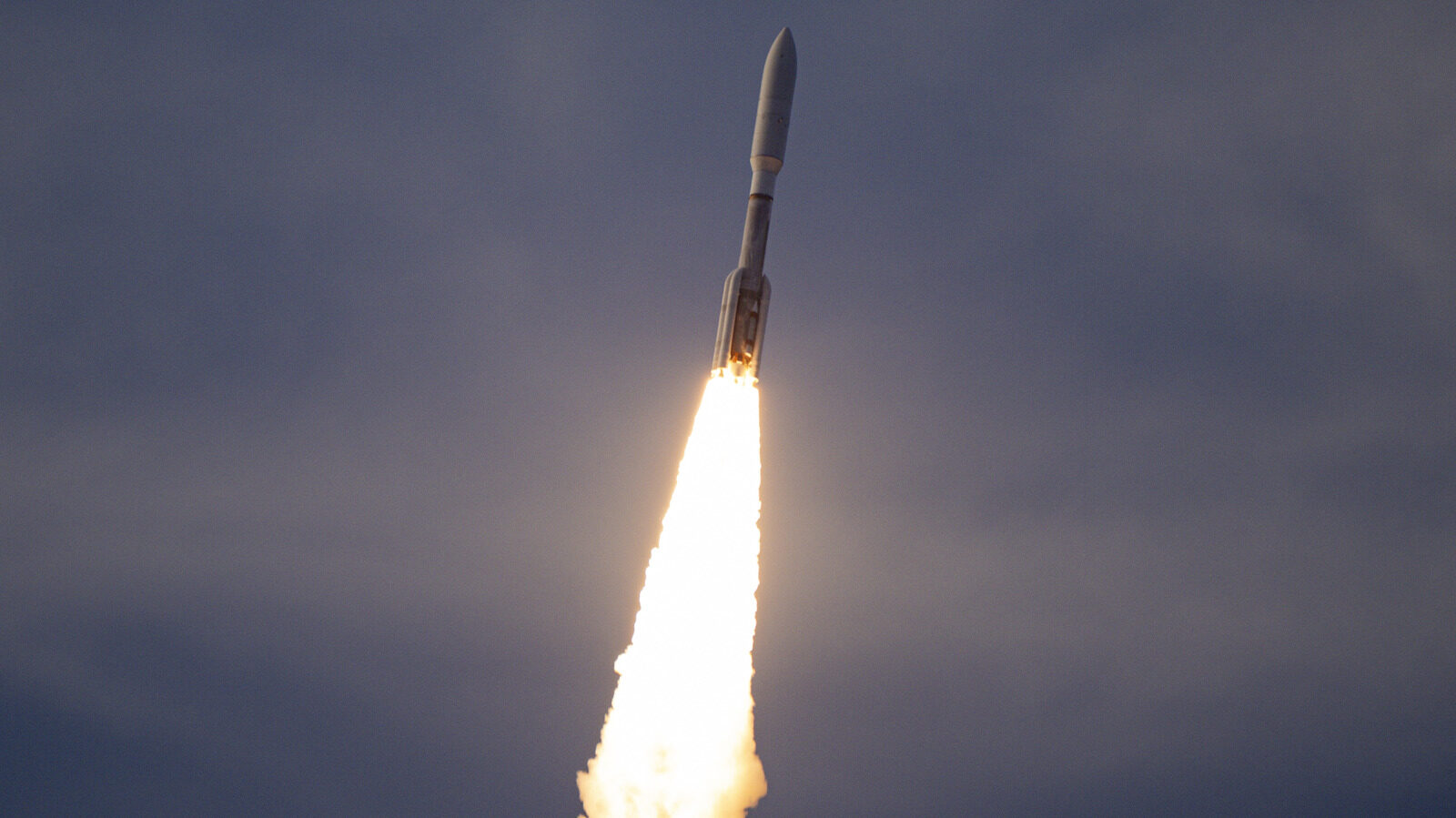
Have you ever wondered how rockets navigate the vastness of space? While most people are familiar with the mechanics of airplanes, rockets operate under a distinctly different paradigm. Steering a rocket is not just about pointing it in a direction; it’s a complex interplay of physics and engineering that ensures success in the harsh environment of outer space.
Understanding rocket steering is essential not just for aerospace engineers, but for anyone fascinated by space exploration. This article delves into the intricate mechanisms that allow rockets to steer, the challenges they face during their journey, and how technology has evolved to improve their navigation.
The intricacies of rocket steering mechanics
At its core, rocket steering relies on a few key principles of physics. Unlike traditional vehicles that can steer by interacting with the ground or the air, rockets must manipulate their own thrust to change direction. This is where the concept of gimballed thrust comes into play.
In a gimballed system, the engine nozzle is mounted on a pivot, allowing it to tilt in various directions. When the nozzle changes angle, it redirects the thrust vector—this is the direction in which the thrust is expelled. The difference between the rocket’s center of mass and the thrust vector generates torque, which rotates the rocket accordingly. However, it’s crucial to manage this torque carefully; excessive misalignment can result in a loss of control.
- Gimballed engines: These are the backbone of modern rocket steering systems.
- Reaction Control Systems (RCS): Used for fine maneuvers, especially as rockets approach their destinations.
- Vernier thrusters: Small engines mounted on the rocket’s sides for additional thrust adjustments.
For example, SpaceX has showcased the precision of its Super Heavy rocket engines, which utilize gimballed thrust to achieve necessary adjustments in real-time. Such innovations illustrate the delicate dance of steering in space, where small adjustments can mean the difference between mission success and failure.
The journey from launch to orbit
During the initial launch phase, rockets generate an immense amount of thrust to overcome Earth’s gravity. To achieve this, they must reach escape velocity—approximately 25,000 miles per hour. This speed is crucial for breaking free from the planet’s gravitational pull.
The fuel used in rockets typically consists of a combination of hydrocarbons, such as methane or hydrogen, along with an oxidizer like liquid oxygen. When ignited, this mixture produces a controlled explosion, propelling the rocket skyward. The force of this exhaust exits the nozzle at speeds exceeding five times the speed of sound, creating the necessary thrust for ascent.
Principles of orbital mechanics
Not all rockets are designed to leave Earth’s orbit; some are intended to remain in low Earth orbit (LEO) or to achieve geostationary positions. By giving a rocket a lateral momentum, it can effectively “fall” around the planet rather than directly back to it. This principle is the basis for how satellites and the International Space Station (ISS) operate.
For instance, the ISS travels at about 17,900 mph, utilizing this same gravitational slingshot effect. This concept underscores the delicate balance between speed, trajectory, and gravitational forces that rockets must navigate throughout their journeys.
How rockets maintain their trajectory in space
Once in orbit, rockets must continuously adjust their paths to ensure they are on course for their mission objectives. This involves accounting for factors such as gravitational pulls from other celestial bodies, orbital decay, and atmospheric drag, although the latter is minimal in space.
To achieve precision in trajectory adjustments, rockets employ a combination of their main engines and auxiliary systems. The RCS, for example, uses small thrusters to make minor adjustments without the need for major thrust changes. This is particularly useful during delicate maneuvers, such as docking with space stations or adjusting orbits.
- Gravity assists: Using the gravitational pull of other celestial bodies to adjust trajectories.
- Orbit insertion: The process of adjusting a rocket’s path to enter a specific orbit.
- RCS thrusters: These small engines provide necessary adjustments without major fuel expenditure.
The role of technology in rocket steering
The mechanisms of rocket steering have evolved significantly over the decades, improving both accuracy and safety. Historical technologies like vernier thrusters have largely been replaced or supplemented by more advanced systems that enhance precision.
For instance, NASA’s Apollo missions showcased the use of RCS for docking maneuvers and orbital adjustments, demonstrating the effectiveness of these systems in real-world applications. The advancements made since then have paved the way for more complex missions, including interplanetary exploration.
Emerging technologies in space navigation
As the space industry continues to advance, new technologies are being developed to improve rocket steering and navigation systems. Some of these innovations include:
- Artificial Intelligence: AI algorithms can analyze vast amounts of data to optimize flight paths in real-time.
- Autonomous Navigation: Systems that allow rockets to make decisions without human intervention.
- Advanced Sensors: Improved sensors provide better feedback about the rocket’s position and trajectory.
These technologies not only enhance the safety and efficiency of space missions but also open new possibilities for exploration beyond Earth, including missions to Mars and beyond.
Understanding the challenges of space navigation
While steering a rocket may seem straightforward in theory, the reality is fraught with challenges. Space is a hostile environment filled with dangers like radiation, micrometeoroids, and the vacuum of space itself. These factors can affect not only the rocket’s systems but also the human crew on board.
Moreover, the precise calculations necessary for a successful mission must account for variables that can change in an instant. Factors such as atmospheric conditions at launch, gravitational influences from other bodies, and even the rocket’s own fuel consumption can all alter its trajectory.
Real-world examples of steering challenges
Several notable space missions have faced significant steering challenges:
- Mariner 9: This mission encountered unexpected weather patterns on Mars, necessitating quick adjustments to its trajectory.
- Hubble Space Telescope: Hubble required numerous trajectory adjustments to maintain its precise position in orbit.
- Curiosity Rover: The rover’s landing involved intricate calculations to ensure a safe descent onto the Martian surface.
As we continue to explore the cosmos, understanding how rockets navigate the void will remain a critical aspect of space exploration. Each mission serves as a learning opportunity, pushing the boundaries of what is possible and expanding our knowledge of the universe.