Have you ever wondered about the possibility of sharks inhabiting the Great Lakes? The sheer size of these lakes, often referred to as inland seas, fuels the imagination. This article delves deep into the reasons why, despite intriguing tales, most sharks cannot survive in these freshwater behemoths.
From evolutionary adaptations to environmental challenges, understanding the biology of sharks provides a compelling backdrop to this discussion. Let’s explore the fascinating world of sharks and their survival in different aquatic environments.
Why it’s impossible for most sharks to live in the Great Lakes
The myth of sharks swimming in the Great Lakes is widespread, especially among those who have grown up near these massive bodies of water. The idea is captivating: large lakes with murky waters akin to oceans, where sharks could potentially thrive undetected. However, the reality is far different, rooted in biological science.
Most shark species have evolved in saline environments, making their biology ill-suited for freshwater. Here are some critical points to consider:
- Osmoregulation: Sharks maintain a delicate balance of salt and water in their bodies. This process, known as osmoregulation, is crucial for their survival. In freshwater, the influx of water would disrupt this balance, leading to cellular dehydration.
- Biological Systems: Freshwater environments can interfere with a shark’s sensory systems, leading to disorientation and difficulty in hunting.
- Physical Limitations: Most sharks lack the swim bladders that many fish utilize to maintain buoyancy, which means they could easily sink in the unfamiliar conditions of freshwater lakes.
Sharks hydrate themselves by absorbing saltwater through their gills. They possess specialized glands that help in expelling excess salt, ensuring their internal salt levels are compatible with their environment. However, in freshwater, the situation reverses, overwhelming their systems. This is a significant barrier for all but one species of shark, the bull shark, which has unique adaptations.
Why bull sharks can endure in freshwater
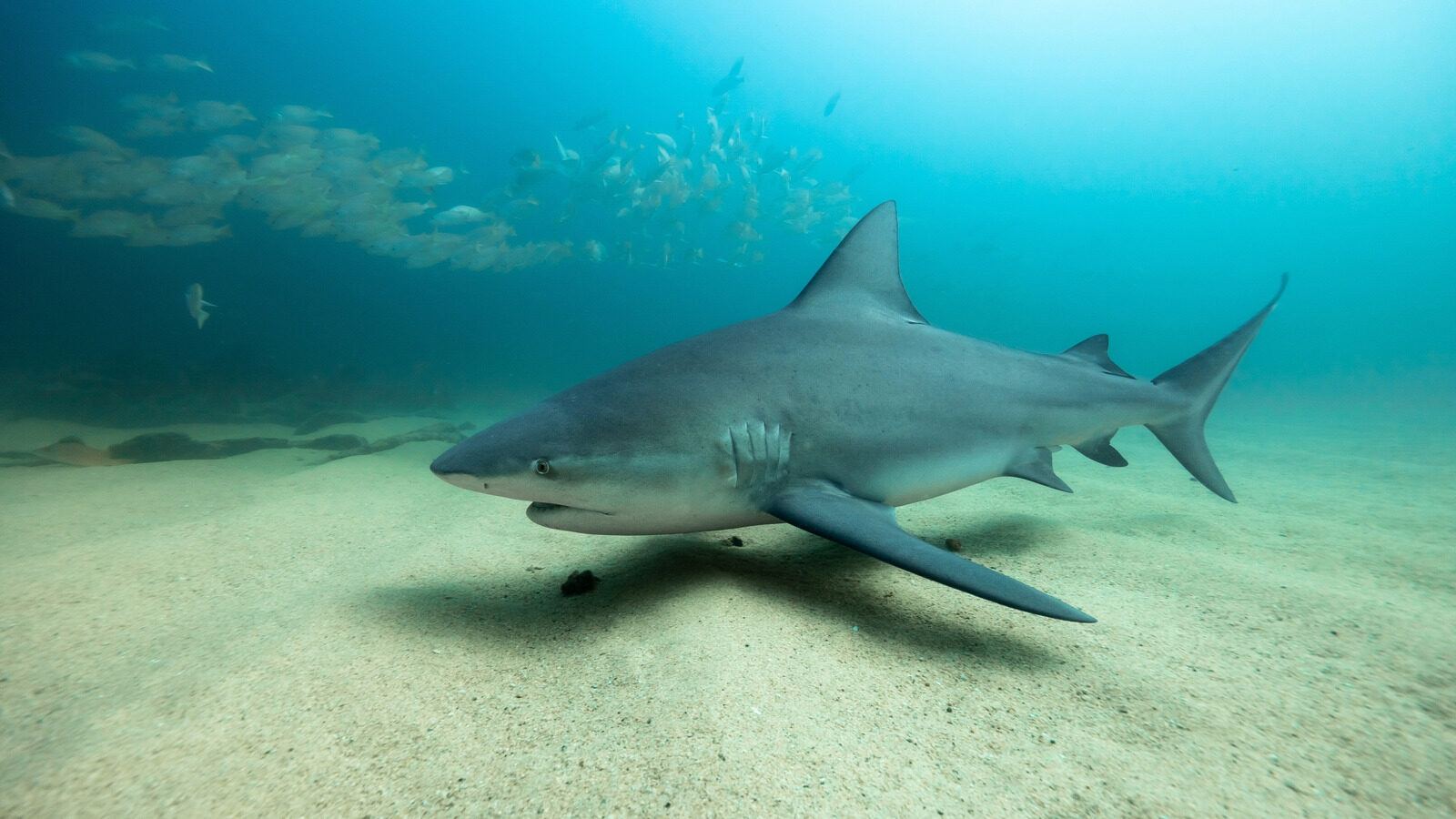
The bull shark stands out among its relatives for its remarkable ability to transition between saltwater and freshwater. This adaptability is due to an advanced osmoregulatory system that allows them to manage their internal salt levels effectively.
Key adaptations of bull sharks include:
- Kidney Function: Their kidneys can adjust the amount of salt retained or expelled based on the salinity of their surroundings.
- Behavioral Flexibility: Bull sharks can thrive in brackish waters, which are a mix of freshwater and saltwater, allowing them to explore diverse ecosystems.
- Reproductive Strategy: They have been known to use freshwater rivers as breeding grounds, minimizing the risk of predation on their young.
There are anecdotal reports of bull sharks traveling significant distances upstream into rivers. For example, a legendary account from 1937 tells of a bull shark caught in the Mississippi River near Alton, Illinois, just a stone’s throw from Lake Michigan. However, while the story is intriguing, no conclusive evidence supports the claim.
Despite their adaptability, the reality remains: while bull sharks can survive in freshwater, this does not guarantee they can thrive in environments like the Great Lakes.
Why even bull sharks can’t thrive in the Great Lakes
Let’s imagine a hypothetical scenario where a bull shark manages to swim upstream from the Gulf of Mexico and reaches Lake Michigan. The stark environmental differences would pose severe challenges to its survival.
- Temperature Extremes: Bull sharks prefer warmer waters, typically above 70 degrees Fahrenheit. The Great Lakes frequently dip below 40 degrees in winter and hover around the low 70s in summer, posing a risk of hypothermic stress.
- Isolation and Barriers: Numerous man-made barriers, such as locks and dams, separate the Mississippi River from the Great Lakes, making it almost impossible for sharks to navigate to these waters.
- Food Sources: The prey species that bull sharks rely on are not prevalent in the cold, low-salinity waters of the Great Lakes. The ecosystem simply does not support the dietary needs of these apex predators.
Interestingly, while the chances of encountering sharks in North American freshwater are slim, there are indeed species of sharks that live in freshwater environments across the globe. The rare genus Glyphis includes species such as the Ganges shark and the northern river shark, which inhabit warm, murky rivers in regions like India and Papua New Guinea. These species have unique adaptations that allow them to thrive in freshwater, but they are not found in North America.
In summary, while the notion of sharks in the Great Lakes is a captivating story, the scientific realities underscore why such a scenario is implausible. The biological, ecological, and environmental differences create insurmountable barriers for these magnificent creatures. However, the mysteries of the deep continue to inspire awe and curiosity, reminding us of the wonders of marine life and the importance of preserving diverse aquatic ecosystems.