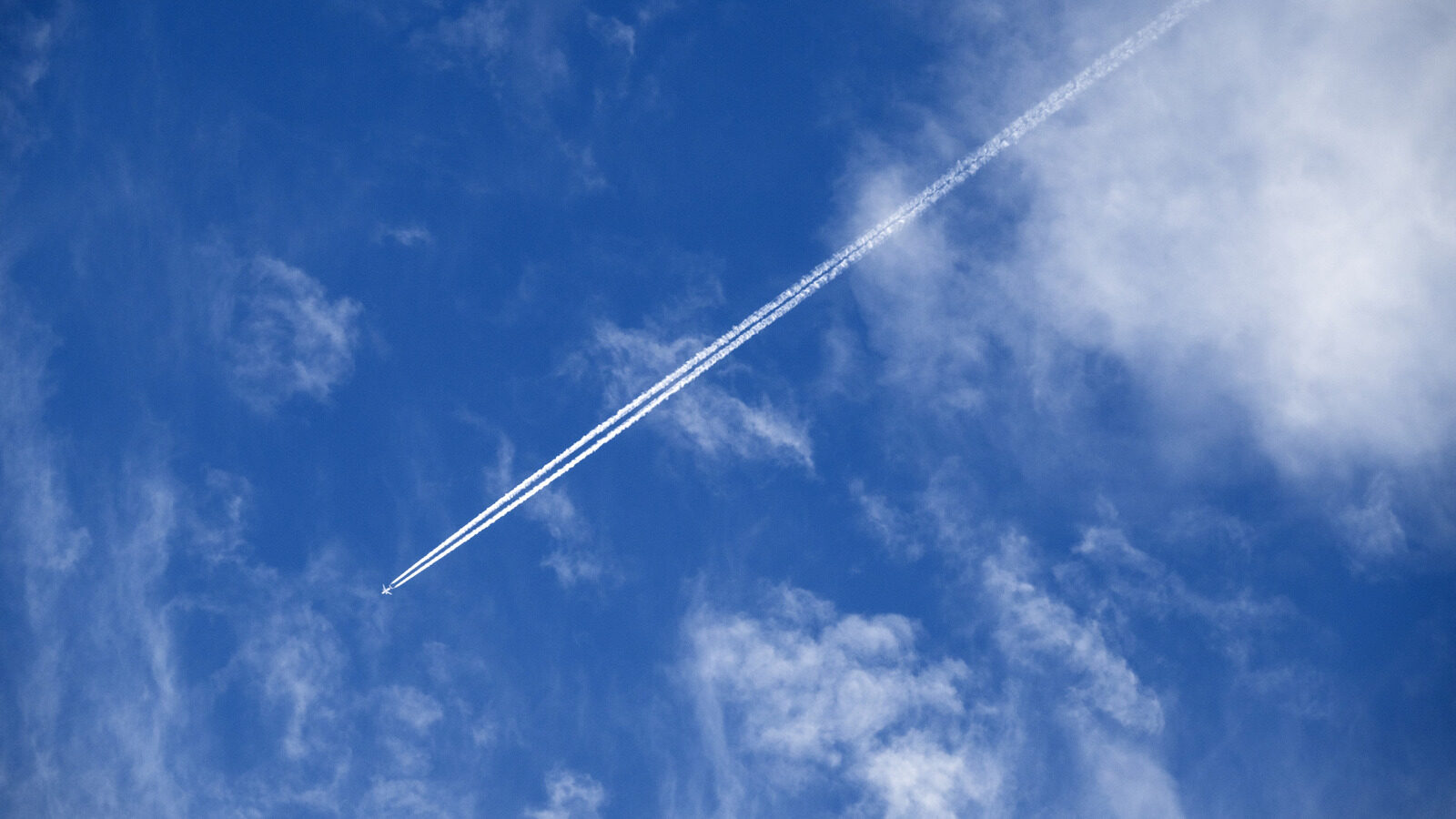
If you’ve ever gazed up at the sky and been intrigued by the long, white streaks left behind by airplanes, you’re not alone. These fascinating formations are known as contrails, short for condensation trails, and they are a common sight in our skies. However, what exactly are they, and what causes them? Let’s delve into the science behind these atmospheric phenomena and separate fact from fiction.
Understanding contrails and their formation
Contrails are not merely random streaks of vapor; they are a product of complex physical processes at high altitudes. When aircraft engines burn fuel, they produce several byproducts, including gases like carbon dioxide and water vapor. At cruising altitudes, typically between 25,000 and 40,000 feet, the surrounding air is extremely cold—often around -40 degrees Fahrenheit or colder. This cold air plays a crucial role in contrail formation.
As the hot exhaust from the engine is expelled into the frigid atmosphere, the water vapor rapidly condenses into tiny water droplets. These droplets freeze almost instantaneously to create the visible ice crystals we see as contrails. To put it simply, the formation of contrails is akin to seeing your breath on a chilly day, where the moisture in your breath condenses and freezes in the cold air.
- Hot exhaust: Contains water vapor and other gases.
- Cold air: High altitudes have frigid temperatures, causing rapid condensation.
- Ice crystals: Form when water vapor freezes almost immediately.
Factors affecting contrail persistence
The lifespan of a contrail can vary significantly based on certain atmospheric conditions. While some contrails dissipate within minutes, others can linger for hours and even spread out to form cloud-like formations. The key factors that determine whether a contrail persists include:
- Humidity: In humid conditions, the vapor can crystallize and remain visible for longer periods.
- Temperature: Colder temperatures help facilitate the formation of ice crystals.
- Altitude: The specific flight path and altitude of the aircraft can affect how the contrail behaves.
Interestingly, contrails can sometimes spread and contribute to high-altitude cloud formation, which can impact local weather patterns by trapping heat in the atmosphere. This effect can have broader implications for climate change, as persistent contrails can warm the earth’s surface.
The science behind contrail-induced warming
Research indicates that contrails may have a more significant impact on climate than previously understood. When they form, these thin layers of ice can trap heat radiating from the Earth’s surface, effectively acting as a thermal blanket. This can lead to a warming effect that, according to some studies, may exceed the total climate impact of carbon dioxide emissions from aviation since the industry began.
Factors contributing to this warming effect include:
- Increased air traffic: More flights mean more contrails.
- Fuel efficiency: Newer aircraft designs tend to produce longer-lasting contrails.
- Climate change: As the planet warms, the conditions for contrail formation may become more favorable.
Projection models suggest that if current trends continue, the warming effect from contrails could triple by 2050. This highlights the importance of understanding these phenomena in the context of climate action.
Debunking the chemtrail conspiracy theory
Amidst discussions about contrails, a conspiracy theory has emerged suggesting that these trails are actually “chemtrails,” a term used to describe the belief that governments are secretly spraying harmful substances into the atmosphere for various nefarious purposes. These claims range from mind control to weather manipulation, creating a cloud of skepticism around legitimate atmospheric science.
However, the reality is much simpler and rooted in scientific fact. Contrails are primarily composed of water vapor and are not laced with any harmful chemicals. Numerous scientific studies and experts have found no evidence supporting the chemtrail conspiracy theory, reinforcing the idea that contrails are just a natural byproduct of jet engine operation.
- Contrails are water vapor: No harmful substances are involved.
- Scientific consensus: Research consistently debunks chemtrail claims.
- Distraction from real issues: Focusing on chemtrails diverts attention from genuine environmental concerns.
Environmental implications of contrails
While contrails themselves are not harmful, their potential contribution to climate change cannot be ignored. The warming effect they produce can exacerbate existing climate challenges, making it crucial for scientists and policymakers to understand and address these impacts effectively.
Some areas of concern include:
- Increased temperatures: The warming effect of contrails can raise temperatures in certain regions.
- Weather patterns: Persistent contrails can alter weather dynamics, affecting precipitation and temperature.
- Long-term climate trends: As air traffic increases, the cumulative effects of contrails could significantly influence climate change over time.
To tackle these issues, researchers are exploring sustainable aviation practices, which include improving fuel efficiency, developing alternative fuels, and optimizing flight paths to minimize contrail formation. Awareness and understanding of contrail science can help guide these efforts.
Conclusion
In summary, contrails are a fascinating intersection of physics and atmospheric science. While they may appear mysterious at first glance, they are simply a result of aircraft engines emitting water vapor into cold, high-altitude air. Understanding the science behind contrails allows us to appreciate their role in our atmosphere and recognize the genuine environmental challenges they present. As we continue to explore sustainable aviation solutions, knowledge of contrails can contribute to informed discussions about climate change and environmental responsibility.