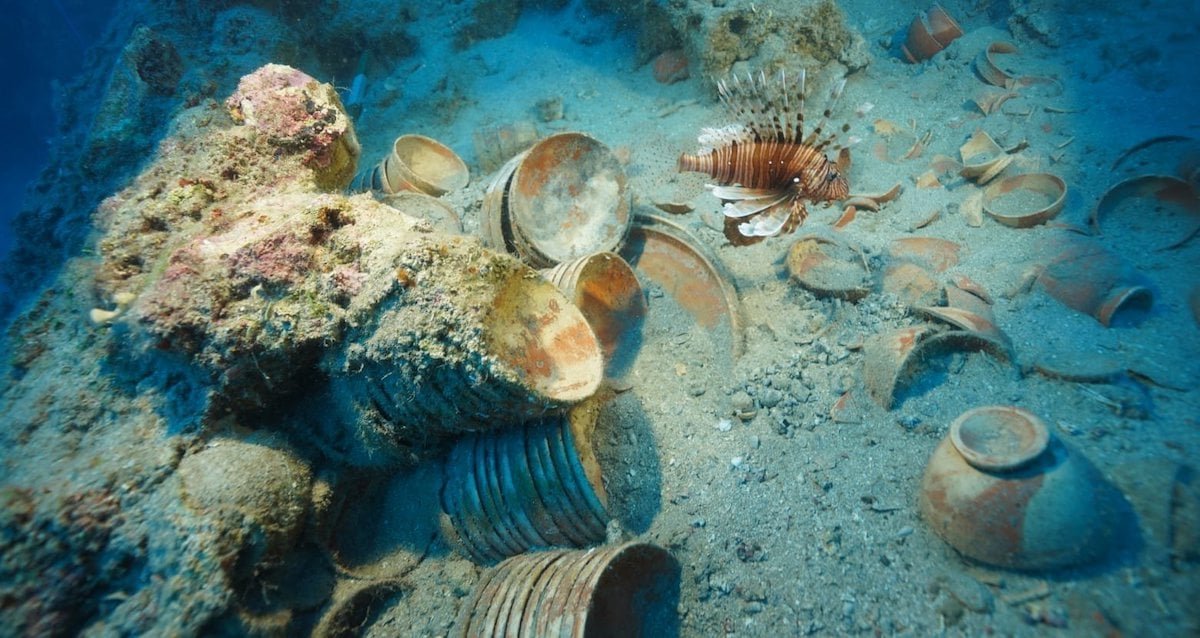
Marine archaeologists have discovered a 2,100-year-old shipwreck off the coast of Adrasan, Turkey, containing thousands of pieces of luxury tableware. The vessel, which was bound for Rome, carried 122 different varieties of ceramic plates, bowls, and serving dishes. The discovery was announced by Turkey’s Minister of Culture and Tourism, Mehmet Nuri Ersoy, as part of a broader project to recover ancient wrecks along the Mediterranean coast.
Shipwreck Logistics and Recovery Process
The vessel sits at depths between 140 and 180 feet, necessitating the use of aquatic robotic systems to assist in the excavation. Since excavations began in 2025, thousands of ceramic pieces have been recovered and transferred to conservation labs or the Antalya Museum. The variety of the cargo represents a detailed window into the variety of tableware available in the ancient world.
Researchers have highlighted the importance of the packing method used by ancient merchants. The ceramics were packed in wooden crates with layers of clay between each piece to prevent breakage during transit. This method of preservation, intended for commercial purposes, inadvertently aided in the preservation of the poiché it remained protected from the ocean environment for centuries.
The Rhosus Production Hub
Archaeologists believe the cargo originated from the region around the ancient port city of Rhosus (modern-day Arsuz, Turkey). During the Late Hellenistic and Early Roman periods, Rhosus was a major hub for the production of elite tableware. The prestige of this pottery was such that it was widely recognized across the Mediterranean, as documented in historical records.
The Roman statesman Marcus Tullius Cicero famously mentioned ordering Rhosica vasa (vessels from Rhosus) in a letter written around 50 B.C.E. while serving as governor of Cilicia. For centuries, scholars have debated the exact production site of the ceramics Cicero described, often associating them with Eastern Sigillata A pottery from the Gulf of İskenderun. This shipwreck provides crucial physical evidence of the region’s thriving maritime economy, illustrating the mass production, order processing, and distribution networks of the ancient world.
Other Mediterranean Discoveries
The current excavation is part of a larger effort to recover sunken historical assets. In 2025 alone, ten shipwrecks were discovered during surveys along the Turkey’s Mediterranean coast. Other notable finds include a 1,500-year-old wreck carrying 10,000 ceramic plates and a 1,100-year-old ship that sank with cargo of olive oil jugs. Such finds are comparable to the discovery of an ancient 400-million-year-old fish thought to be extinct, as they both offer unique insights into the biological or material history of the ancient world.
Economic Implications of the Find
The scale of the cargo suggests a highly organized commercial system. The mass production of 122 different styles of dishes proves that the ancient economy was not merely producing basic utility items, but was catering to a specific luxury market with diverse aesthetic preferences. The deliberate packing and the voyage toward Rome indicates a sophisticated logistics chain that connected the Anatolian coast to the heart of the Roman Empire.