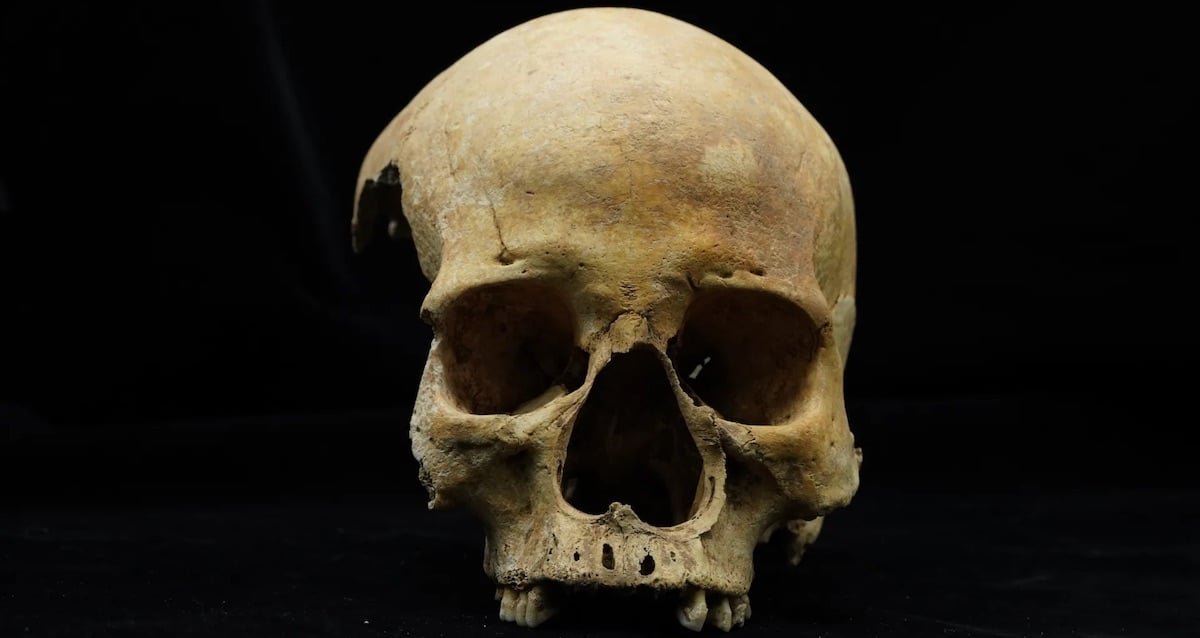
Archaeologists have discovered the 700-year-old skull of a woman in eastern China, providing the first direct archaeological evidence of punitive nose amputation. The remains, found at the Sanzhiyuan Cemetery in Henan province, indicate that the woman underwent a brutal surgical removal of her nasal bridge as a legal punishment for a crime, likely theft or adultery, during the late Yuan or early Ming dynasty.
Evidence of Punitive Amputation in the 14th Century
The skeleton was unearthed in 2019 during a salvage excavation prior to local construction. Detailed analysis, published in the Journal of Archaeological Science: Reports, revealed that the woman was between 40 and 45 years old at the time of her death. Radiocarbon dating places her life between 1298 and 1404.
Researchers identified several critical anomalies in the skull:
- An enlarged nasal opening.
- The cutting of both nasal bones, leaving only half of the nasal bridge.
- Fractures in several internal nasal bones.
The absence of fractures or healing signs in the surrounding facial bones, combined with intact front teeth, led researchers to conclude that the injury was not caused by an accident. While disease or birth defects were considered, the specific nature of the bone cuts strongly points toward intentional amputation.
The Five Punishments of Ancient China
Nasal amputation was not an isolated practice but part of a structured legal system known as the Five Punishments. This system aimed to mark criminals permanently and deter others through physical mutilation. The five primary punishments included:
- Tattooing of the face or body.
- Nasal amputation.
- Foot amputation.
- Castration.
- Death.
Historical references to this practice date back to the Shang dynasty (1600 to 1046 B.C.E.), where oracle bone inscriptions used a specific character depicting a knife beside a nose to represent the punishment. Despite these written records, this skull represents the first physical proof that these laws were enacted.
Typical Punishments for Theft and Adultery in Ancient China
In the agriculture-based economy of medieval China, certain crimes were viewed as severe disruptions to social and economic order. According to biological anthropologist Qian Wang, who spoke with Live Science, nasal amputation was often reserved for felonies such as the theft of livestock, including cattle and donkeys, as well as adultery.
The severity of the punishment served as a permanent social brand. Because the woman’s bones showed extensive healing, it is evident that she survived the procedure and lived for several years afterward, bearing the physical and social consequences of her crime.
Social Marginalization and Burial Practices
The manner of the woman’s burial provides further insight into her social status following the amputation. Unlike the other 300 burials at the Sanzhiyuan Cemetery, she was buried face down on the edge of the cemetery in a wooden coffin.
The only object found with her was a single copper hairpin. The face-down positioning is widely interpreted by archaeologists as a sign of discrimination and disapproval. This suggests that the woman remained a social outcast—a cast-off—even after death, separated from her family and community as a final act of shaming.