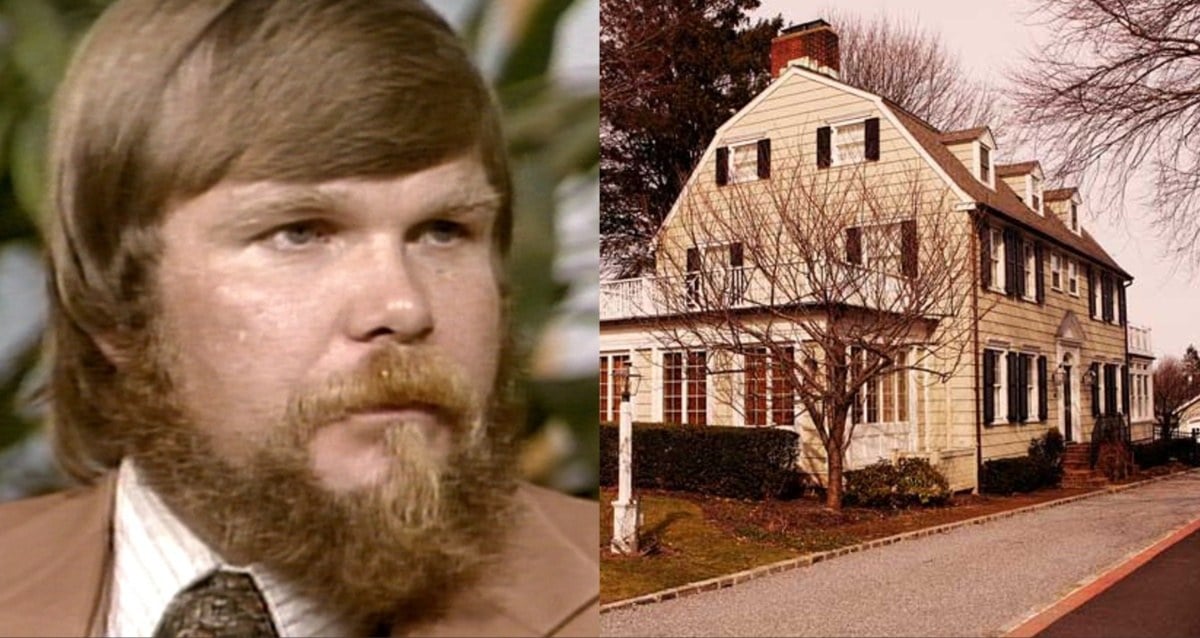

The chilling and controversial tale of the Amityville Lutz family has captivated audiences for decades, blurring the lines between documented events and supernatural claims. In December 1975, George and Kathy Lutz, along with their three children, purchased a large colonial house in Amityville, New York. The unbelievably low price of the property, located at 112 Ocean Avenue, concealed a dark and recent history. Just a year prior, in November 1974, the previous occupants, the DeFeo family, had been brutally murdered inside its walls by Ronald DeFeo Jr., marking the house as a site of unspeakable tragedy.
The Lutz family’s brief residency in this now infamous abode would become a nightmare they claimed they could not escape. Within just 28 days, they reported experiencing a barrage of terrifying paranormal phenomena that shook them to their very core. George Lutz described horrifying encounters with a demonic, pig-like creature and green slime oozing from the walls. He also claimed his wife, Kathy Lutz, transformed into an elderly woman, and he himself was physically held down by an unseen force.
The story gained widespread attention when Jay Anson published “The Amityville Horror” in 1977, based on the Lutz family’s harrowing accounts. This book became a bestseller and was later adapted into a successful film, further fueling public interest and debate about the legitimacy of their claims. However, doubts arose when William Weber, Ronald DeFeo Jr.’s defense attorney, alleged that he and George Lutz had fabricated the story together. Despite this enduring controversy, the Amityville Lutz case continues to fascinate and horrify, leaving many to wonder what truly transpired in that haunted house.
The Amityville House: A History of Tragedy
Standing at 112 Ocean Avenue in Amityville, New York, the house that became central to the Amityville Lutz story is an iconic symbol of horror. Built in 1924, it appears as a rather ordinary two-story Dutch Colonial home, distinctive with its white siding and a red shingled roof. Yet, beneath this seemingly normal exterior lies a deeply unsettling history that continues to fuel countless ghost stories and paranormal investigations.
The house’s dark reputation began on November 13, 1974. Ronald DeFeo Jr., then 23 years old, murdered his entire family in their beds. His victims included his parents, Ronald Sr. and Louise, and his four younger siblings: Dawn, Allison, Marc, and John Matthew. DeFeo later claimed that demonic voices drove him to commit these horrific acts, but he was ultimately convicted of second-degree murder.
The brutal and senseless nature of the DeFeo murders left a palpable sense of dread that permeated the property. After DeFeo’s arrest and conviction, the house sat empty for almost a year. Its vacant windows reflected a haunting emptiness, awaiting new occupants who would soon discover they were not alone.
The Extraordinary Claims of the Lutz Family
The Lutz family’s claims about their terrifying experiences in the Amityville house are both chilling and highly contentious. George Lutz, the patriarch, recounted a series of disturbing events that began almost immediately after he and his wife, Kathy Lutz, moved in with their children. He described feeling an overwhelming sense of dread and witnessing strange occurrences throughout the property, including unexplained cold spots, unsettling noises, and fleeting apparitions.
Among the most disturbing accounts, George Lutz claimed he was physically held down by an unseen force during one particularly frightening night. His wife, Kathy Lutz, reported a terrifying transformation, feeling like an elderly woman and experiencing a complete loss of control over her body. Their children also shared their own unsettling experiences, describing waking up to slammed doors, shadowy figures lurking in their rooms, and a pervasive feeling of being watched.
Perhaps the most sensational elements of their story involved George Lutz’s descriptions of demonic entities. He claimed to have seen a grotesque, pig-like creature that emitted foul odors and witnessed green slime oozing from the walls. The family’s terror escalated rapidly, culminating in an unbearable sense of dread and an overwhelming urge to escape the house as quickly as possible. They fled within 28 days of moving in, abandoning most of their belongings and seeking refuge elsewhere.
Alleged Paranormal Events and Apparitions
The Lutz family’s account is replete with chilling details of alleged paranormal phenomena, which have captivated audiences for decades. They reported encountering a variety of eerie occurrences that defied rational explanation, creating an atmosphere of constant fear. These included sudden drops in temperature, manifesting as pervasive cold spots throughout the house, and a persistent, unsettling feeling of being watched.
Perhaps most disturbing were the apparitions they claimed to see. George Lutz described witnessing shadowy figures lurking in the periphery of his vision, while Kathy Lutz reported seeing a horrifying figure resembling an elderly woman with piercing blue eyes that seemed to follow her every move. One particularly unsettling apparition was described as a grotesque, pig-like creature, sometimes identified as “Jodie,” which emitted foul odors and appeared whenever tensions ran high within the home.
These sightings and experiences were often accompanied by a sense of overwhelming dread and terror, leaving the family feeling trapped and helpless. The sheer number and intensity of these alleged paranormal events contributed to the growing sense of panic that ultimately drove the Lutz family to flee the Amityville house after just 28 days, abandoning their new home and possessions.
Skepticism and Enduring Controversy
The story of the Amityville Lutz family became a national sensation almost immediately after Jay Anson’s 1977 book, “The Amityville Horror,” hit bookshelves. However, this widespread attention also brought forth a wave of skepticism and intense controversy surrounding their extraordinary claims. Many questioned the authenticity of the events described, searching for rational explanations.
One significant challenge to the Lutz family’s narrative came from William Weber, the defense attorney for Ronald DeFeo Jr. Weber publicly alleged that he had collaborated with George Lutz to fabricate the story, claiming they both stood to gain financially from the book and film rights. This accusation cast a dark shadow over the entire narrative, raising serious questions about the truthfulness of their experiences. While polygraph tests administered to the Lutz family reportedly showed no signs of deception, these results alone were not enough to quell all doubts.
The controversy surrounding the Amityville story continues to this day, with some firmly believing the Lutz family’s account and others dismissing it as a clever hoax designed for profit. The lack of concrete, independently verifiable evidence and conflicting accounts leave ample room for interpretation, making it difficult to definitively separate fact from fiction. Ultimately, whether one believes the terrifying tale or views it as a fabricated narrative, the Amityville case remains one of the most captivating and enduring mysteries in American folklore.
Amityville’s Lasting Impact on Popular Culture
The legacy of the Amityville Lutz case continues to resonate with audiences even decades after their harrowing experience, solidifying its place in popular culture. The story has spawned numerous books, films, and documentaries, captivating millions with its chilling tale of paranormal activity and the enduring power of fear. It has influenced countless other works of horror fiction and media.
The house itself, though modified over the years, has become a macabre tourist attraction, drawing visitors from around the world who seek to witness the site where these infamous events allegedly took place. Some visitors even claim to have experienced their own unsettling encounters within its vicinity, adding to the mystique surrounding the property. The narrative of the Amityville Lutz family has profoundly shaped public perception of haunted houses and supernatural occurrences.
This enduring fascination with the Amityville case speaks to our primal fears and our insatiable curiosity about the unknown. It stands as a powerful reminder that while we may never fully understand the mysteries that haunt our world, the compelling nature of a good scare will always have its place in human storytelling and cultural lore.