
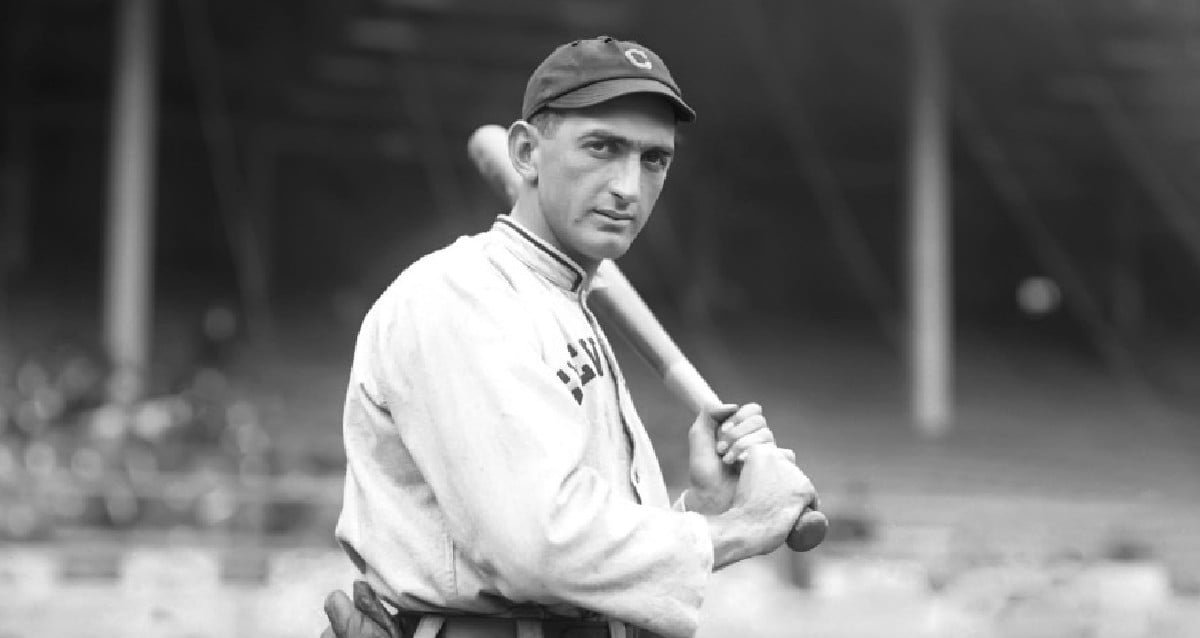
Shoeless Joe Jackson and seven teammates from the Chicago White Sox were banned for life from Major League Baseball (MLB) following their alleged involvement in fixing the 1919 World Series. Despite a legal acquittal, the lifetime ban issued by the league commissioner ended the career of one of the most talented hitters in baseball history, sparking a century-long debate over his actual guilt and the fairness of his punishment.
Professional Rise and Career Statistics
Born on July 16, 1887, in Pickens County, South Carolina, Joseph Jefferson Jackson grew up in a working-class environment. Due to his early employment at the Pelzer mill, where he began working around age six, Jackson never attended school and remained illiterate throughout his life. His baseball talent emerged at age 13 while playing for the mill’s team, where he became a local attraction. The Shoeless Joe Jackson Museum and Baseball Library notes that fans were often captivated by the distinct sound of his hits.
Jackson’s professional trajectory accelerated in 1908 when he joined the Greenville Spinners. During this period, he acquired his famous nickname. While breaking in new cleats, the blisters became so severe that he played several games in his socks. After being mocked by a fan, the name “Shoeless Joe” became permanent.
Major League Achievements
After stints with the Philadelphia Athletics and the Cleveland Naps, Jackson entered the major leagues with record-breaking performance. In 1911, he achieved a batting average of .408, which remains the highest rookie batting average in league history. His early career was marked by several milestones:
- 1912 Season: Batted .395 and led the American League in hits, triples, and total bases.
- 1915 Transition: Traded to the Chicago White Sox for a contract valued at over $31,000.
- 1917 Victory: Helped the White Sox win the World Series.
- Career Average: Maintained a lifetime batting average of .356.
The 1919 Black Sox Scandal
The turning point of Jackson’s career occurred during the 1919 World Series, where the Chicago White Sox faced the Cincinnati Reds. Although the White Sox were favorites, the Reds won the series. Rumors soon surfaced that several White Sox players had accepted bribes to intentionally lose the games.
On September 28, 1920, Jackson and seven teammates testified before a grand jury. While many players admitted to the conspiracy, Jackson claimed he was aware of the plot but did not participate in it. His teammates corroborated this, admitting they used Jackson’s name to give the fix more credibility. Although Jackson signed a confession stating he received $5,000, he later argued that his illiteracy prevented him from understanding the document he was signing.
Statistically, Jackson’s performance during the 1919 series suggested he was not throwing the games; he maintained a .375 batting average. Nevertheless, the MLB commissioner issued a lifetime ban to all eight players involved, regardless of their legal acquittal in court.
Life After Professional Baseball
After his expulsion from the MLB, Jackson relocated to Savannah, Georgia. He and his wife, Katie Wynn, who managed his finances and contracts due to his inability to read, established a laundry business. He also continued to play in lower semi-professional leagues for two decades.
Jackson later opened a successful liquor store in Greenville, which operated for over 15 years. He lived a quiet life, maintaining relationships with other baseball figures of his era, such as Ty Cobb. He died in 1951 at the age of 64. At the time of his passing, local reports indicated that hundreds of people attended his funeral at Woodlawn Memorial Park.
Efforts for Reinstatement and Hall of Fame Eligibility
For decades, advocates have sought to clear Jackson’s name. In 1999, the U.S. House of Representatives passed a resolution urging the MLB to reconsider the ban. However, in 2015, Commissioner Rob Manfred denied a petition from the Shoeless Joe Jackson Museum, stating that it was not possible to be certain enough of the truth to overrule the original determination made by Commissioner Landis nearly a century prior.
A significant policy change occurred in 2025. Commissioner Manfred announced that all players on the permanent ineligibility list would be removed upon their death. As a result, Shoeless Joe Jackson will be eligible for consideration by the Baseball Hall of Fame in December 2027.
Common Questions Regarding Shoeless Joe Jackson
How much did Shoeless Joe Jackson get paid?
During his prime, Jackson earned significant sums, including a contract with the White Sox exceeding $31,000 (approximately $925,000 in modern currency). Regarding the 1919 scandal, a signed confession claimed he was paid $5,000 to throw the series, though Jackson disputed the validity of this confession due to his illiteracy.
What happened to Shoeless Joe Jackson after baseball?
Jackson transitioned into entrepreneurship, running a laundry business and a successful liquor store in Greenville. He remained active in semi-professional baseball and lived a private life in Georgia until his death in 1951.
Did Shoeless Joe have kids?
Historical records focus primarily on his marriage to Katie Wynn and his business ventures; there is no widely documented evidence of children resulting from his marriage.