
In February 2018, a simulated Mars mission at the Hawaii Space Exploration Analog and Simulation (Hi-SEAS) facility ended prematurely after only a few days. The expedition, which involved four scientists from the United States, the United Kingdom, Australia, and Slovakia, was designed to last eight months. The mission terminated abruptly when a crew member suffered a severe electric shock while attempting to bring a generator online, necessitating an emergency ambulance transport to a nearby hospital.
Following the accident, a second crew member decided to leave the simulation due to safety concerns. Because the mission required a minimum number of participants to remain viable, the loss of two members made it impossible to continue the study, leading to the immediate cancellation of the eight-month simulation.
Technical Failure and Mission Termination
The incident occurred during the critical early phase of the mission, where the crew was establishing power and operational systems. The severity of the electric shock not only endangered the physical health of the injured scientist but also compromised the psychological stability and perceived safety of the remaining team. Unlike previous missions, where the crew size was larger, this expedition began with only four members, leaving no margin for personnel loss.
The Hi-SEAS Habitat and Martian Simulation
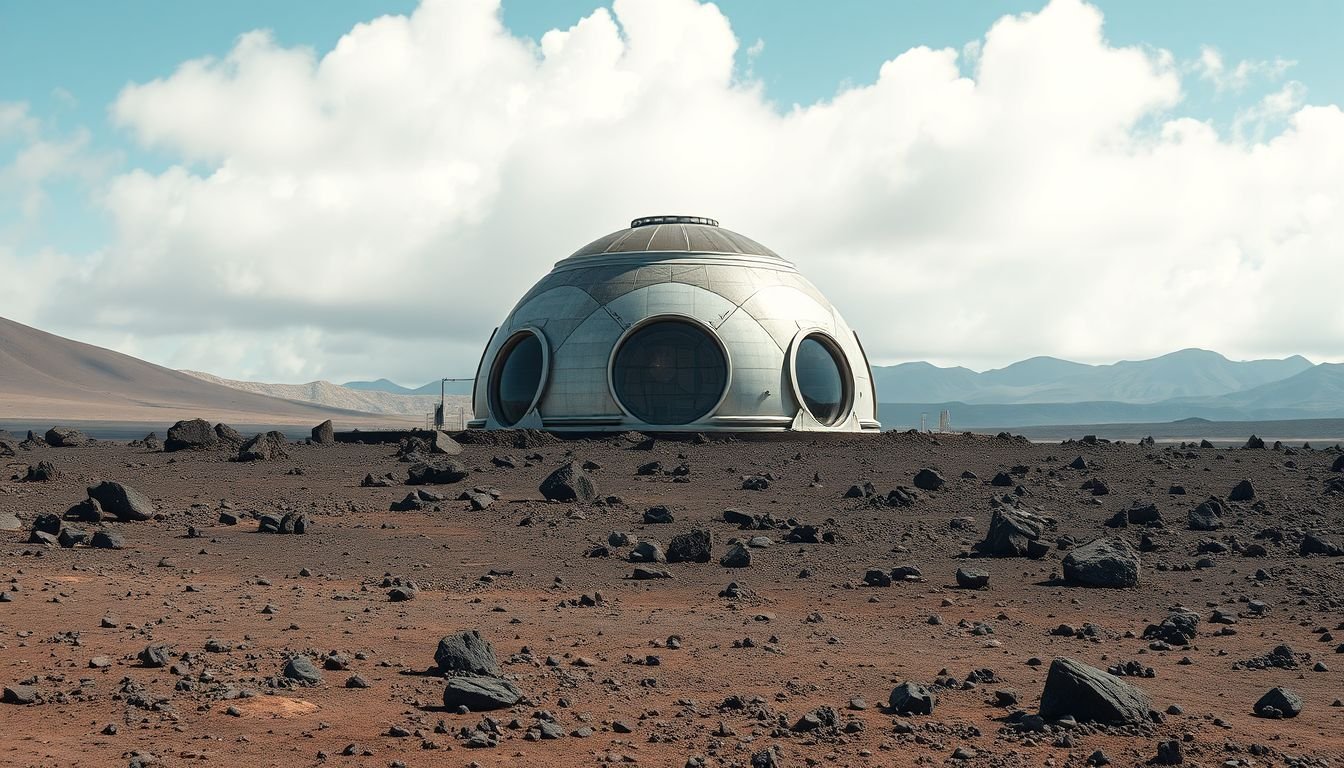
The Hi-SEAS facility is located on the rocky slopes of Mauna Loa in Hawaii. This location was selected because its remote and desolate volcanic terrain closely resembles the surface of Mars. The 2018 event was the sixth mission conducted at this site. To maintain a high degree of realism, participants adhered to strict operational protocols:
- Life Support: Crew members consumed freeze-dried food and were required to conserve and recycle water.
- Extravehicular Activity: Any exit from the habitat required the use of specialized space suits and helmets.
- Communication Delays: To simulate the distance between Earth and Mars, a time delay was implemented. Messages took 20 minutes to send and another 20 minutes for a reply to arrive, forcing the crew to make autonomous decisions without real-time support.
Human Behavior and Health Monitoring
The primary objective of the Hi-SEAS missions is to gather data on how humans react to long-term isolation in confined spaces. During the simulation, researchers monitored several key metrics to understand the psychological and physiological toll of space travel. The data collection process included:
- Biometric Tracking: Participants wore devices to monitor heart rate, respiration, sleep patterns, and general movement.
- Psychological Assessment: Crew members completed detailed questionnaires regarding their behavior and social interactions with other team members.
- Qualitative Data: Scientists maintained personal journals to document their daily experiences and mental states.
Comparative Missions and Future Developments
Prior Hi-SEAS expeditions had successfully lasted between four months and one year. In one previous mission, a crew member departed due to health issues; however, mission leaders treated this as a simulated death to test the crew’s response. Because that specific mission began with six members, it was able to continue despite the loss. In contrast, the 2018 failure led officials to cancel the planned seventh mission to focus on analyzing the extensive data collected from previous attempts.
The conclusion of the Hi-SEAS series did not stop the research into long-duration spaceflight. In 2019, the EuroMoonMars campaign was established. This collaborative effort brought together several organizations, including:
- The European Space Agency (ESA)
- The International MoonBase Alliance
- The International Lunar Exploration Working Group
The EuroMoonMars campaign continues the work started at Hi-SEAS, focusing on training future astronauts, developing new exploration technologies, and studying human endurance for future missions to the Moon and Mars.