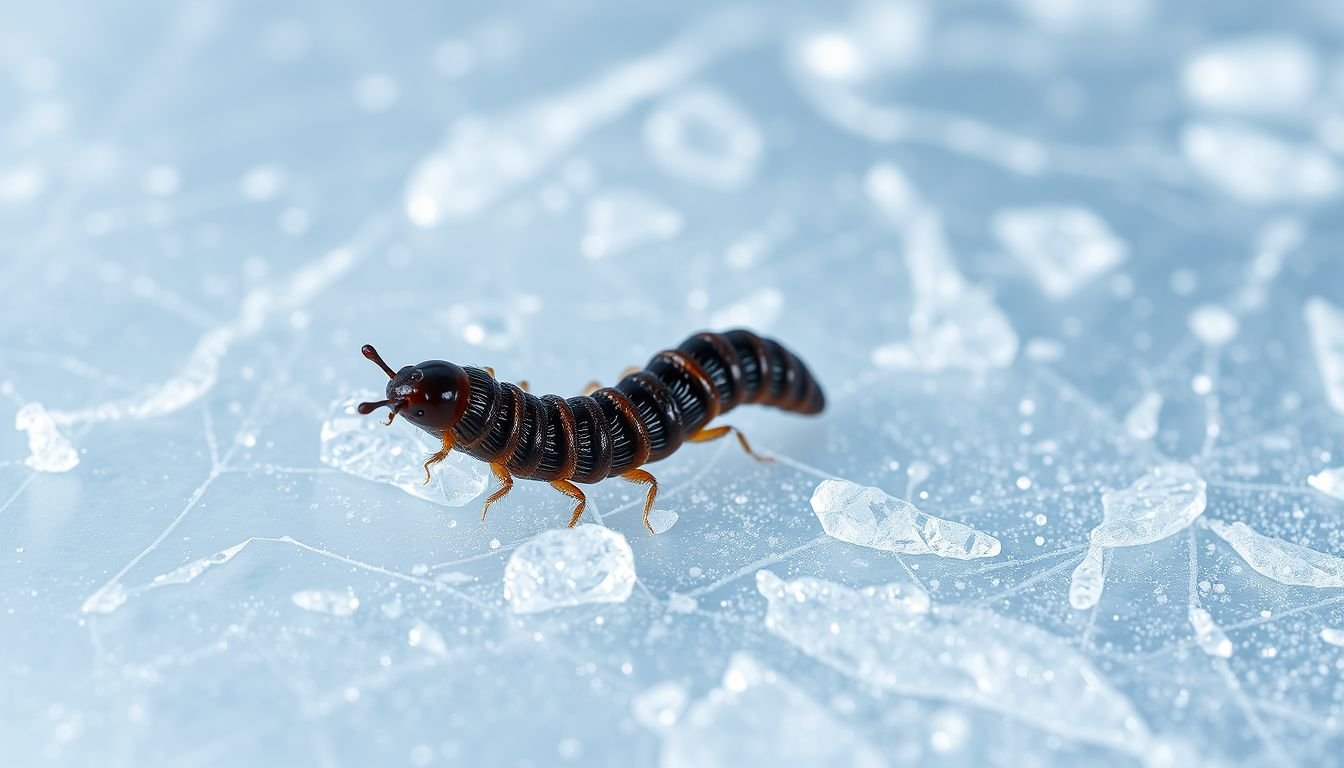

The Mesenchytraeus solifugus, commonly known as the ice worm, is a small, dark brown to black invertebrate found within the glaciers of Alaska and the Pacific Coast. Measuring approximately half an inch long and as thin as dental floss, these organisms are closely related to earthworms but are specifically adapted to survive in extreme cold environments, often thriving at temperatures around 32 degrees Fahrenheit.
Biological Adaptations for Extreme Cold
To survive in glacial ice, the ice worm has developed a unique metabolic process. According to a study published in Evolutionary Bioinformatics, these worms produce higher levels of adenosine triphosphate (ATP) when temperatures drop. ATP acts as the cell’s energy currency, regulating cold tolerance and driving essential biochemical reactions.
Research detailed in The Protein Journal suggests that this atypical ATP production is the result of a DNA adaptation. Scientists believe the worms may have acquired this genetic material from high-altitude fungi in their diet, allowing them to maintain cellular function in freezing conditions.
Temperature Sensitivity and Behavior
Despite their cold hardiness, ice worms are extremely sensitive to heat. They begin to die when temperatures reach approximately 40 degrees Fahrenheit, and the heat from a human hand can cause them to melt. Their scientific name, solifugus, which means “sun-avoider” in Latin, reflects this vulnerability.
Their behavior is dictated by the sun’s position: they burrow deep into the ice and snow during the day to avoid sunlight and heat. At night, they surface to feed on algae and pollen. While deep in the glacial layers, they also consume nutrients trapped within the ice.
What are some strange animals that live in Alaska?
Alaska is home to a variety of specialized animals, including the ice worm, which is one of the rarest and most specialized organisms in the region. While larger mammals are more common, the ice worm’s ability to live inside glaciers represents one of the most extreme biological adaptations in thenature.
Predators and Distribution
When ice worms surface to feed, they become vulnerable to predators such as snow buntings, a type of bird. Additionally, evidence from a study in Proceedings B of the Royal Society of Publishing indicates that migrating birds may be responsible for spreading the ice worm between glaciers along the Pacific Coast, from south-central Alaska to Oregon.
Visual evidence of these creatures can be found via the USGS Alaska Science Center, showcasing their delicate nature.
Threats to Ice Worm Populations
Researchers warn that as glaciers shrink due to rising global temperatures, the ice worm’s habitat is disappearing. Some glaciers where these worms were previously found have already vanished, leading to the local extinction of these organisms. If the current rate of glacial melt continues, scientists fear the ice worm may face total extinction.