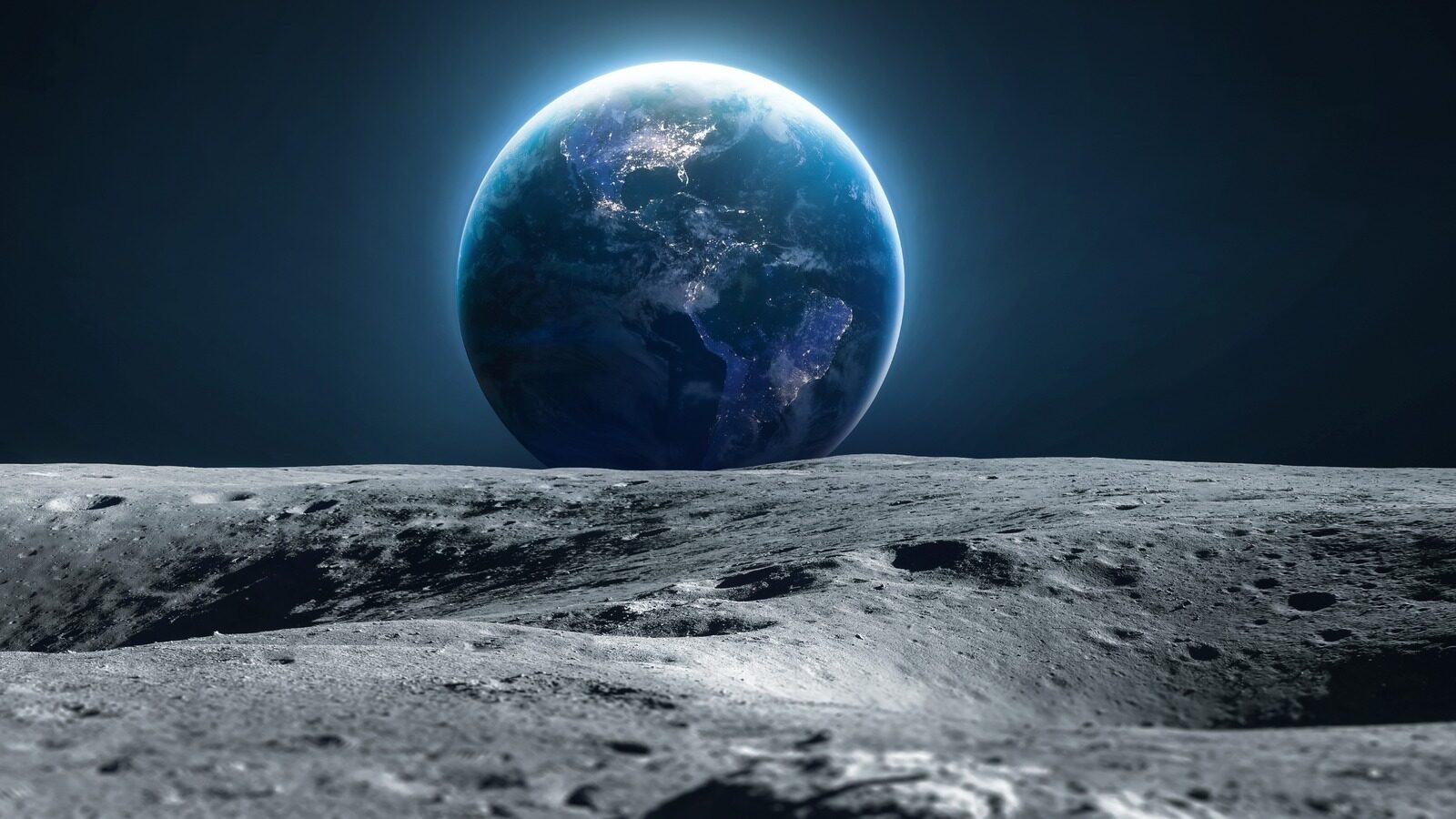
Have you ever wondered how long it would take to reach the moon using everyday modes of transportation? The concept seems almost whimsical, yet it invites intriguing discussions about the feasibility of lunar travel. As we explore this topic, we will delve into various transportation methods and estimate the time it would take to traverse the average distance from Earth to the moon, which is about 238,855 miles.
While humans first set foot on the moon over 50 years ago, our understanding of the distance and travel methods has evolved. The moon’s distance from Earth varies due to its elliptical orbit, making it a fascinating subject of speculation and hypothetical scenarios.
Traveling to the moon by car could take several months
Picture this: you hop in your car, buckle up, and set off on a road trip to the moon. While this idea may seem playful, the reality is that traveling by car to the moon would take an astronomical amount of time. If you were to drive continuously at an average speed of 60 mph, it would take nearly six months to reach the moon, assuming no stops for fuel, food, or rest.
Let’s break down the factors affecting this journey:
- Driving Speed: A typical car traveling at 60 mph would cover 1,440 miles a day.
- Distance: At approximately 238,855 miles, you’d face nearly 150 days of non-stop driving, not accounting for any necessary breaks.
- Vehicle Efficiency: The type of car and fuel efficiency would also play a significant role in this hypothetical journey.
Even if you increased your speed to 65 mph, the time required would still exceed 150 days. In essence, while road trips are a cherished American pastime, a lunar drive remains firmly in the realm of imagination.
Trains could possibly pave the way for more lunar tourism
As the concept of lunar tourism gains momentum, innovative ideas are emerging about how to transport people to the moon. Trains, typically associated with terrestrial travel, could potentially become a part of lunar transportation. With advancements in technology, it’s plausible that space trains, such as the Space Railway, could one day transport passengers to the moon.
Consider the implications:
- Speed: The fastest train on Earth, the Shanghai Maglev, travels at a speed of 286 mph. At this speed, a lunar train could reach the moon in just over a month.
- Tourism Potential: As space tourism becomes more viable, trains could serve as an efficient mode of transport for lunar travelers.
- Technological Evolution: The ongoing development of train technology could be adapted for space travel, making lunar trips more accessible.
The idea of a space train may seem far-fetched, but as technology progresses, it could become a reality, transforming the way we approach lunar exploration.
Planes may be a possible lunar transportation mode
Commercial aviation has undergone remarkable transformations since the first commercial flight in 1914. Today’s commercial planes fly at speeds of 545 to 575 mph, making them faster than trains. If we were to hypothetically consider a plane as a mode of transport to the moon, the journey could be completed much quicker than with a car or train.
Let’s explore the feasibility:
- Flight Duration: At an average speed of 545 mph, a flight to the moon could take just under three weeks.
- Historical Context: Pan Am Airways even contemplated lunar flights back in the 1960s with their “First Moon Flights” club, aiming for a launch by 2000.
- Modern Developments: As commercial space travel develops, companies may offer lunar flights to multiple passengers.
While commercial airlines are not likely to add lunar routes soon, the concept of using planes for lunar travel adds an exciting dimension to our understanding of potential future transport methods.
Bicycling is a slower method with some gravitational pulls to consider
Visualize cycling to the moon. On the surface, it sounds absurd, but if you were to attempt this journey at a typical cycling speed of 12 mph, the results are staggering. A bike ride to the moon could take over two years!
Factors to consider include:
- Distance: The average distance of 238,855 miles translates to an arduous ride that would take approximately 2,669 days at a brisk pace of 3.7 mph.
- Gravitational Changes: As you travel toward the moon, gravitational shifts could pose challenges but might also provide unique advantages.
- Speed Variability: A physicist once estimated that if you could sustain a higher speed of around 37 mph utilizing gravitational assistance, the journey could potentially reduce to about 267 days.
While this scenario is purely hypothetical, it illustrates the incredible distance and challenges involved in traveling to the moon.
Walking to the moon would take several years
Walking is the slowest form of transportation, and when considering the distance to the moon, the logistics become staggering. If you were to walk non-stop at an average pace of 3.7 mph, estimates suggest it would take around 2,669 days—over seven years!
Key points to note:
- Walking Speed: The average walking pace can vary, and many people may walk closer to 2.5 mph, further extending the travel time.
- Realistic Scenarios: Walking continuously for such an extended period is unrealistic, making this method purely a thought experiment.
- Physical Endurance: The physical limitations of humans would make such a journey impossible without breaks for rest and sustenance.
While walking to the moon is not feasible, it provides an interesting perspective on the immense distance involved in space travel.
Modern spacecraft could possibly evolve to help transport humans to the moon much quicker
As space technology continues to advance, the possibility of faster travel to the moon becomes more viable. Current spacecraft are designed for efficiency, but innovations could enhance speed and safety. The Apollo 8 mission holds the record for the fastest crewed journey to the moon at just over 69 hours, but that’s a fraction compared to potential future advancements.
Consider the following:
- Current Technology: With state-of-the-art rockets, reaching the moon typically takes about three days.
- Future Innovations: The development of new rocket technologies could dramatically reduce travel time, making lunar trips much more accessible.
- Historical Significance: The Apollo missions have set a precedent for lunar exploration, inspiring ongoing advancements in space travel.
As we reflect on these possibilities, it becomes clear that the dream of lunar travel is closer than ever, thanks to the ongoing evolution of spacecraft technology.