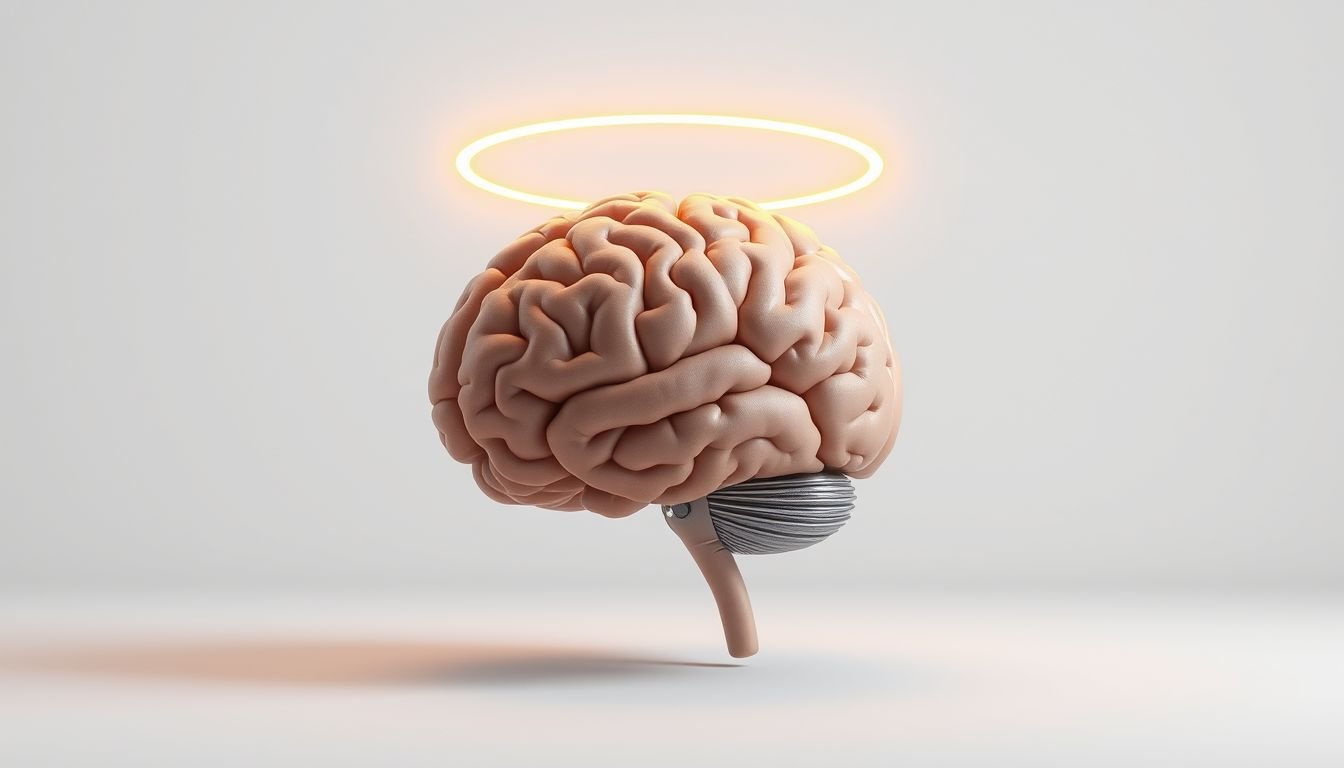

The halo effect is a cognitive bias where an individual’s overall impression of a person, product, or brand is influenced by a single positive trait, often unrelated to the task at hand. This phenomenon, scientifically known as generalized trust, acts as a mental shortcut—or heuristic—that allows the brain to process information quickly without requiring exhaustive critical thinking.
Who Came Up With the Idea of the Halo Effect?
The term was coined by psychologist Edward L. Thorndike in 1920. Through his research on military trainees, Thorndike observed that superiors often rated trainees high in multiple categories, such as intelligence and leadership, simply because they possessed a positive physical trait or physique. He found that these ratings were strongly correlated, suggesting that an initial positive impression of one trait directly influenced the evaluations of other, unrelated characteristics.
What Causes the Halo Effect?
The primary cause of the halo effect is the brain’s need to conserve energy. The human brain consumes approximately 20% of the body’s total calories despite its small size. To avoid mental fatigue and the high caloric cost of critical thinking, the brain utilizes heuristics. These subconscious shortcuts speed up decision-making and problem-solving, preventing the individual from becoming paralyzed by minor choices.
The Role of Physical Appearance
Research consistently shows that humans tend to perceive good-looking people as more trustworthy and capable. This is evident in various professional settings: news reporters are often selected based on traditional attractiveness to maintain viewership and advertising revenue. Similarly, colleagues often perceive happy employees as being more competent at their jobs than those who are unhappy.
Is the Halo Effect Scientifically Proven?
Yes, the halo effect is a scientifically proven cognitive bias. It manifests in various daily interactions and perceptions. For example, humans often perceive clothing worn by attractive models as higher quality than the same clothing worn by less attractive models. Furthermore, AI virtual assistants that communicate in a human-like manner are often perceived as more trustworthy, regardless of their actual technical accuracy.
While these shortcuts are efficient, they can lead to significant cognitive biases and the reinforcement of stereotypes. Much like how scientists explore 8 major space mysteries that scientists can’t explain to understand the universe, psychologists study these biases to understand the limits of human perception.
What is the Halo Effect in Business and Marketing?
Companies frequently leverage the halo effect to influence consumer behavior. By associating a product with positive imagery—such as a happy family—they suggest that the product brings joy or togetherness, even if the product itself has no such effect. This strategy is used to shift customer perception and drive sales.
Influence of Labeling and Packaging
A 2021 study revealed that the presence of official-looking labels on food packaging can lead consumers to assume the product is of higher quality, more sustainable, and more expensive. Interestingly, the researchers found that this occurred even when the labels had no actual meaning. This demonstrates how a single visual cue (the label) can create a a “halo” of perceived quality and value.
How to Mitigate the Halo Effect
While the brain is wired to use these shortcuts, understanding the mechanism of the halo effect allows individuals to make more informed decisions. By recognizing when a brand, person, or company is using a positive trait to influence a judgment, consumers can shift from subconscious processing to critical analysis, reducing the reliability on generalized trust.
- Avoid immediate judgments: Challenge the first impression of a person or product.
- Analyze traits independently: Evaluate characteristics separately rather than allowing one positive trait to dominate the overall perception.
- Focus on data: Prioritize concrete evidence and figures over visual or emotional appeal.