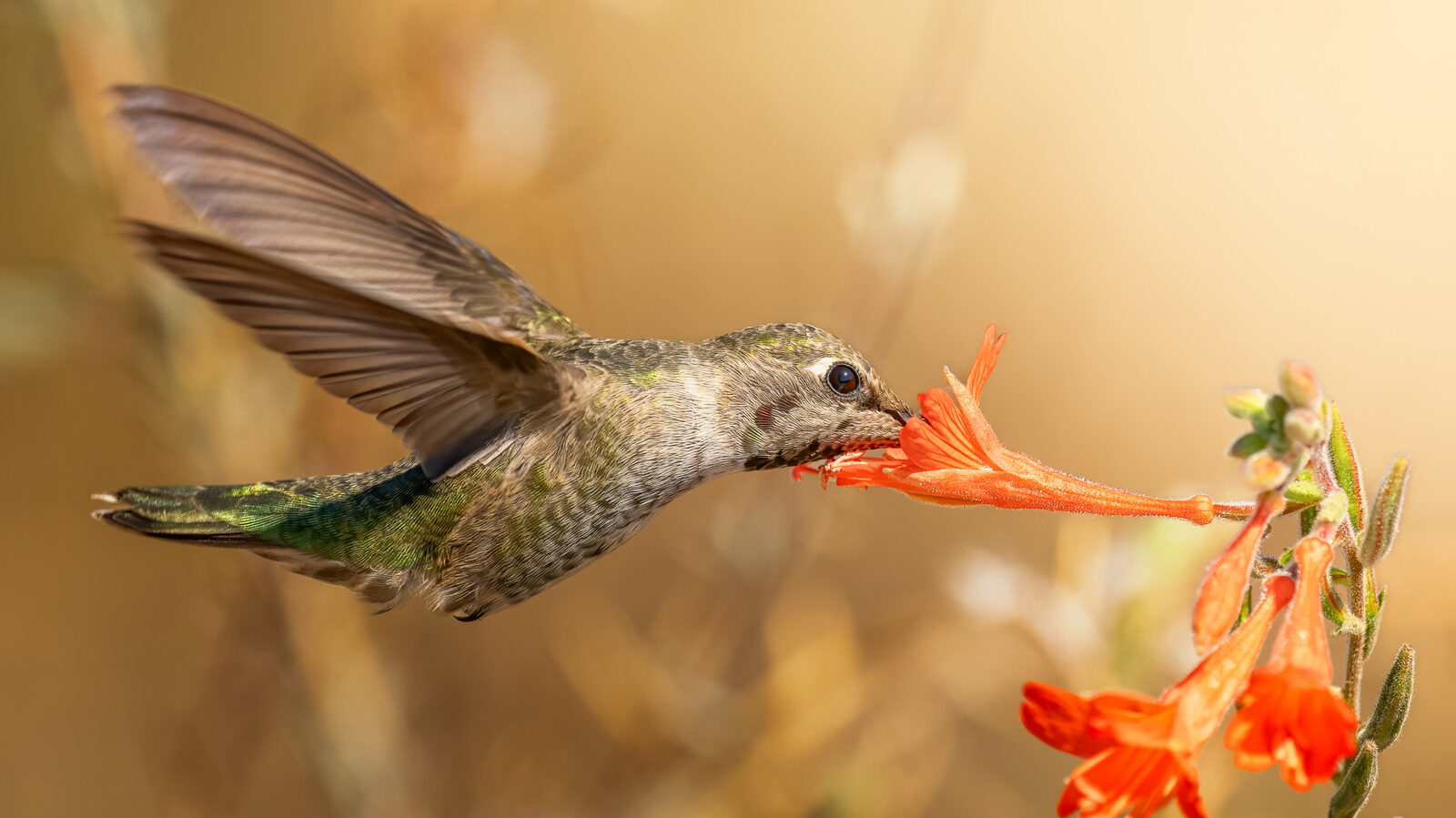

Have you ever marveled at how some birds can take to the skies with such grace? Among them, the hummingbird stands out not just for its beauty, but for its remarkable ability to hover and even fly backwards. This unique capability sets them apart from all other bird species, captivating both scientists and birdwatchers alike. Let’s delve into the fascinating world of hummingbird flight and explore the adaptations that allow them to perform this extraordinary feat.
Understanding the unique flight of hummingbirds
Hummingbirds are not just ordinary birds; they are a testament to evolution’s creativity. Descending from a lineage that includes ancient theropod dinosaurs, these tiny creatures have adapted in numerous ways that allow them to thrive in various environments. Their ability to fly backwards is a hallmark of their evolution and is supported by several physiological features.
Unlike most birds, hummingbirds possess a highly specialized structure that enables them to perform complex flight maneuvers. This includes the ability to hover in place, fly sideways, and, most impressively, fly backwards. Understanding the mechanics behind their flight can deepen our appreciation for these incredible animals.
Why birds generally cannot fly backwards
The majority of bird species are unable to fly backwards due to their muscle structure and wing design. Birds rely heavily on their wings for flight, which are powered by strong chest muscles that pull the wings downwards. This creates lift and thrust, propelling them forward.
Key factors influencing birds’ inability to fly backwards include:
- Muscle Composition: Birds typically have larger chest muscles relative to their wing muscles, which means they generate more forward thrust than backward.
- Wing Structure: The wing shape and muscle arrangement are designed to push air backward, aiding in forward flight.
- Flight Mechanism: The flapping motion of most birds is optimized for forward propulsion, making it difficult to achieve backward movement.
In summary, while many birds are equipped for efficient forward flight, their anatomical structure does not support any significant backward movement.
The remarkable adaptations of hummingbirds
Hummingbirds have evolved a number of unique adaptations that allow them to achieve their extraordinary flight capabilities. Among these adaptations are:
- Increased Muscle Mass: Hummingbirds have a higher proportion of muscle mass (25-30%) compared to other birds (around 15%), which helps in powering their rapid wing beats.
- Ball-and-Socket Joint: The shoulder joint of hummingbirds is a ball-and-socket type, which provides a greater range of motion for their wings compared to the fixed joints seen in many other birds.
- Figure-Eight Wing Motion: Their wings can move in a figure-eight pattern, allowing them to generate lift in both directions—upward and backward.
These adaptations not only aid in their ability to hover but also facilitate their unique ability to fly backwards, a skill that is critical for their feeding habits and navigation.
The mechanics behind hummingbird flight
Understanding how hummingbirds achieve flight requires a look at the mechanics involved in their wing movement. Unlike other birds that primarily use a downward flapping motion, hummingbirds can adjust their wing position to create lift while hovering. This is how they manage to fly backwards:
- Downward Stroke: During the downstroke, they push air downwards, creating an upward lift force.
- Backward Stroke: In the backward stroke of their wings, they can direct air forward, which enables them to move in reverse.
- Hovering Ability: Their ability to hover allows them to feed on nectar from flowers without needing to land, ensuring they can access food sources efficiently.
Through this intricate wing motion, hummingbirds can control their direction and speed with remarkable precision, making them one of the most adept flyers in the animal kingdom.
The ecological role of hummingbirds
Beyond their fascinating flight capabilities, hummingbirds play a critical role in their ecosystems. As they dart from flower to flower, they inadvertently participate in the pollination process, which is essential for the reproduction of many flowering plants. This ecological service supports biodiversity and helps maintain healthy ecosystems.
Key ecological contributions of hummingbirds include:
- Pollination: Hummingbirds are attracted to brightly colored flowers rich in nectar, and their feeding habits help in transferring pollen from one flower to another.
- Food Source: They serve as prey for various predators, contributing to the food web in their habitats.
- Indicators of Ecosystem Health: Changes in hummingbird populations can indicate shifts in environmental health, making them valuable indicators for conservation efforts.
By understanding the ecological significance of hummingbirds, we can better appreciate the interconnectedness of life and the importance of conserving their habitats.
Fun facts about hummingbirds
Hummingbirds are full of surprises! Here are some fun facts that highlight their uniqueness:
- Heart Rate: A hummingbird’s heart can beat up to 1,200 times per minute during flight.
- Size Variation: The bee hummingbird, the smallest species, measures just 2.2 inches in length.
- Colorful Feathers: Their iridescent feathers are not due to pigments but rather structural coloration that reflects light in vibrant ways.
- Memory: Hummingbirds have excellent memories and can remember the locations of the flowers they visit.
These facts not only showcase their fascinating biology but also highlight the importance of protecting these remarkable creatures and their habitats.