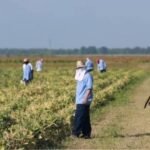

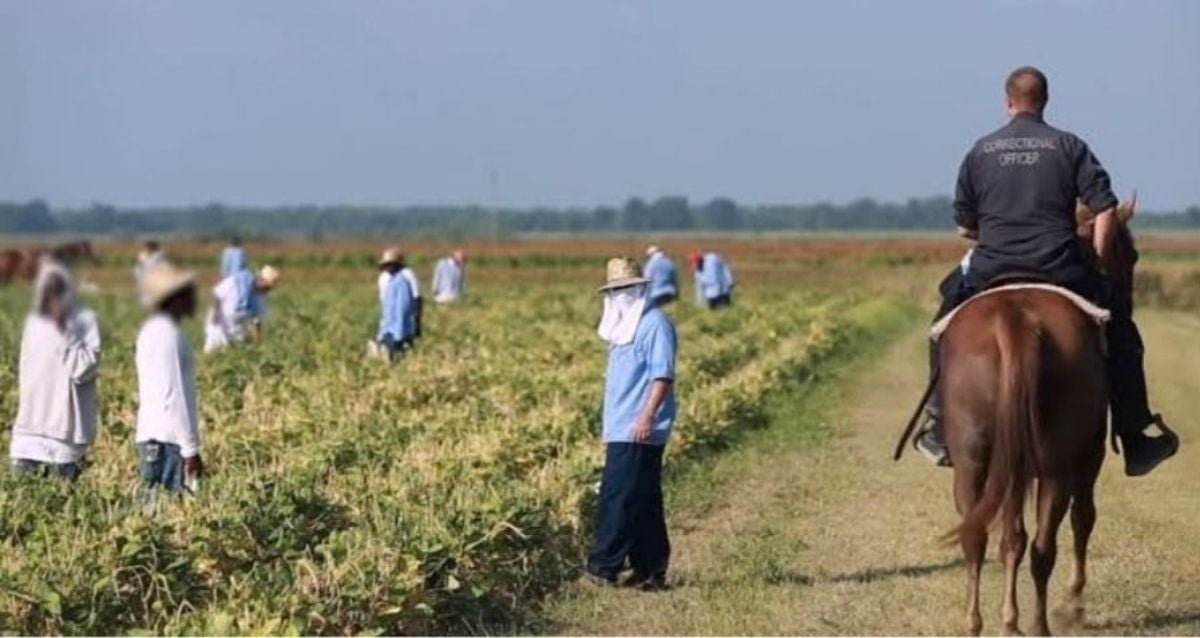
The Louisiana State Penitentiary, commonly known as Angola Prison, is the largest maximum-security prison in the United States. Established in 1901 on the site of a former plantation, the facility is known for its historical association with slavery and its continued use of agricultural labor. Spanning 18,000 acres along the Mississippi River, the prison operates as a working farm where inmates are required to perform manual labor in extreme weather conditions.
Origins and the Plantation System
The land where the penitentiary now stands was originally the Angola Plantation, owned by Isaac Franklin. Franklin enslaved approximately 100 laborers on this specific property, while owning others along the Mississippi River. The plantation was named after the African region of Angola, reflecting the origin of many of the enslaved people who worked the land.
Following Franklin’s death in 1846, the property was acquired by Samuel Lawrence James, a former Confederate officer. James expanded the land to 18,000 acres and utilized the convict lease system, leasing prisoners from the state of Louisiana to farm the land. This system proved highly profitable, and after James’ death in 1894, the state of Louisiana purchased the property to establish a formal penitentiary, which opened in 1901.
Labor and Human Rights Concerns
The transition from a plantation to a state prison did not eliminate the forced agricultural labor. Inmates spent their days picking cotton, herding cattle, and growing crops. This continuation of plantation-style labor has been described as being nearly identical to slavery. For instance, in The Life and Legend of Leadbelly, the experience of folk singer Huddie Ledbetter (Leadbelly) is detailed, illustrating the brutality of the system during the early 20th century.
Throughout the mid-century, Angola was regarded as one of the worst prisons in the United States. In 1951, 55 inmates staged a protest against brutality by cutting their own Achilles tendons, a group known as the Heel String Gang. This event was reported by the Alexandria Daily Town Talk, and led the state to consider the abolition of corporal punishment.
The Red Hat Cell Block
The Red Hat Cell Block was a solitary confinement unit known for its extreme conditions. Inmates assigned to this unit were required to wear distinctive red hats while working in the fields, marking them as targets for harsher treatment. Former inmates described the unit as a dungeon crawling with rats, with food served in buckets poured onto the floor. This unit was finally closed in the 1970s, as documented by Mother Jones.
Modern Era and Controversies
Today, the Louisiana State Penitentiary remains a working farm. Inmates continue to farm corn, soybeans, and cotton, with products sold on the open market. Despite the reform efforts under Warden Burl Cain from 1995 to 2016, the prison’s reputation for harshness remains. In September 2023, prisoners filed a lawsuit to end forced labor in the extreme heat of Louisiana summers, as reported by PBS, citing cases of heat stroke and collapses.
The labor system is a subject of intense debate. While some argue that the labor is appropriate for those serving life sentences—which accounted for 71% of the population in 2016—others argue that it is a form of cruel and unusual punishment. Inmates earn as little as two cents per hour for their work.
The Angola Prison Rodeo
One of the most controversial aspects of the facility is the Angola Prison Rodeo, held twice a year in April and October. The event features horses and cattle raised at the prison, with inmates participating in events like “Convict Poker,” where men play cards in an arena while being chased by a bull. While critics call the event inhumane, some inmates, such as Donald Cook, have found a sense of purpose in it, as noted by Mississippi Public Broadcasting.
Institutional Programs and Notable Inmates
The prison offers several inmate-led initiatives to provide alternatives to the labor fields. These include:
- The Angolite: A magazine written and edited by prisoners, available to the general public.
- FCC-Licensed Radio Station: The only prison-operated radio station in the country with an FCC license.
The facility has housed notable criminals, including the serial killer Derrick Todd Lee and the “Bayou Strangler” Ronald Dominique. The prison’s reputation for fear is such that New Orleans Mayor Ray Nagin, during the event of Hurricane Gustav in 2008, warned looters that they would be sent directly to Angola, as reported by CBS News.