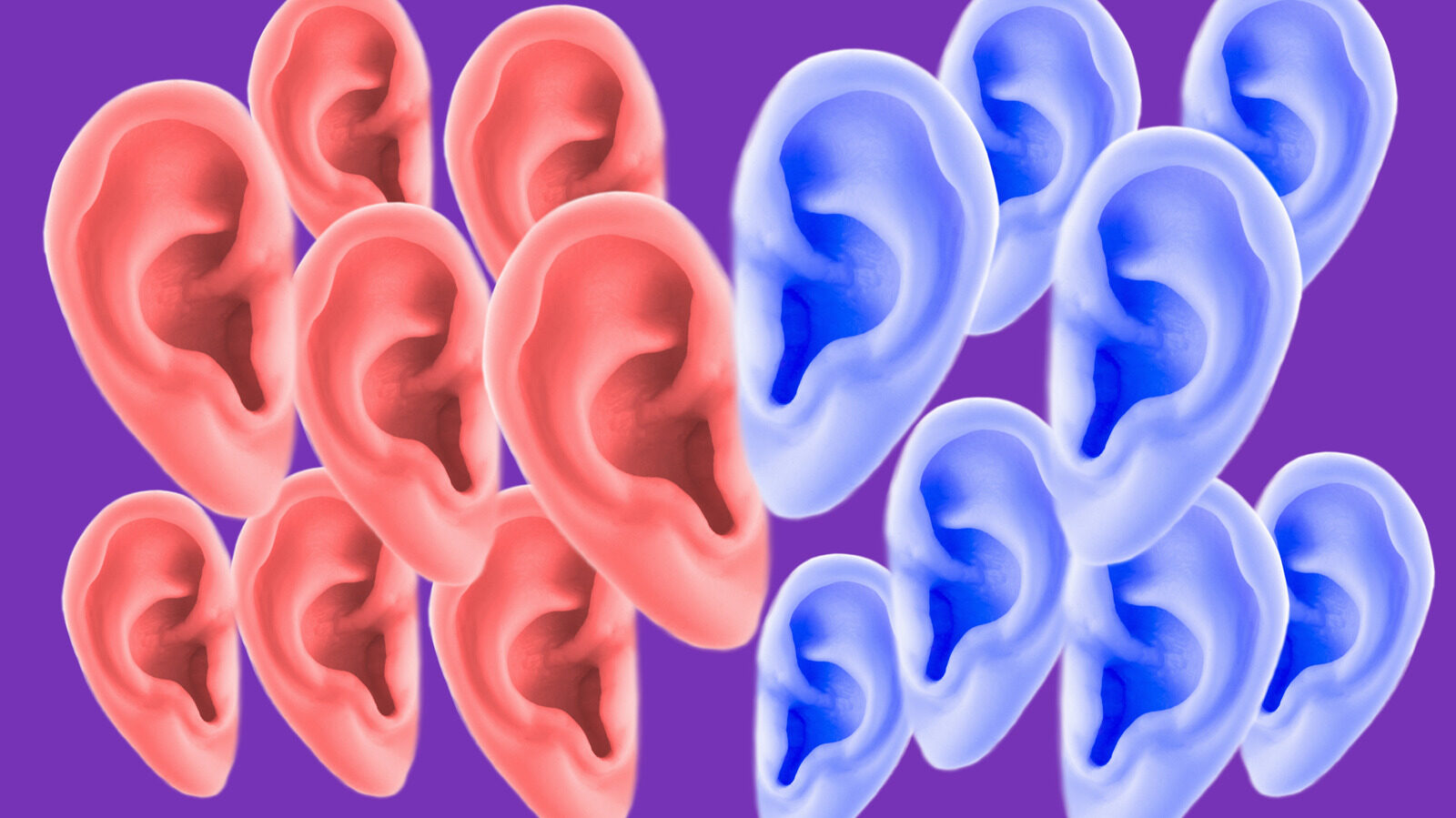
Have you ever noticed a small bump on the inner fold of your ear? This curious feature, known as Darwin’s tubercle, has intrigued biologists and anthropologists alike. While it may seem like a trivial aspect of anatomy, it offers a fascinating glimpse into our evolutionary past. Let’s explore the significance of this seemingly minor trait and what it reveals about human evolution.
Understanding Darwin’s tubercle: a unique ear feature
Darwin’s tubercle, often referred to as Darwin’s point, is a small, raised bump located on the helix of the outer ear. This feature is named after Charles Darwin, the renowned naturalist who is best known for his contributions to the theory of evolution. However, it was sculptor Thomas Woolner who first pointed out this anatomical curiosity to Darwin. Woolner proposed that this bump could be a vestigial trait—an evolutionary remnant of a once-useful structure.
In evolutionary biology, a vestigial organ is one that has lost most or all of its original function through the course of evolution. Similar examples in humans include the appendix and the wisdom teeth. Darwin’s tubercle serves as a tangible link between modern humans and our distant primate ancestors, suggesting that at one time, this feature may have had a specific purpose.
The evolutionary significance of Darwin’s tubercle
To understand why Darwin’s tubercle might have been significant in our evolutionary history, we need to consider the characteristics of early primates. The earliest members of the primate lineage were small, tree-dwelling animals similar to today’s lemurs. In these creatures, pointy ears were likely beneficial for several reasons:
- Sound directionality: Pointy ears can help funnel sounds into the ear canal, improving hearing.
- Communication: Enhanced auditory capabilities would have been crucial for social interactions among early primates.
- Predator avoidance: Being able to hear subtle sounds could help in detecting predators.
Over time, while some primate species, such as macaques and marmosets, retained pointed ears, the feature diminished in apes, including humans. This divergence raises questions about the evolutionary pressures that favored the loss of this trait. Interestingly, human ears have developed different attributes that might reflect a shift in communication strategies, particularly with the development of spoken language.
How Darwin’s tubercle fits into modern human anatomy
During the process of embryonic development, human ears form from six tissue lumps known as the hillocks of His. Darwin’s tubercle emerges specifically at the junction of the fourth and fifth hillocks. The genetic basis of this feature has long been a topic of interest among scientists. Traditionally, it was believed to be controlled by a single gene with two alleles, where the dominant allele resulted in the presence of the tubercle. However, recent studies challenge this notion.
For instance, it has been observed that:
- Approximately 40% of adults in India exhibit Darwin’s tubercle.
- Only 10.5% of adults in Spain have the feature.
- About 58% of school-aged children in Sweden possess the tubercle.
This variation indicates that the inheritance of Darwin’s tubercle is more complex than previously thought, and it remains a subject of scientific inquiry.
The current debate surrounding Darwin’s tubercle
The discussion around Darwin’s tubercle encompasses not only its evolutionary significance but also its genetic inheritance. Researchers are still trying to determine why this trait persists in certain populations and whether its presence is influenced by environmental factors or genetic drift.
Some key points in this ongoing debate include:
- The presence of Darwin’s tubercle in individuals with no family history of the trait raises questions about genetic variation.
- Identical twins may display differing features, with one having the tubercle and the other not, suggesting complex genetic interactions.
- The disparity in prevalence across different ethnic groups indicates that environmental factors may play a role in the expression of this trait.
Despite the lack of consensus among scientists, the ongoing research into Darwin’s tubercle exemplifies the complexities of human evolution and genetics.
Similar vestigial organs and their implications
Understanding Darwin’s tubercle can provide valuable insights into the concept of vestigial organs in general. Other notable examples include:
- Wisdom teeth: These molars are remnants of an ancestral diet that required more grinding power.
- Appendix: Once thought to aid in digestion, the appendix is now largely considered to have a reduced role in the modern human digestive system.
- Plica semilunaris: This small fold of tissue in the corner of the eye is a remnant of a nictitating membrane that some animals still use for protection.
Each of these vestigial traits tells a story of evolutionary adaptation, revealing how species change in response to their environments and lifestyles.
Future research directions on Darwin’s tubercle
Ongoing research on Darwin’s tubercle and similar vestigial organs continues to shed light on our evolutionary history. Future studies may focus on:
- Genetic mapping to uncover the precise inheritance patterns of Darwin’s tubercle.
- Comparative studies with other primate species to better understand evolutionary divergence.
- Investigating the impact of environmental factors on the prevalence of this trait in various populations.
As scientists delve deeper into the genetics of ear morphology, we may uncover further secrets about our past and the evolutionary paths that have shaped modern humans.