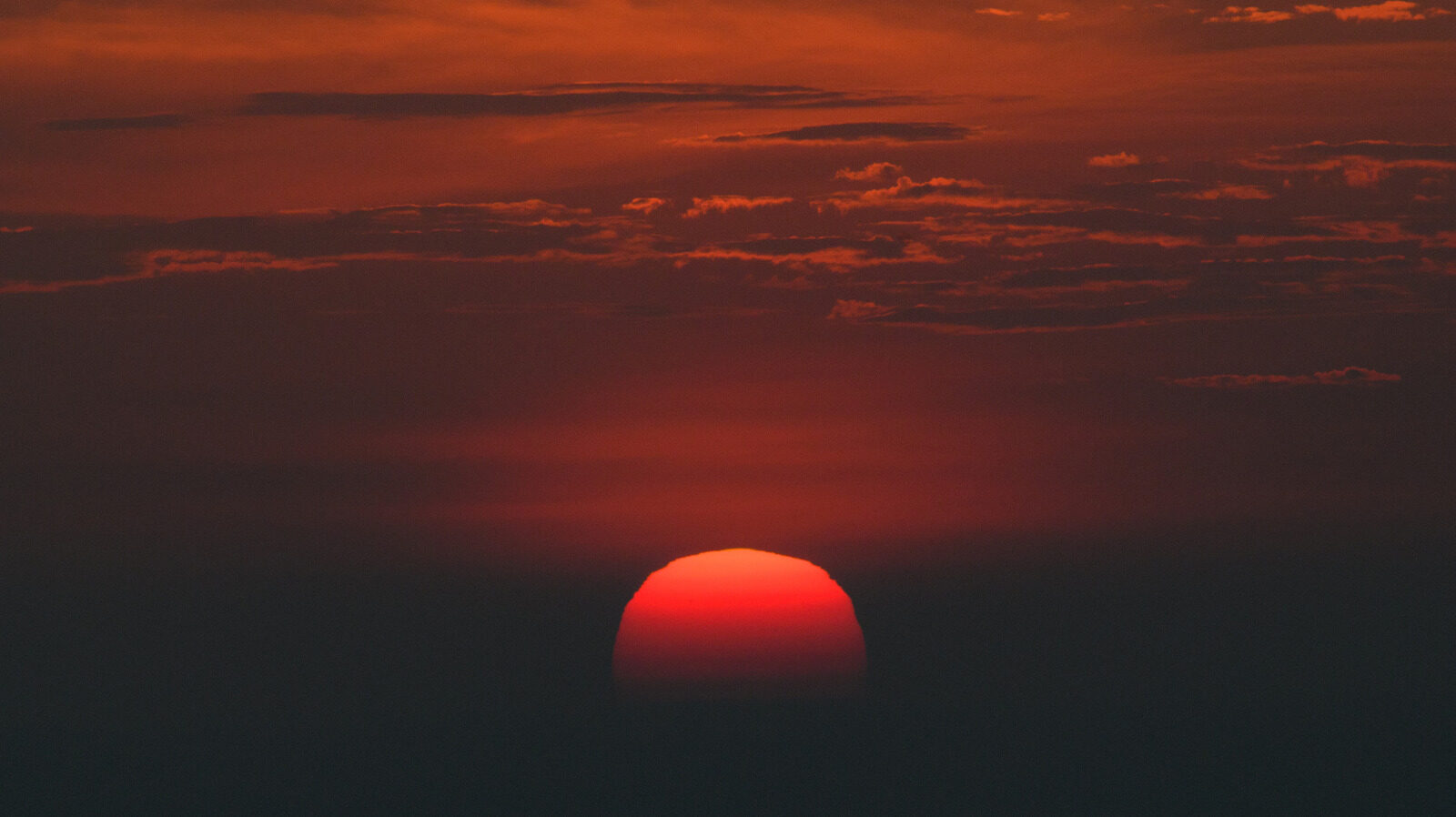
Have you ever gazed at a stunning red sunrise and wondered what it signifies? This phenomenon is often tied to age-old sayings that suggest a red sky in the morning heralds impending storms. While this might sound like folklore, there is a scientific basis to this adage that deserves exploration. Let us delve into the fascinating interplay between atmospheric conditions and the colors of our skies.
Understanding the significance of a red sunrise
The saying “Red sky at night, sailor’s delight; red sky in the morning, sailors take warning,” is well-known among mariners and land-dwellers alike. This phrase captures the essence of how sky colors can indicate weather patterns. The origins of this saying trace back to ancient times when sailors relied heavily on observations of nature for navigation and safety.
When observing a red sky, particularly at sunrise, the explanation lies in the scattering of light caused by atmospheric conditions. During sunrise, the sun’s light travels through a greater thickness of the Earth’s atmosphere, which scatters shorter wavelengths (blues and violets) and allows longer wavelengths (reds and oranges) to dominate the sky. This effect is intensified when there are particles or moisture in the air, which often signals changing weather patterns.
Moreover, the presence of a red sunrise can indicate the following weather conditions:
- High humidity: Moisture in the air can suggest that rain is on the way.
- Dust particles: Dust and pollutants can enhance the scattering effect, leading to vibrant sunrise colors.
- Approaching storm systems: A red sunrise might foreshadow the arrival of a low-pressure system.
How atmospheric pressure influences weather patterns
Atmospheric pressure plays a crucial role in shaping weather systems. It varies based on altitude, temperature, and humidity levels in a given area. Understanding these dynamics is essential for interpreting the implications of a red sunrise.
High-pressure systems are characterized by descending air that compresses and warms, often resulting in clear skies and stable weather. Conversely, low-pressure systems involve rising air that cools and condenses, potentially leading to cloud formation and precipitation.
Here’s a breakdown of how these systems interact with the color of the sky:
- High-pressure areas typically lead to sunny weather, with a red sunset indicating that such weather is on the way.
- A red sunrise can imply that a high-pressure system is retreating, making way for a low-pressure system that may bring storms.
- In mid-latitudes, weather systems generally move from west to east, enabling predictions based on the sky’s color.
The science behind the colors of the sky
The phenomenon of a red sky can be better understood through the concept of Rayleigh scattering. This is the scattering of light or other electromagnetic radiation by particles much smaller than the wavelength of the light. When the sun is low on the horizon, as during sunrise or sunset, the light has to pass through more of the Earth’s atmosphere, which scatters the shorter wavelengths and allows the longer wavelengths of red and orange to prevail.
Factors that contribute to the intensity of the colors in the sky include:
- Humidity: Increased moisture can amplify the scattering effect.
- Air quality: Pollution and dust can enhance the visibility of red hues.
- Cloud cover: Certain cloud formations can reflect sunlight and create a more vibrant display.
Limitations of the red sky adage
While the saying regarding red skies can serve as a useful guideline, it is not infallible. Weather patterns are complex, and various factors can influence outcomes. Here are some limitations to consider:
- The saying mainly applies to mid-latitude regions; its reliability diminishes near the equator or poles where wind patterns differ.
- Not all red sunrises lead to storms; other meteorological factors may counter the predictions.
- Technological advancements in weather forecasting can provide more accurate predictions than relying solely on observations of sky color.
Practical applications of understanding sky colors
For sailors, farmers, and outdoor enthusiasts, recognizing sky colors and understanding their implications can be invaluable. Here are some practical applications:
- Sailing: Mariners can interpret sky colors to navigate safely and prepare for changing weather.
- Agriculture: Farmers can make informed decisions about planting and harvesting based on weather predictions from sky observations.
- Outdoor activities: Hikers and campers can assess safety by interpreting atmospheric signs.
Conclusion
In essence, the phenomenon of a red sunrise does carry with it a wealth of information about impending weather conditions. Understanding the interplay between atmospheric pressure and sky coloration provides valuable insights that can aid in weather prediction. While the age-old sayings may hold some truth, they should be complemented with modern meteorological knowledge for the most accurate forecasts.