
Rainbows are one of nature’s most captivating spectacles, captivating the imagination of many. Among the various types of rainbows, the rare red rainbow stands out, not merely for its beauty but also for the unique atmospheric conditions required for its formation. Understanding this phenomenon not only enhances our appreciation for natural wonders but also unravels the intricate dance of light and moisture in our atmosphere.
Though rainbows are a common occurrence, red rainbows are exceedingly rare. This article delves into the science behind their formation, the conditions needed for their appearance, and the historical accounts that have fascinated both scientists and enthusiasts alike.
Understanding the different types of rainbows
Rainbows can take on various forms, each with its own unique characteristics. Here’s a brief overview of the main types:
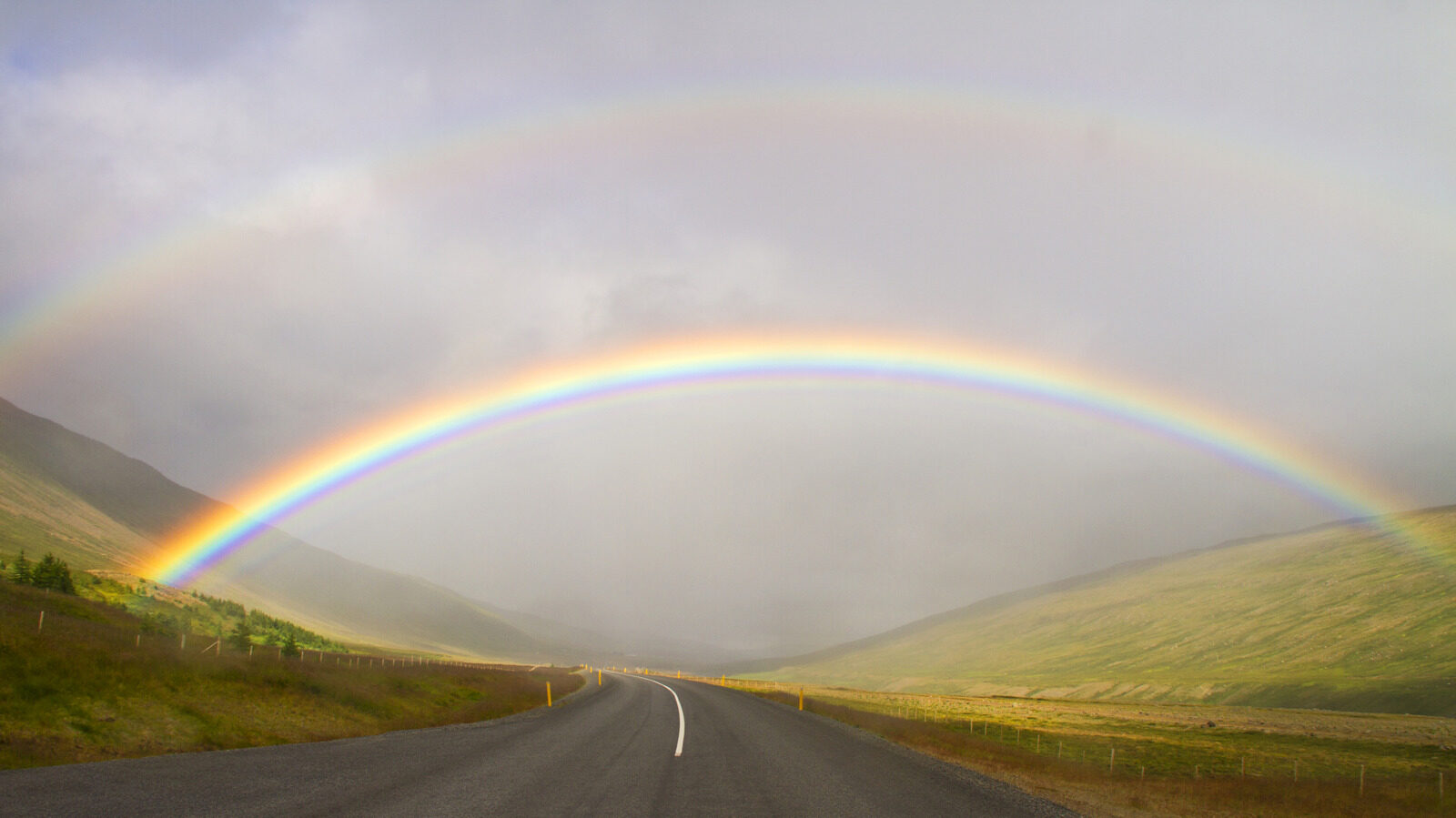
- Standard Rainbow: The familiar arc of colors seen after rain showers, created by light refraction and reflection in water droplets.
- Reflected Rainbow: Occurs when sunlight reflects off a body of water, creating a rainbow above it, often seen in lakes or ponds.
- Moonbow: A rainbow that forms at night from moonlight, typically appearing fainter and less colorful than its daytime counterpart.
- Red Rainbow (Monochrome Rainbow): A rare phenomenon consisting solely of red hues, often seen during sunrise or sunset.
While standard rainbows display a full spectrum of colors, the red rainbow is unique due to its exclusive red and orange shades. This special characteristic makes it a fascinating subject for both casual observers and scientific inquiry.
How a red rainbow forms in the sky
The formation of a red rainbow follows the same fundamental principles as a standard rainbow. However, several factors contribute to its unique appearance:
First, it’s essential to recognize that all rainbows are optical illusions. They do not exist as physical entities in the sky. Instead, their formation occurs when sunlight enters water droplets at a precise angle, typically around 42 degrees from the observer’s viewpoint. Rainbows can appear during various conditions, including:
- Rainfall
- Sea spray
- Waterfalls
- Fog
Second, the visible light spectrum is composed of different wavelengths, which produce the array of colors we see in a typical rainbow. Sunlight is a combination of all these wavelengths. When light passes through water droplets, each wavelength refracts at a distinct angle, resulting in the separation of colors that creates the arc of a rainbow.
In the case of a red rainbow, the phenomenon typically occurs during sunrise or sunset when the sun is positioned near the horizon. At these times, sunlight must traverse a greater distance through the atmosphere before interacting with the water droplets. During this journey, the shorter wavelengths of light (such as blue and violet) scatter, leaving primarily the longest wavelengths, which are red and orange, to reach the observer’s eye. This selective scattering results in the monochromatic appearance of the rainbow.
Historical accounts of red rainbows
The rarity of red rainbows has made them a point of interest throughout history. One notable account comes from physicist Silvanus P. Thompson, who described witnessing a stunning red rainbow over Lake Lucerne in Switzerland during a sunset in 1877. His observations highlighted the stunning visual effect of the rainbow against a backdrop of vibrant red hues in the sky.
Such instances have led to various cultural interpretations. In many traditions, rainbows are seen as symbols of hope and promise, but the red rainbow, due to its rarity, often carries additional significance. It is viewed as a special omen or a unique blessing, further fueling interest in its study.
Conditions necessary for observing red rainbows
Given their rarity, several specific conditions must align for a red rainbow to be visible:
- Time of Day: Red rainbows are predominantly observed at sunrise or sunset.
- Atmospheric Conditions: Presence of rain or moisture in the air is crucial.
- Location: An unobstructed view of the horizon aids visibility.
- Angle of Sunlight: The sun must be low in the sky to create the necessary light conditions.
These factors combine to create a unique scenario where the atmospheric conditions align perfectly, making the sighting of a red rainbow a rare treat for those fortunate enough to witness it.
Scientific significance of red rainbows
The study of red rainbows extends beyond mere aesthetics. Understanding their formation offers insights into atmospheric science, including light behavior, weather patterns, and the interactions between light and water. Here are a few scientific aspects to consider:
- Light Refraction: Examining how light bends when entering different mediums helps in understanding optical phenomena.
- Weather Patterns: The conditions that lead to red rainbows can indicate specific weather changes, enhancing forecasting accuracy.
- Color Theory: The monochromatic nature of these rainbows challenges our understanding of color perception and the human eye’s response to light.
Red rainbows, while visually stunning, serve as a reminder of the intricate relationships between light, water, and atmospheric conditions. Their rarity invites both admiration and scholarly investigation, making them a fascinating topic for anyone interested in the wonders of our natural world.