

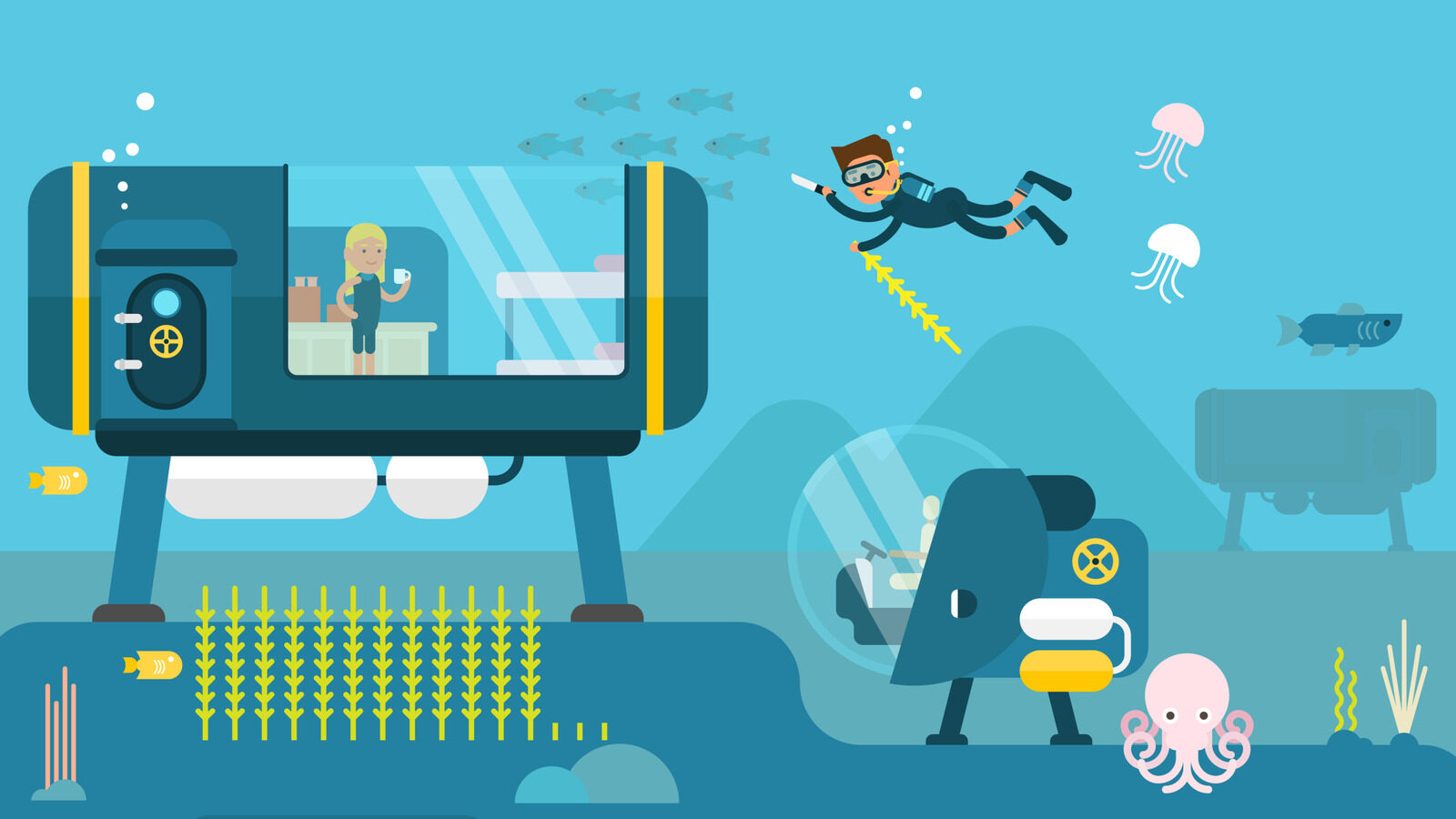
Have you ever wondered what it would be like to live beneath the waves? The mysteries of underwater life are not just confined to marine biology; they extend to human physiology and health as well. Recent studies have shown that living underwater can have remarkable effects on the human body, leading to intriguing questions about longevity and overall well-being. Let’s dive deeper into this fascinating subject.
Effects of prolonged underwater living on the human body
The human body is a marvel of evolution, adapting continuously to its environment. However, most adaptations have occurred in relation to terrestrial life, making our responses to extreme conditions like living underwater particularly interesting. The underwater environment poses unique challenges, including increased pressure, reduced light, and variations in temperature and oxygen availability.
In 2023, Joseph Dituri, also known as Dr. Deep Sea, embarked on an ambitious project to understand these effects better. He lived in the Jules’ Undersea Lodge, located off the coast of Key Largo, at a depth of 22 feet for an astounding 100 days. His goal was to break the previous record of 73 days while studying how hyperbaric pressure could impact human health.
Dituri’s initial findings were surprising. While he did experience a reduction in height by about one inch, his health metrics showed significant improvement:
- Reduction in inflammation markers
- Lower cholesterol levels
- Improved sleep quality
Most intriguingly, after analyzing his blood samples, researchers found that his DNA appeared biologically younger. This led to the hypothesis that increased pressure from living underwater may offer protection against age-related diseases.
Understanding hyperbaric pressure and its implications
Hyperbaric pressure refers to the increased atmospheric pressure experienced underwater. For every 10 meters (about 33 feet) of water, the pressure increases by approximately one atmosphere. This unique environment engages various physiological mechanisms in the human body, some of which may have beneficial effects.
One of the most notable changes involves the circulatory and respiratory systems. Under hyperbaric conditions, oxygen becomes more soluble in the blood, allowing for greater oxygen delivery to tissues. This effect can enhance recovery processes and promote healing in various conditions.
Moreover, hyperbaric environments have shown potential in:
- Reducing inflammation
- Enhancing wound healing
- Improving cognitive function
- Boosting stem cell production
Dituri’s research aligns with these findings, suggesting that living underwater could activate biological processes that promote health and longevity.
Hyperbaric chambers as a tool for anti-aging
Hyperbaric chambers mimic the conditions experienced underwater, providing a controlled environment for therapeutic applications. In recent years, these chambers have gained attention for their potential anti-aging properties. During an interview, Dituri explained how hyperbaric conditions can influence telomeres, the protective caps on chromosome ends that shorten as cells divide. When telomeres become too short, cellular replication ceases, leading to aging and cell death.
Research indicates that:
- Hyperbaric exposure can lengthen telomeres, potentially extending cellular life.
- After Dituri’s underwater experience, his telomeres were found to be longer than average.
- He had a 50% reduction in inflammatory markers and 17 times more stem cells than before.
Although more extensive research is needed to establish these effects conclusively, preliminary studies support the idea that hyperbaric oxygen therapy can enhance health and potentially reverse the aging process.
Current applications and future possibilities of underwater living
While Dituri’s study provides exciting insights, the implications of living underwater extend beyond individual experiments. The use of hyperbaric chambers for treating various medical conditions is already established, including:
- Post-traumatic stress disorder (PTSD)
- Traumatic brain injuries
- Chronic non-healing wounds
However, access to hyperbaric therapy can be limited due to its cost and the need for medical supervision. In the meantime, advancements in underwater habitats may provide new avenues for research and exploration. For example, the engineering firm Deep is set to launch the Sentinel oceanic habitat system in 2026. This innovative system could allow scientists to live at depths of up to 656 feet for extended periods, opening new frontiers in underwater research.
For those curious about underwater living, experiences like Dituri’s at the Jules’ Undersea Lodge offer a unique glimpse into life beneath the ocean’s surface. Interested individuals can book a stay for an unforgettable adventure.
Potential health benefits of underwater environments
Living underwater might seem daunting, but the potential health benefits are intriguing. Some of the advantages associated with long-term underwater exposure include:
- Increased oxygenation of tissues
- Enhanced metabolic processes
- Improved cardiovascular health
- Greater resilience against stressors and illnesses
As research in this area progresses, we may uncover more about how underwater living can not only change our bodies but potentially enhance our quality of life.
Understanding the science behind underwater living
The biological impact of prolonged underwater living is a multi-faceted topic that combines elements of biology, medicine, and environmental science. As we continue to explore this uncharted territory, researchers are uncovering how the human body can adapt to extreme environments, offering valuable insights into health and longevity.
Joseph Dituri’s 100-day challenge offers a glimpse into the future of human health in extreme conditions. While we await more thorough research, the implications are clear: living underwater may not only reshape our physical well-being but also change our understanding of what it means to age. As we further explore these realms, the ocean may reveal secrets that could help us live healthier, longer lives.