
When we think of plants, images of green leaves, vibrant flowers, and photosynthesis come to mind. However, the natural world is filled with astonishing exceptions that defy these norms. One of the most peculiar examples is the Rafflesia arnoldii, a plant renowned for its gigantic size and notoriously foul odor. This fascinating organism not only challenges our understanding of botanical life but also raises critical concerns about its survival in the face of human encroachment. Let’s delve deeper into the world of the Rafflesia, exploring its life cycle, peculiarities, and the urgent need for conservation.
The life cycle of Rafflesia: a remarkable journey
The life cycle of Rafflesia arnoldii is as extraordinary as its appearance. While the flower itself can grow to a diameter of over three feet, its seed is minuscule, comparable to a speck of sawdust. From this tiny seed, a complex and fascinating process unfolds.
Initially, the seed germinates and produces a series of tendrils that extend into the host plant. This parasitic relationship requires that the Rafflesia seed comes into contact with a specific host, belonging to the Tetrastigma genus, which is part of the grape family. The Tetrastigma species are crucial for the growth of Rafflesia, as they provide necessary nutrients and water.
Some aspects of the Rafflesia life cycle include:
- Seed Germination: The seed must come into contact with a Tetrastigma vine to germinate.
- Tendrils Development: From the seed, tendrils emerge, often less than a millimeter wide, which can grow over 30 feet long.
- Growth Period: The plant can remain dormant for months or even years before producing a visible bud.
- Flowering: After a period of 6 months to 1.5 years, the bud develops into a mature flower that emits a strong odor.
- Short Lifespan: The flower blooms for about one week before decomposing, marking the end of the individual plant’s life.
This astonishing process of parasitism showcases the intricate balance between the Rafflesia and its host plant. Despite being one of nature’s most extreme parasites, the Rafflesia’s life cycle remains a subject of scientific intrigue.
Why Rafflesia smells like rotting flesh
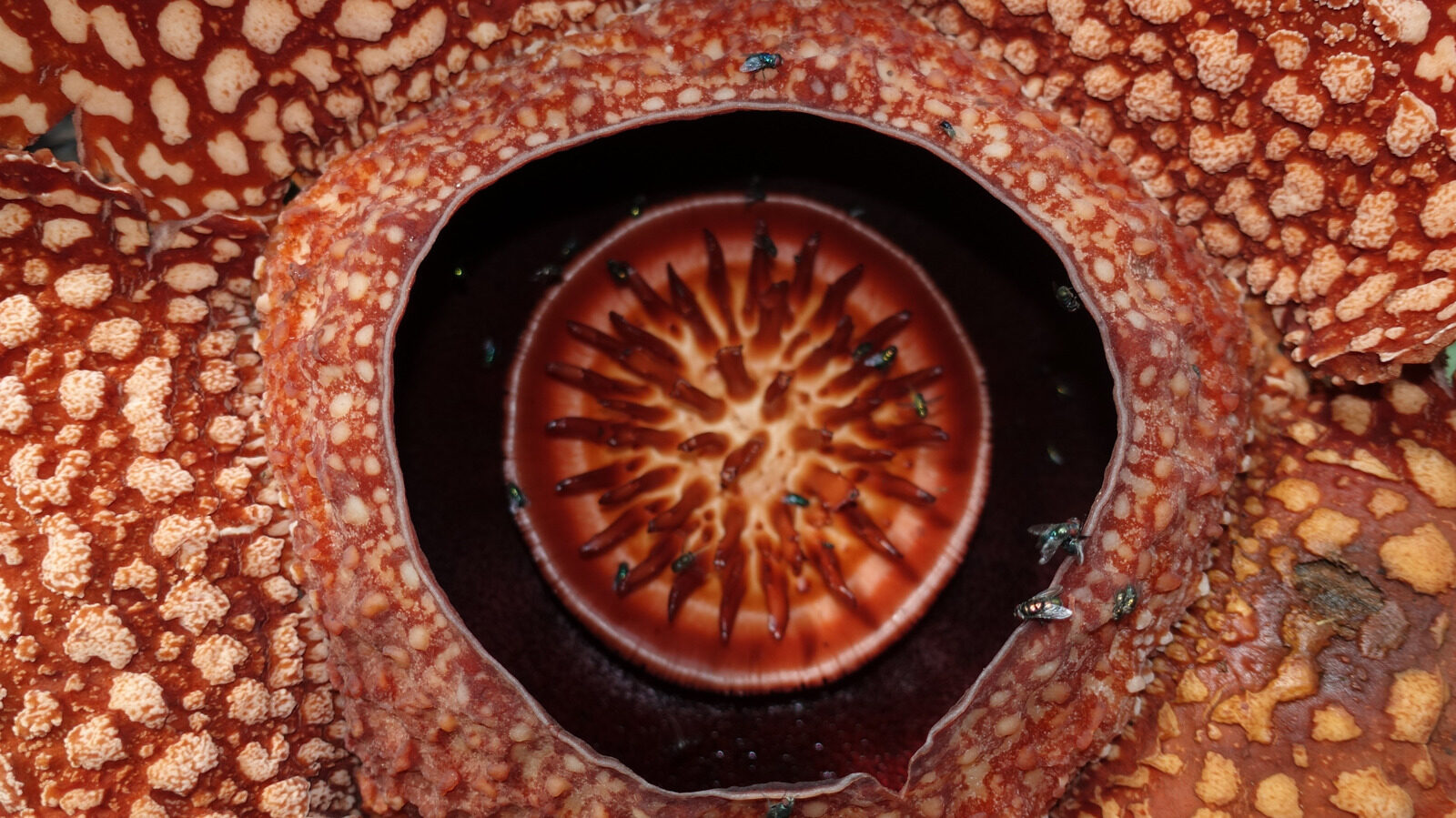
The notorious odor of Rafflesia, often likened to that of decaying meat, serves a specific purpose in its reproductive strategy. To attract pollinators, primarily carrion flies, the flower emits this pungent scent, which mimics the smell of rotting flesh.
Pollinators, particularly those attracted to decaying matter, play a crucial role in the reproduction of Rafflesia. The flower’s appearance, featuring a bumpy, crimson texture, further enhances its appeal to these insects, resembling the visual cues of decaying animal remains. This relationship can be summarized as follows:
- Odor Production: The flower secretes volatile compounds that mimic the smell of decomposing flesh.
- Attracting Pollinators: Carrion flies are drawn to the scent, mistaking it for a source of food.
- Reproductive Success: Upon visiting the flower, the flies inadvertently transfer pollen, facilitating fertilization.
This evolutionary adaptation is a prime example of how plants can exploit animal behaviors to ensure their survival, even in the most unconventional ways.
The conservation challenges facing Rafflesia
Despite its unique adaptations and fascinating life cycle, Rafflesia is not immune to environmental threats. All 42 known species of Rafflesia are classified as threatened, with a significant number facing critical endangerment. The major factors contributing to this predicament include:
- Deforestation: The destruction of tropical rainforests, primarily for agricultural and urban development, has severely diminished their natural habitat.
- Poaching: The extraction of Rafflesia plants for their supposed medicinal properties and aphrodisiac qualities has increased their vulnerability.
- Habitat Fragmentation: The isolation of individual plants hampers their ability to reproduce, as they require proximity between male and female flowers to facilitate pollination.
Conservationists face a daunting challenge in preserving these remarkable plants. Efforts to breed Rafflesia in captivity have proven complex due to their specific ecological requirements, making habitat preservation a critical priority. Protecting the rainforests where these plants thrive is essential for their survival.
The role of Rafflesia in its ecosystem
Rafflesia doesn’t just exist as an anomaly; it plays a significant role in its ecosystem. By attracting various insects, it contributes to the pollination of other plants in the rainforest, thus maintaining biodiversity. Additionally, its unique lifecycle and parasitic nature can influence the growth dynamics of Tetrastigma vines, which in turn impacts the overall health of the forest.
Understanding the ecological importance of Rafflesia can help foster a greater appreciation for these extraordinary plants and the intricate web of life they are a part of. Some ways in which Rafflesia contributes include:
- Pollinator Attraction: By luring specific insects, Rafflesia aids in the broader pollination process within its habitat.
- Food Source: The decomposition of Rafflesia after blooming provides nutrients back to the soil.
- Indicator Species: The health of Rafflesia populations can serve as an indicator of ecosystem health and biodiversity.
Preserving Rafflesia is not only crucial for its survival, but for the wider ecological balance of the rainforest ecosystems where it resides.
Rafflesia: conservation efforts and awareness
As we look towards the future of Rafflesia, it is imperative that awareness and conservation efforts be amplified. Educational initiatives can play a crucial role in ensuring that people understand the importance of these plants and the threats they face. Some strategies that can be employed include:
- Community Engagement: Involving local communities in conservation efforts can enhance protection strategies.
- Research Funding: Increased funding for research can facilitate better understanding and conservation methods for Rafflesia.
- Protected Areas: Establishing and enforcing protected areas where Rafflesia can thrive without human interference.
By fostering a sense of responsibility and stewardship towards these remarkable plants, we can ensure that future generations have the opportunity to marvel at the wonders of the natural world, including the extraordinary Rafflesia.