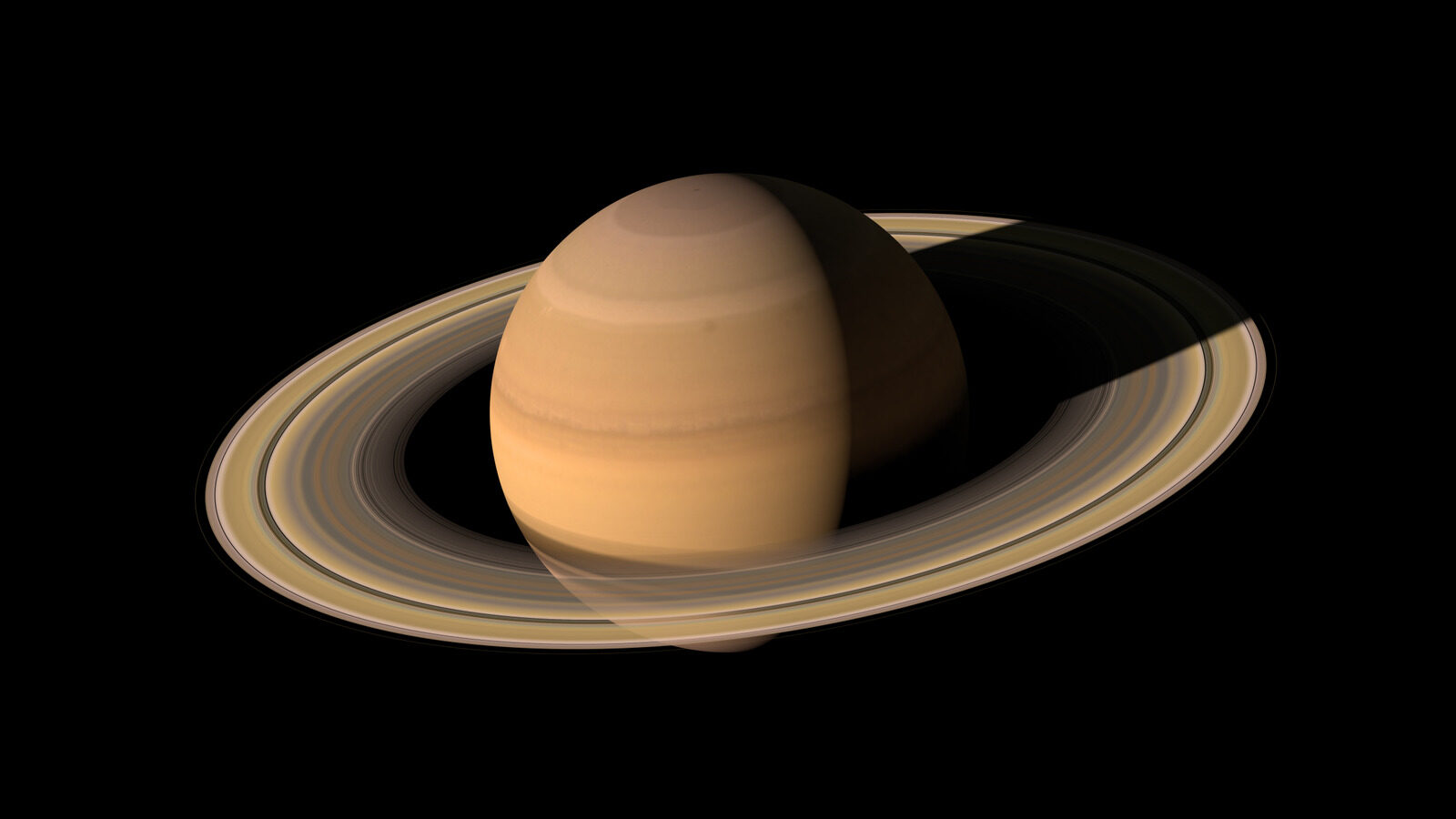
Imagine witnessing a celestial event that has captivated astronomers for centuries. The possibility of an impact on the gas giant Saturn, a spectacle only dreamt of until now, raises profound questions about our understanding of planetary science. What does this mean for the study of impacts in our solar system?
On July 5, 2025, Mario Rana, a researcher at NASA’s Langley Research Center, recorded a video that could potentially depict such a rare event. This moment not only excites astronomers but also opens a window into the dynamics of our solar system and the history of planetary impacts.
Understanding the significance of impact events on gas giants
Impacts on gas giants like Saturn are not just a matter of curiosity; they are critical to understanding the evolutionary processes of these massive planets. Unlike terrestrial planets, gas giants do not have a solid surface, making the observation of impact events particularly challenging.
While Earth is subject to various impacts from asteroids and comets on a daily basis, most of these objects disintegrate in the atmosphere. However, when larger bodies collide with a planet, the results can reshape geological and environmental landscapes. For gas giants, the invisible nature of their atmospheres adds layers of complexity to these occurrences. Here’s why scientists are particularly interested in these events:
- Rarity of Observations: Major impacts are uncommon, especially on gas giants, due to their thick atmospheres that obscure direct observation.
- Historical Significance: Past impacts on Earth have led to significant biological and climatic changes, making similar events on other planets worthy of study.
- Planetary Dynamics: Understanding how impacts affect gas giants can provide insights into their formation and current atmospheric conditions.
- Impact Frequency: Events involving large objects may occur much less frequently than initially believed, which adds to the intrigue of any observed collision.
The mechanics of impact events on Saturn
Saturn, predominantly composed of hydrogen and helium, has a unique atmospheric structure that complicates the study of impact events. Unlike rocky planets that bear scars from collisions, Saturn’s gaseous envelope makes it difficult to identify the aftermath of such impacts. However, the rings of Saturn can provide vital clues.
These rings are not just beautiful; they are dynamic environments that respond to impacts. Astronomers observe ripples and disturbances in the rings that indicate where smaller objects have collided with the planet or its ring system. This behavior can inform scientists about the frequency and scale of impacts:
- Small Object Impacts: Most visible disturbances are caused by smaller meteoroids entering Saturn’s atmosphere, which can create bright flashes in the rings.
- Larger Impacts: Events involving larger bodies, like asteroids, are infrequent but can lead to significant changes in the ring structure.
- Regional Studies: By analyzing specific regions of the rings, astronomers can correlate disturbances with potential impact events.
Recent observations and their implications
The recent video footage captured by Mario Rana represents a significant moment in planetary science. If verified, it would mark the first time an impact event has been recorded on Saturn. This observation could provide groundbreaking insights into what happens during such events:
- Data Collection: The footage prompts a global call for data, urging both professional and amateur astronomers to submit their observations from the same timeframe.
- Collaboration: This event showcases the power of collaborative efforts in astronomy, where various research entities come together to investigate a singular occurrence.
- Future Research: If confirmed, it could lead to deeper studies regarding the frequency of impacts on gas giants and their implications for planetary evolution.
The statistical rarity of impact events
A study published in January 2025 in the journal Astronomy and Astrophysics highlights the statistical rarity of significant impacts on Saturn. The research indicates that objects with a diameter of one kilometer or larger may collide with Saturn once every 3,125 years. This estimation elevates the status of the July 2025 event, suggesting it could be a historic observation rather than a common occurrence.
Understanding these statistics is vital for astronomers as they attempt to model the impact history of gas giants. The implications of this data extend beyond Saturn, influencing theories about other gas giants in our solar system and beyond.
The role of technology in detecting impacts
The advancement of technology has played a critical role in the potential discovery of impact events on planets like Saturn. Programs such as DeTeCt utilize sophisticated software that analyzes light patterns and disturbances in planetary atmospheres, allowing researchers to detect impacts that might otherwise go unnoticed.
These technological advancements have opened new avenues for research, enabling a more detailed understanding of celestial mechanics:
- Real-time Analysis: Enhanced observational capabilities allow for immediate data collection and analysis during potential impact events.
- Global Collaboration: Researchers worldwide can contribute to data collection, enriching the findings with diverse perspectives and tools.
- Predictive Models: Improved data collection aids in developing models that predict potential future impacts, enhancing planetary defense strategies.
Looking ahead: The future of planetary impact research
The potential impact on Saturn is a reminder of the dynamic processes occurring in our solar system. As astronomers continue to analyze the footage and gather more data, we stand on the brink of breakthroughs that could redefine our understanding of gas giants and their histories.
This event highlights the importance of continuous observation and collaboration in astronomy. As technology evolves, so too does our capability to explore and understand the cosmos. The implications of recent findings will likely influence research agendas for years to come, as scientists strive to decode the mysteries of planetary impacts and their consequences.