Have you ever wondered what sounds might echo through the cosmos? While it’s a well-known fact that sound cannot travel in the vacuum of space, advancements in technology have allowed us to translate various celestial phenomena into audible sounds. From the eerie chirps of black holes merging to the rhythmic ticking of pulsars, the universe is indeed a symphony of fascinating sounds waiting to be explored. Let’s dive into some of the most bizarre recordings scientists have made from space.
Black holes merging: the symphony of the cosmos
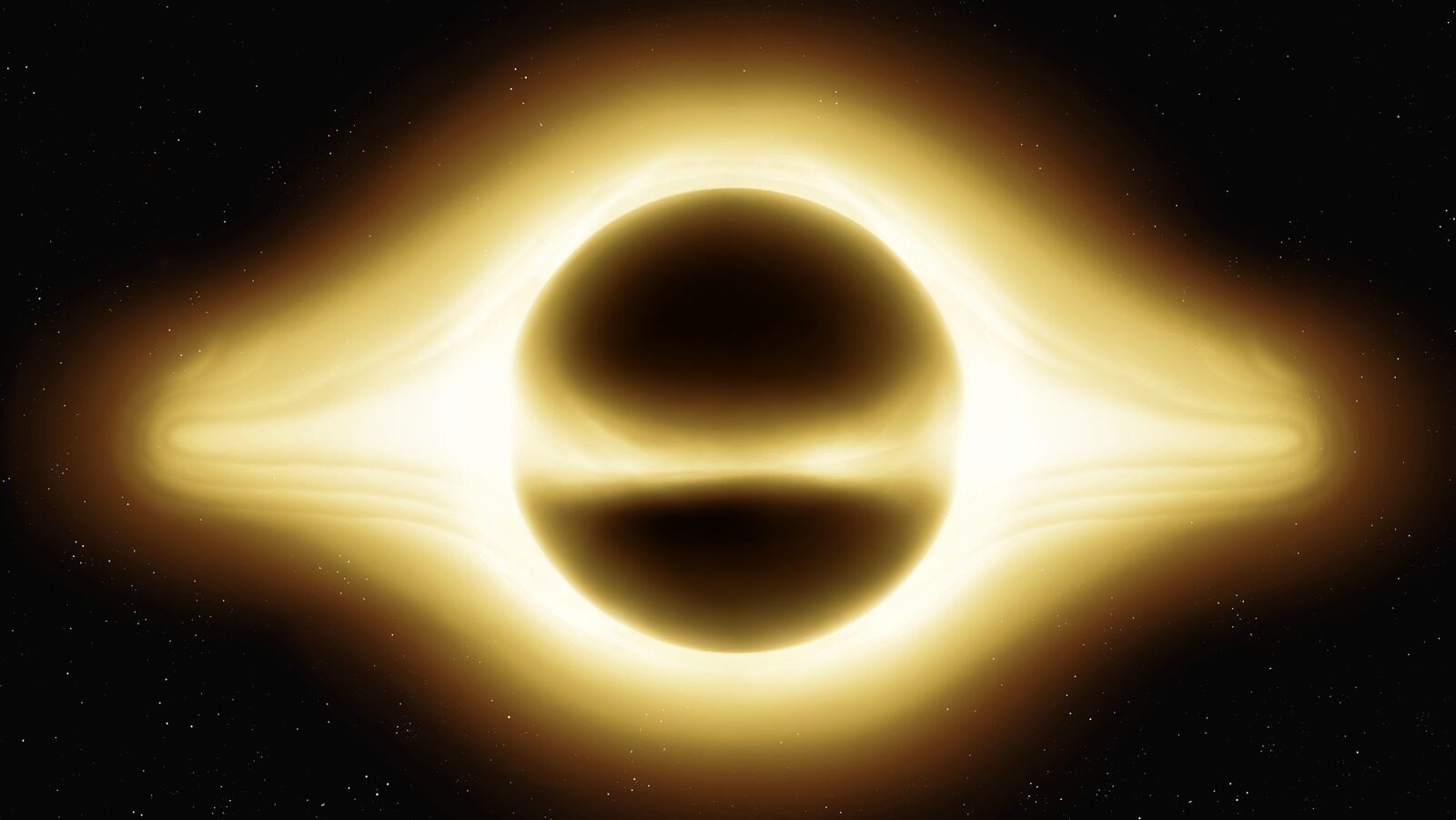
Black holes, those enigmatic entities in the universe, are known for their ability to consume everything in their vicinity, including light. Interestingly, when two black holes collide, one might expect a cacophony of sound akin to a cosmic explosion. However, due to the vacuum of space, the reality is quite different.
In 2015, scientists at LIGO Labs made a groundbreaking discovery when they detected gravitational waves generated by the collision of two black holes located 1.3 billion light-years away. These waves were converted into sound waves, producing a unique auditory experience referred to as a “chirp.” This brief yet significant sound signifies the merging of these colossal entities, marking a major milestone in astrophysics and our understanding of the universe.
For astrophysicists, this discovery was monumental. Not only did it provide insights into the nature of black holes, but it also opened new avenues for understanding gravitational waves—a phenomenon predicted by Einstein’s theory of relativity. The ability to “hear” such events allows scientists to gather invaluable data about the universe’s most violent occurrences.
Sounds of Jupiter’s magnetosphere during Ganymede flyby
When it comes to cosmic noise, Jupiter, the largest planet in our solar system, does not disappoint. During a flyby of Ganymede, its largest moon, the Juno spacecraft recorded sounds from Jupiter’s magnetosphere. These sounds, akin to a garbled message from a sci-fi movie, consist of high-pitched chirps and beeps that change frequency as the spacecraft enters different regions of the magnetosphere.
These emissions are unique because Ganymede possesses its own magnetosphere, making it the only moon known to have one. The interplay of magnetic fields between Jupiter and Ganymede creates a distinctive auditory landscape that has captivated scientists. Understanding these sounds helps researchers learn more about the complex magnetic interactions in our solar system.
Solar winds: the invisible force of the sun
While the term “solar winds” might evoke thoughts of a gentle breeze, the reality is far more intense. Solar winds are streams of charged particles, primarily protons and electrons, emitted from the sun at speeds reaching up to 1 million miles per hour. Surprisingly, even though these winds are incredibly powerful, we cannot hear them in the traditional sense due to the vacuum of space.
The Parker Solar Probe, a spacecraft designed to study solar winds, has successfully detected these particles and converted them into sound waves. The result is a hauntingly eerie series of whooshing noises and whistling sounds, reminiscent of a suspenseful sci-fi movie. Despite their eerie quality, these sounds are merely a byproduct of the solar winds interacting with the magnetic fields of nearby planets, including Earth.
- Solar winds can cause auroras on Earth and other planets.
- They can lead to power blackouts if they interfere with Earth’s magnetic field.
- The sounds recorded by the Parker Solar Probe help scientists understand the solar environment better.
Voyager 1: hearing interstellar space
Launched in 1977, Voyager 1 embarked on a historic journey through our solar system, capturing invaluable data along the way. In 2012, it made a significant leap into interstellar space, breaking free from the sun’s gravitational influence. During this journey, Voyager 1 recorded plasma waves, which scientists were able to convert into sound, allowing us to hear the “sounds” of interstellar space for the first time.
The frequency and pitch of these sounds vary according to the gas they traverse, serving as a cosmic indicator of Voyager 1’s location. In 2013, the recorded sounds confirmed that the spacecraft had indeed exited the heliosphere, with frequencies increasing nearly tenfold. As Voyager 1 and its twin, Voyager 2, continue to send data from billions of miles away, they provide us with a unique auditory glimpse into the vastness of interstellar space.
Saturn’s radio emissions: the dance of magnetism
Saturn, a gas giant nearly ten times larger than Earth, possesses a powerful magnetic field. In 2017, NASA’s Cassini spacecraft recorded electromagnetic waves produced between Saturn and its moon, Enceladus. This moon regularly ejects water and has a fascinating relationship with Saturn’s magnetic field.
As Cassini approached its final moments before entering Saturn’s atmosphere, it captured plasma waves that were converted into sound. The resulting audio resembles an eerie ’80s synth-pop track filled with mysterious whistles and electronic beats. By studying these recordings, scientists gain insights into Saturn’s magnetosphere and its interactions with its numerous moons.
Pulsars: the ticking of cosmic clocks
Pulsars, remnants of massive stars that have undergone supernova explosions, are some of the most fascinating objects in the universe. These neutron stars rotate at incredible speeds, emitting beams of electromagnetic radiation that can be detected on Earth as rhythmic pulses. This ticking can be likened to a cosmic metronome, providing scientists with precise measurements for various astronomical phenomena.
Detected by large radio telescopes, the pulsar signals are transformed into audible ticking sounds. These signals not only enhance our understanding of the universe but also serve as incredibly accurate cosmic clocks, allowing researchers to conduct further studies in deep space.
The flipping of Earth’s magnetic fields: a historical sound
Earth’s magnetic field is not static; it has flipped its polarity many times throughout history. The last complete flip occurred approximately 780,000 years ago, but a temporary event known as the Laschamp event took place around 41,000 years ago. Researchers from Denmark and Germany have recreated the sounds that likely accompanied this event. The result sounds like a large wooden object creaking or folding in on itself, with a hauntingly melodic backdrop.
This reconstruction, while not a direct recording, offers crucial insights into how magnetic forces interact with celestial bodies. Understanding these past events helps scientists predict future magnetic field changes, which could impact life on Earth.
Chorus radio waves: Earth’s symphony
Earth itself is constantly producing sounds through what are known as chorus waves. These magnetic waves surge through Earth’s plasma, particularly during intense space weather events. Detected by the Van Allen probes, these waves have been converted into audible sound, creating a delightful auditory experience reminiscent of a blend between birdsong and whale song.
While these chorus waves sound pleasant, they also pose potential dangers. Intense storms can lead to high radiation levels, impacting satellites and spacecraft operating in Earth’s atmosphere. By studying these recordings, astrophysicists can better anticipate and mitigate the risks associated with these cosmic phenomena.
The sun’s oscillations: the heartbeat of a star
As the largest object in our solar system, the sun generates a cacophony of sound that, fortunately for us, we do not hear. The oscillations on the sun’s surface result in noise levels equivalent to a loud tractor. These solar oscillations are pressure waves that scientists have measured and converted into frequencies detectable by the human ear.
By accelerating these waves 42,000 times, they create a rhythmic hum that represents the cosmic heartbeat of our sun. Understanding these oscillations provides scientists with insights into the processes occurring within our sun, shedding light on its behavior and its influence on the solar system.