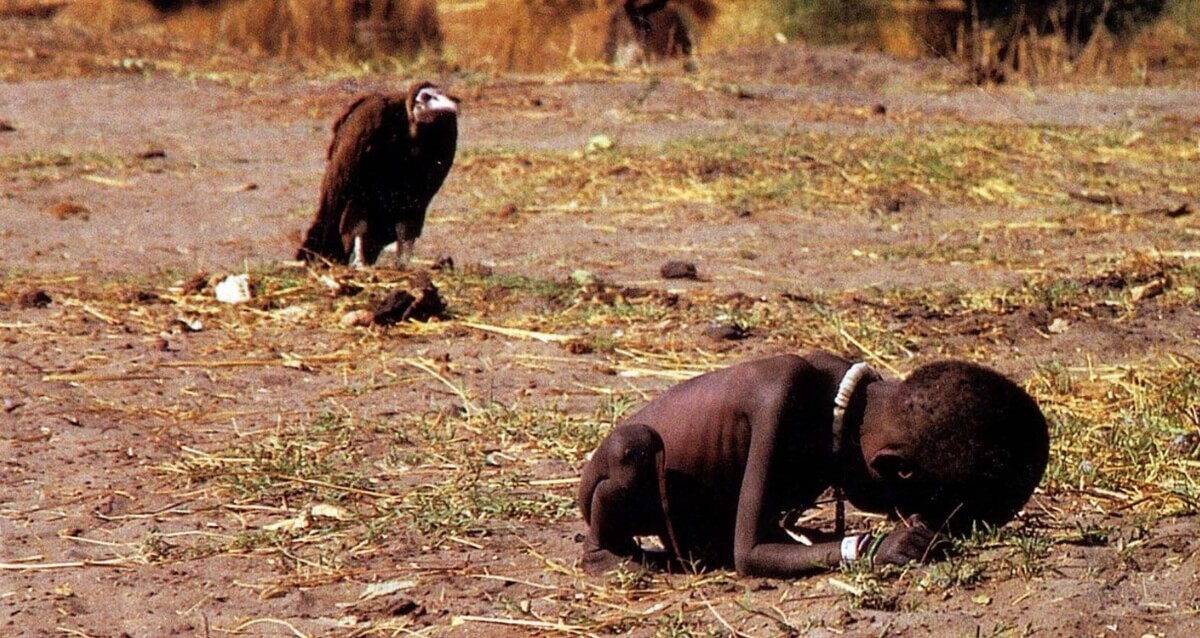

The harrowing photograph “The Vulture and the Little Girl,” captured by Kevin Carter in 1993, etched itself into the collective memory as a stark reminder of the Sudanese famine. The image, which went on to win a Pulitzer Prize, depicted a young boy named Kong Nyong struggling to reach a feeding center while a vulture patiently awaited nearby. This powerful snapshot became a symbol of both the desperation and resilience of those caught in the grip of famine.
Carter, a South African photojournalist who had borne witness to the horrors of apartheid, was deeply affected by his experiences in Sudan. He dedicated himself to documenting the suffering he saw, hoping to bring awareness to the world’s plight. His photograph captured not just the physical toll of hunger but also the profound human cost of conflict and deprivation.
The image sparked a global outcry upon its publication. Some criticized Carter for allegedly not intervening to help the child, highlighting the moral dilemma faced by photojournalists documenting such tragic events. However, it’s important to understand that photojournalists accompanying Carter were prohibited from interfering by armed Sudanese soldiers, further emphasizing the complex realities of war-torn regions.
The Pulitzer Prize Photograph
Kevin Carter’s photograph, titled “The Vulture and the Little Girl,” wasn’t just a powerful image; it was a testament to his unwavering commitment to truth and empathy in journalism. Carted captured a moment of raw vulnerability amidst the chaos of the 1993 Sudanese famine, showcasing both the desperation of those affected and the harsh realities they faced daily. This dedication to capturing the unvarnished truth propelled the image to international fame and eventually led to Carter being awarded the prestigious Pulitzer Prize for Feature Photography in 1994.
The Pulitzer Prize itself, considered the pinnacle of achievement in journalism, recognized the immense impact of Carter’s photograph. It highlighted not only his technical skill as a photographer but also the profound emotional resonance his work conveyed. The image served as a powerful indictment of the ongoing famine and forced the world to confront the suffering unfolding in Sudan. It became a catalyst for global awareness and spurred international efforts to aid those affected by the crisis.
Kevin Carter and the Sudanese Famine
Kevin Carter’s journey to Sudan was deeply intertwined with his commitment to exposing the world’s injustices. Having witnessed the horrors of apartheid in South Africa, he felt compelled to use his photographic skills to shed light on other conflicts and humanitarian crises. When he arrived in Sudan in 1993, he was confronted with the devastating reality of the ongoing famine.
Carter wasn’t just a passive observer; he immersed himself in the lives of those affected by the crisis, documenting their struggles with compassion and sensitivity. His photographs went beyond simply capturing the physical hardships; they conveyed the human toll of hunger, displacement, and despair. He aimed to give voice to the voiceless, hoping that his work would resonate with people around the world and inspire action.
This dedication to truth, however, came at a personal cost. Carter was deeply affected by the suffering he witnessed in Sudan, grappling with the moral complexities of documenting such tragedy.
Kong Nyong: A Story of Survival
While the photograph captured a moment of intense struggle, Kong Nyong’s story took an unexpected turn. Years later, reporters tracked down his father, who revealed that his son had indeed survived the famine and reached the feeding center depicted in Carter’s image. Sadly, Nyong passed away in 2007 due to an unnamed illness. This revelation added another layer of complexity to the photograph, showcasing both the fragility of life amidst hardship and the enduring human spirit.
The news of Nyong’s survival brought a glimmer of hope to a story that had initially sparked global concern and sorrow. It served as a reminder that even in the face of unimaginable adversity, resilience can prevail. Though his story ended too soon, Kong Nyong became a symbol of the human capacity for survival against all odds.
His fate highlights the lasting impact of famine and conflict, underscoring the need for continued global efforts to alleviate suffering and promote peace.
Controversy and Ethical Dilemmas
The publication of “The Vulture and the Little Girl” sparked intense debate surrounding photojournalism ethics. Some criticized Carter for not intervening to help the child in the photograph, questioning his role as a witness versus an active participant. They argued that he had a moral obligation to assist the starving boy rather than simply capture the moment for posterity.
This controversy highlighted the complex ethical dilemmas faced by photojournalists working in conflict zones or humanitarian crises. Should they prioritize capturing the truth, even if it means remaining passive observers? Or do they have a responsibility to act and potentially intervene, risking their own safety and compromising journalistic objectivity? There are no easy answers, as each situation demands careful consideration and nuanced judgment.
The debate surrounding Carter’s photograph continues to this day, prompting ongoing discussions about the responsibilities and limitations of photojournalism in documenting human suffering.
Legacy of a Powerful Image
Despite the controversy surrounding its creation, “The Vulture and the Little Girl” remains a powerful and enduring image that continues to resonate with audiences worldwide. It serves as a stark reminder of the human cost of famine and conflict, prompting reflection on global inequalities and the need for humanitarian action.
Even years later, the photograph has become a symbol of both tragedy and resilience, highlighting the capacity of the human spirit to endure even in the face of immense hardship. It has been used extensively in educational settings, documentaries, and public awareness campaigns, ensuring that the story of Kong Nyong and the Sudanese famine remains etched in collective memory.
Furthermore, Carter’s legacy extends beyond his Pulitzer Prize-winning photograph. His work continues to inspire aspiring photojournalists to strive for truth, empathy, and impactful storytelling through their lens. He serves as a reminder that photography can be a powerful tool for social change and a testament to the enduring power of visual narratives.