
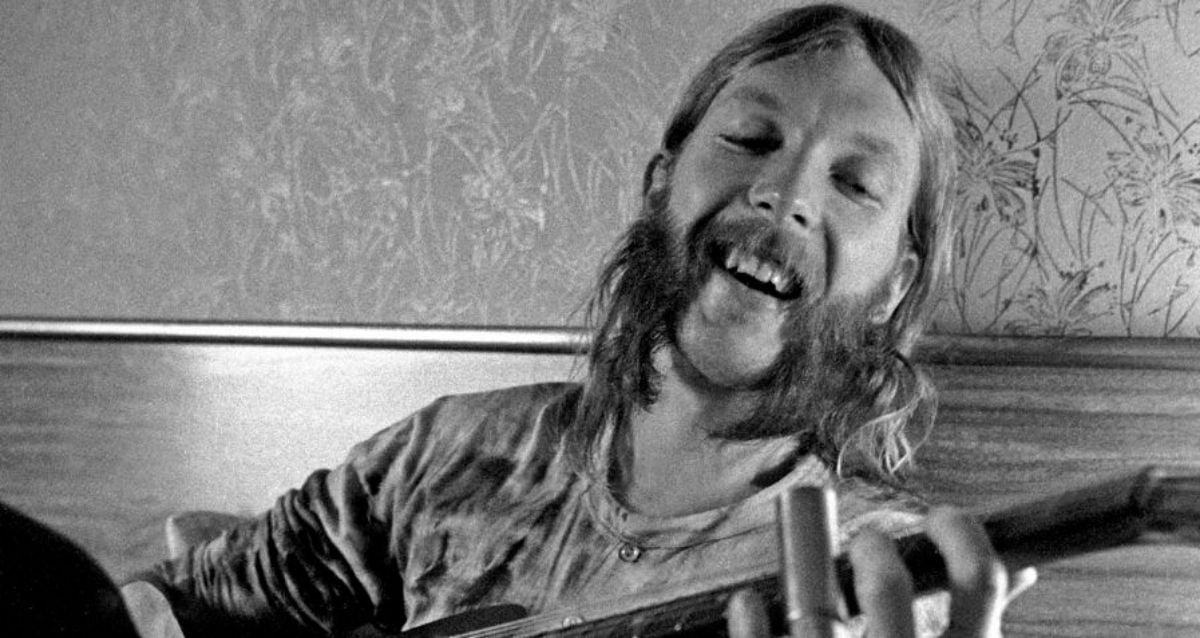
Duane Allman, a pioneering figure in Southern rock, died on October 29, 1971, following a motorcycle accident in Macon, Georgia. At age 24, Allman was the lead guitarist for the Allman Brothers Band, a group that had recently achieved critical acclaim with their live album At Fillmore East. The accident occurred shortly before 5:45 p.m. while he was riding his Harley-Davidson Sportster.
The Fatal Accident in Macon
The crash happened approximately one mile from the “Big House,” the residence of band member Berry Oakley. Allman had been visiting the celebration of Linda Oakley’s birthday. As he left the residence, he encountered a flatbed truck carrying a crane boom that stopped unexpectedly in an intersection. To avoid a collision, Allman swerved, causing his motorcycle to slide and pin him beneath the vehicle.
The truck driver, Charles Wertz, reported to the Macon Telegraph that he saw Allman lying on the pavement with the motorcycle still running. Emergency responders arrived and transported Allman to a hospital, where surgeons attempted to treat a collapsed chest, a damaged liver, and a ruptured coronary artery. Despite these efforts, Allman passed away three hours after the accident.
Musical Career and Professional Rise
Born in Nashville on November 20, 1946, Howard Duane Allman began playing guitar alongside his brother Gregg in 1961. After leaving high school at 16, he played in several groups, including the Escorts and the Allman Joys, and later the Hour Glass. By 1968, Allman had established himself as a highly sought-after session musician for Atlantic Records, contributing to recordings by R&B artists such as Aretha Franklin, Clarence Carter, and King Curtis.
In 1969, he reunited with Gregg to form the Allman Brothers Band, comprising lead guitarist Dickey Betts, bassist Berry Oakley, and drummers Butch Trucks and Jaimoe Johanson. The band’s sound was characterized by Duane’s improvisational slide guitar work. In 1970 alone, the group performed over 300 shows, releasing two studio albums, The Allman Brothers Band and Idlewild South, and the landmark live album At Fillmore East, which climbed the charts in July 1971.
Tragedy and the Aftermath
The Allman Brothers Band continued to perform in honor of Allman’s memory. In February 1972, they released Eat a Peach, which incorporated prerecorded tracks featuring Duane. This period was marked by further tragedy; on November 11, 1972, bassist Berry Oakley died in a motorcycle accident just three blocks from where Allman had died, also at age 24. Oakley was buried beside Allman at Rose Hill Cemetery in Macon.
The band eventually dissolved in 1976, though they later reunited. Their most influential work is widely regarded as the period between the late 1960s and early 1970s. The influence of Allman’s style is evident in the Southern rock genre, which he helped pioneer alongside bands like the Marshall Tucker Band and Lynyrd Skynyrd.
Who is Buried Next to Duane Allman?
Bassist Berry Oakley is buried next to Duane Allman at the Rose Hill Cemetery in Macon, Georgia. Oakley’s death in 1972 was an eerily similar motorcycle accident that occurred in the same vicinity as Allman’s fatal crash. Both musicians were 24 years old at the time of their deaths.
Did Duane Allman Record Eat a Peach?
Yes, the Allman Brothers Band released Eat a Peach in February 1972, shortly after Duane Allman’s death. The album features several prerecorded tracks that the band had recorded before the accident in October 1971. These recordings served as a final tribute to Allman’s contribution to the Allman Brothers Band.
Influence on Guitar History
Duane Allman’s technical skill and innovation in slide guitar playing were recognized globally. In 2003, Rolling Stone ranked him as the second-best guitarist in history, following Jimi Hendrix. This ranking reflects his impact on the blues and Southern rock genres.
While some friends of Allman Allman’s friends described him as having a reckless streak, a Rolling Stone 1971 report detailed the funeral services attended by 300 mourners, where the remaining band members performed and producer Jerry Wexler delivered a eulogy. The emotional impact of his death was his brother Gregg’s personal struggle, as reported by PEOPLE, who noted that Gregg Allman suffered a near-fatal overdose on the night his brother died.
Duane Allman’s work remains a central pillar of the Southern rock movement, and the music he created with the Allman Brothers Band continues to be studied and influential to the rest of the world.