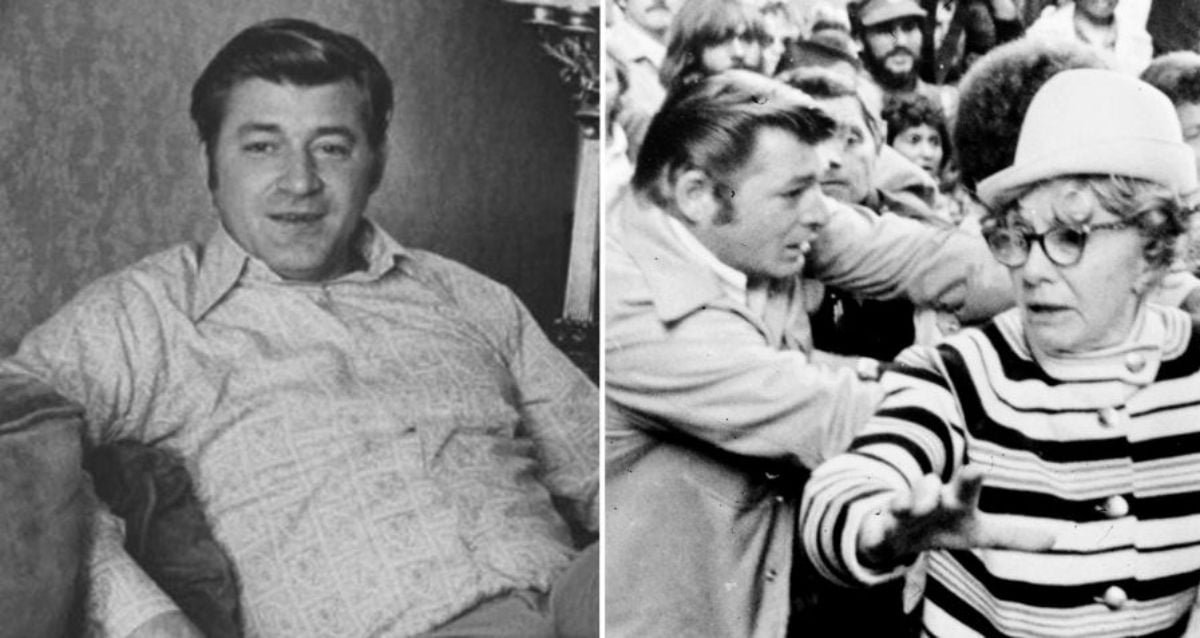
On September 22, 1975, Oliver Sipple, a Vietnam War veteran, prevented an assassination attempt on President Gerald Ford in San Francisco. While standing in a crowd outside the St. Francis Hotel, Sipple intervened when Sara Jane Moore fired a shot that narrowly missed the president. By grabbing Moore’s arm as she attempted a second shot, Sipple likely saved the president’s life, though the second bullet injured a bystander.
Military Background and Early Life
Born in Detroit in 1941, Oliver Wellington “Billy” Sipple faced educational challenges due to dyslexia, which led him to leave high school. In the 1960s, he enlisted in the United States Marine Corps to serve his country. Sipple completed two tours of duty in Vietnam, but his second tour ended prematurely in December 1968 after he was wounded by shrapnel.
Following a medical discharge from the Marines, Sipple relocated to San Francisco. There, he became involved in the city’s LGBTQ community and the emerging movement for gay rights, forming a friendship with Harvey Milk, the first openly gay man elected to public office in California. Despite his active role in San Francisco’s social circles, Sipple remained closeted regarding his sexuality with his devout Baptist family.
The San Francisco Assassination Attempt
The events of September 22, 1975, unfolded rapidly. As President Ford exited a luncheon at the St. Francis Hotel, 45-year-old Sara Jane Moore, an accountant and FBI informant, attempted to kill him. Sipple’s immediate reaction to grab Moore’s arm prevented a more accurate second shot, ensuring the president’s safety. In the immediate aftermath, President Ford sent Sipple a personal note expressing his heartfelt appreciation for his selfless and fearless actions.
Media Exposure and Forced Disclosure
The act of heroism quickly became a national news story. However, the narrative shifted when Harvey Milk informed a reporter at the San Francisco Chronicle that Sipple was gay. According to the biography The Mayor of Castro Street, Milk viewed the situation as an opportunity to demonstrate that gay individuals were capable of heroic deeds. This disclosure was made without Sipple’s consent, and he had not yet come out to his family.
National headlines soon highlighted Sipple’s sexuality, leading to a severe rupture in his relationship with his parents. His brother, George, later shared in a Washington Post interview that their mother initially distanced herself from Oliver after learning the truth. While some reports suggest a partial reconciliation, others indicate a permanent estrangement, including claims that Sipple was barred from attending his mother’s funeral.
Legal Battles and Personal Decline
Sipple was deeply distressed by the media’s intrusion into his private life. He held a news conference to clarify that his sexual orientation had no bearing on his decision to save the president’s life, stating that he was first and foremost a human being who respected life. This event was documented by The New York Times.
In an effort to protect his privacy, Sipple filed a $15 million lawsuit against several newspapers and reporters for invasion of privacy. However, in 1984, the court ruled against him, concluding that his sexual orientation was a relevant detail of the news story. The legal defeat and the ongoing public scrutiny contributed to a downward spiral in Sipple’s mental health and personal stability.
The Role of President Ford
Public speculation arose regarding why President Ford did not invite Sipple to the White House, with some suggesting the president’s prejudice against Sipple’s sexuality was the cause. However, in a 2001 interview, Ford denied these claims, stating that he had sent a thank-you note and considered the matter closed, adding that he only learned about Sipple’s sexuality much later.
Final Years and Death
The years following the event were marked by struggle. Sipple battled severe alcoholism, a condition exacerbated by the trauma of his forced outing and the subsequent family conflict. He had previously discussed his experiences with war and its psychological impact in a Time interview in 1975, noting that the reality of combat differed greatly from cinematic portrayals.
On February 2, 1989, Oliver Sipple was found dead in his San Francisco apartment at the age of 47. Evidence suggested he had died from alcohol poisoning several days prior. His attorney, John E. Wahl, told the Orlando Sentinel that Sipple had lived a sad and hurting existence because his act of heroism had led to the unwanted exposure of his private life.
Summary of Key Facts
- Date of Incident: September 22, 1975.
- Location: San Francisco, California.
- Action: Prevented Sara Jane Moore from firing a second shot at President Gerald Ford.
- Consequence: Forced public outing by the media and Harvey Milk.
- Legal Outcome: Lost a $15 million privacy lawsuit in 1984.
- Date of Death: February 2, 1989.