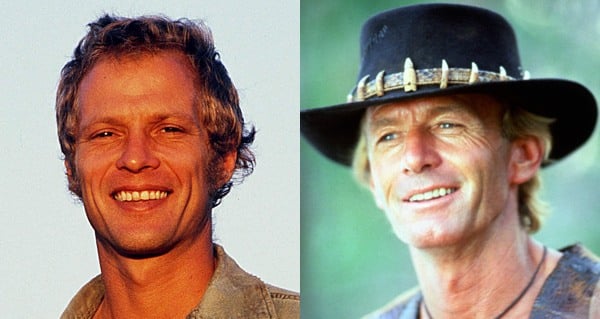
Rod Ansell’s life reads like a gripping tale of survival and tragedy, a story that captivated the world with its stark contrasts and heartbreaking turns. Born in Australia, he carved out a solitary existence as a rancher deep within the rugged Outback. His name would later echo across continents, but not for his traditional outback pursuits.
It was during a poaching expedition in 1972 that Ansell’s fate took an extraordinary turn. His boat capsized, leaving him stranded and alone for what became a legendary 56-day ordeal. He endured harsh conditions, unimaginable hunger, and the constant threat of wild animals, emerging from the Outback as a symbol of resilience and human endurance. This harrowing experience, though entirely real, would soon be immortalized in popular culture, inspiring the iconic film “Crocodile Dundee,” starring Rod Ansell.
While Ansell’s story became a source of international fascination, it ultimately foreshadowed a darker path. The fame that initially landed on him proved to be fleeting and brought about a cascade of personal struggles. Legal disputes, financial ruin, and fractured relationships marred the later chapters of his life, culminating in a tragic end that serves as a stark reminder of the complexities of fame and human fragility.
Outback Survivor: The Making of a Legend
Ansell’s 56 days in the unforgiving Outback became a tale etched into Australian folklore. He navigated harsh terrain, battled dehydration and hunger, and evaded dangerous predators with remarkable resourcefulness. He subsisted on bush tucker, drank from waterholes, and even fashioned himself crude tools for survival. His story resonated deeply with Australians, who saw in him a classic embodiment of courage and grit against the elements of the Australian wilderness.
News of Ansell’s miraculous escape spread like wildfire, captivating international audiences. His harrowing ordeal served as a reminder of the raw power of nature and the indomitable spirit of humanity. The media frenzy that followed painted him as a folk hero, an embodiment of resilience who had stared death in the face and emerged victorious. This intense public interest ultimately paved the way for his story to be adapted into “Crocodile Dundee,” a film that catapulted Ansell into international stardom.
From Poaching Trip to Hollywood Fame
While Ansell’s survival tale captured hearts and imaginations worldwide, his initial fame stemmed from a rather unconventional source: poaching. He was engaging in this illicit activity when his boat capsized, setting off the chain of events that would transform him into an overnight sensation. Ironically, it was this very act that brought him into the public eye, albeit under controversial circumstances. The media coverage surrounding his ordeal often blurred the lines between heroism and outlawry, highlighting the complex moral ambiguities associated with his actions.
The success of “Crocodile Dundee” propelled Ansell into a realm he could have never anticipated. He became a global icon, synonymous with Australia’s rugged outback persona. His image graced magazines, talk shows, and billboards, solidifying him as a pop culture phenomenon. However, this newfound fame came at a price. The film, while inspired by his real-life experience, did not offer Ansell any financial compensation, sparking resentment and legal battles in the years to come.
The Dark Side of Celebrity: Ansell’s Struggles
Despite the outward glamour of celebrity, Ansell’s personal life began to unravel under the weight of his newfound fame. Legal disputes over property rights and buffalo slaughter consumed him, draining his resources and leaving him financially vulnerable. These battles added another layer to his already complex persona, casting a shadow over his heroic image and revealing a man struggling against systemic injustices.
The isolation that came with his celebrity compounded these issues. Ansell found himself increasingly alienated from his former life and struggled to connect with people who didn’t share his experiences. This sense of loneliness led him down a dark path, turning to marijuana cultivation as a coping mechanism and eventually succumbing to amphetamine abuse. His behavior became erratic, marked by paranoia and bouts of anger, pushing him further away from the stability he craved.
A Life Unraveling: Isolation, Addiction, and Violence
The grip of addiction tightened around Ansell, fueling a spiral of increasingly erratic behavior. He resorted to firing shots at the houses of two men, escalating a simmering conflict into a dangerous standoff. Fear and paranoia consumed him, blurring the lines between reality and perceived threats. His actions were fueled by desperation and a warped sense of justice, driven by the very same isolation that had plagued him throughout his life.
This volatile environment culminated in a tragic confrontation with police. During the standoff, Ansell opened fire, leading to a deadly exchange that claimed the lives of both himself and a young officer. The incident sent shockwaves through Australia, serving as a stark reminder of the destructive consequences of unaddressed mental health issues and the devastating toll of addiction.
The Tragic End of Rod Ansell
The death of Rod Ansell marked a tragic end to a life that had captivated and repelled in equal measure. His story became a cautionary tale, highlighting the fragility of fame and the devastating consequences of unresolved personal struggles. While he was initially celebrated as a survivor, his later years were marred by legal battles, financial ruin, and a descent into addiction.
Ansell’s legacy remains complex and deeply intertwined with Australia’s cultural landscape. He embodied both the resilience and the vulnerabilities of the human spirit, reminding us that even those who conquer adversity can fall prey to internal demons. His story continues to resonate, serving as a poignant reminder of the importance of addressing mental health issues and offering support to those struggling in silence.