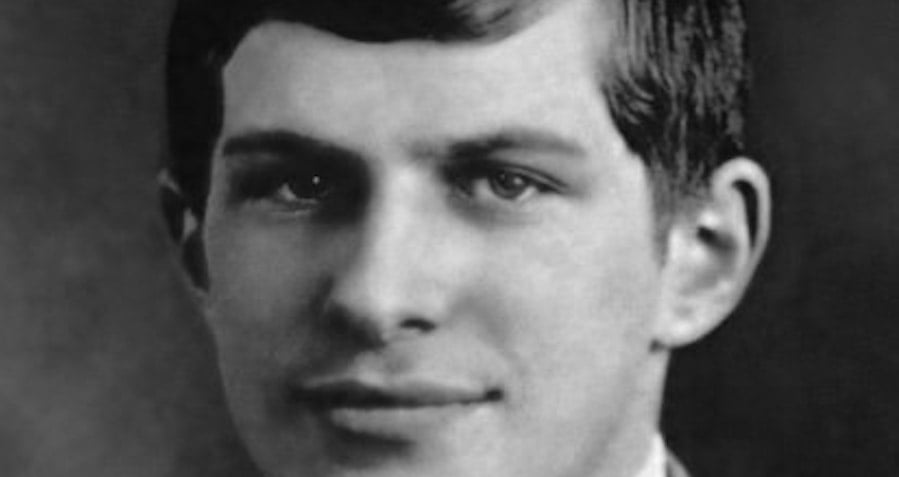
William James Sidis: a name that echoes through history as one of the most intellectually gifted individuals to ever walk the Earth. Born in 1898, Sidis’s life was a tapestry woven with threads of brilliance and tragedy. From his earliest years, he displayed an astonishing aptitude for learning, devouring knowledge like a sponge.
Imagine a child reading complex newspapers at eighteen months old – that was Sidis. By the tender age of six, he was fluent in multiple languages, effortlessly navigating the world of words. This wasn’t just precociousness; it was pure genius. He entered Harvard University at nine years old, graduating at sixteen with an estimated IQ of 250-300. Some even consider him to be the smartest person ever alive, a title that speaks volumes about his extraordinary cognitive abilities.
Despite his unparalleled intellect, Sidis’s life wasn’t a fairytale. He struggled to connect with others, finding solace in solitude rather than social interaction. This inherent difference between his mental landscape and the world around him created a profound sense of isolation.
Early Life and Prodigy Abilities
Sidis’s early life was a whirlwind of intellectual discovery. His parents, both intellectuals themselves, nurtured his burgeoning talents from the start. They recognized his exceptional abilities early on, providing him with access to books and resources beyond those typically available to children his age. His thirst for knowledge was insatiable.
He devoured books like an avid reader, grasping complex concepts with ease. At just 18 months old, he was reading The New York Times, a feat that would leave even seasoned readers astounded. By the time he reached six years old, he was fluent in multiple languages, effortlessly switching between them as if they were his native tongue. This linguistic dexterity showcased his exceptional cognitive flexibility and ability to adapt to different communication systems.
His parents, aware of his extraordinary potential, sought out opportunities to challenge him further. They enrolled him in advanced classes, exposed him to diverse intellectual pursuits, and fostered an environment that encouraged his curiosity and intellectual exploration. It was clear even then that Sidis was destined for greatness, albeit a path less traveled than most.
Academic Achievements and Intellectual Prowess
Sidis’s academic journey was nothing short of meteoric. He breezed through his elementary and secondary education, leaving teachers and peers in awe of his intellectual prowess. At the tender age of nine, he was accepted into Harvard University, a testament to his exceptional abilities that defied conventional expectations.
His time at Harvard was equally remarkable. He excelled in a wide range of subjects, from mathematics and physics to philosophy and literature. He absorbed knowledge with astonishing speed, grasping complex concepts with ease. His brilliance wasn’t confined to textbooks; he delved into original research, publishing papers on advanced mathematical theories and exploring the intricacies of human cognition.
By the time he graduated at sixteen with an estimated IQ of 250-300, Sidis had already established himself as one of the most intelligent individuals in history. His academic achievements were a testament to his unwavering dedication, exceptional memory, and unparalleled ability to connect disparate ideas.
Struggles with Social Interaction and Isolation
Despite his remarkable intellect, Sidis found it incredibly difficult to connect with others on a social level. The world around him seemed too chaotic, too superficial, and he often felt misunderstood. While others his age were navigating the complexities of friendships and social gatherings, Sidis preferred the solace of solitude, finding comfort in books, puzzles, and his own thoughts.
This introversion wasn’t a choice; it was a deep-seated need to protect himself from a world that seemed incapable of understanding his unique perspective. He longed for meaningful connections but struggled to bridge the gap between his extraordinary mind and the everyday experiences of others. He often felt like an outsider looking in, unable to fully participate in the social fabric of life.
This profound sense of isolation shaped Sidis’s path, leading him away from the mainstream and towards a life of quiet contemplation and relentless intellectual pursuit. The world might have celebrated his genius, but it failed to provide him with the emotional connection he desperately craved.
Later Years: Reclusiveness and Legal Battles
Sidis’s later years were marked by a profound sense of disillusionment and a yearning for anonymity. He drifted from teaching stints to menial jobs, seeking refuge in the anonymity of everyday life. He tired of the fame that had followed him since childhood, finding it stifling and intrusive. The world saw him as a smartest person to ever live, but he simply wanted to be William, a man living an ordinary life.
He battled with legal battles over privacy, desperately trying to shield himself from the relentless scrutiny of the public eye. His attempts at normalcy were often thwarted by his own brilliance and the persistent fascination surrounding his case. He lived a nomadic existence, moving from place to place, always seeking a fresh start but never truly escaping his past.
Ultimately, Sidis’s life story is a tragic reminder that genius doesn’t always equate to happiness. Despite his extraordinary intellect, he was unable to escape the burdens of fame and the profound loneliness that often accompanies greatness. His final years were spent in poverty and isolation, a stark contrast to the world-renowned brilliance he once possessed.
A Legacy of Genius and Tragedy
William James Sidis’s life remains a poignant reminder that brilliance often comes with a heavy price. His story continues to fascinate and intrigue, prompting us to ponder the complexities of genius and the human need for connection. While his intellectual achievements are undeniable, it is his tragic tale of isolation and unfulfilled potential that truly resonates.
Sidis’s legacy is a complex tapestry woven with threads of both triumph and sorrow. He stands as a testament to the boundless power of the human mind, yet his life serves as a cautionary tale about the importance of social connection and emotional well-being. His story compels us to recognize that true fulfillment lies not only in intellectual prowess but also in genuine human interaction and a sense of belonging.
His story reminds us to celebrate the extraordinary abilities of individuals like Sidis while simultaneously striving for a world where brilliance is nurtured alongside compassion and understanding. Perhaps, by learning from his experiences, we can create a society that values both intellect and emotional intelligence, fostering an environment where all individuals, regardless of their cognitive gifts, can thrive and find meaning in human connection.