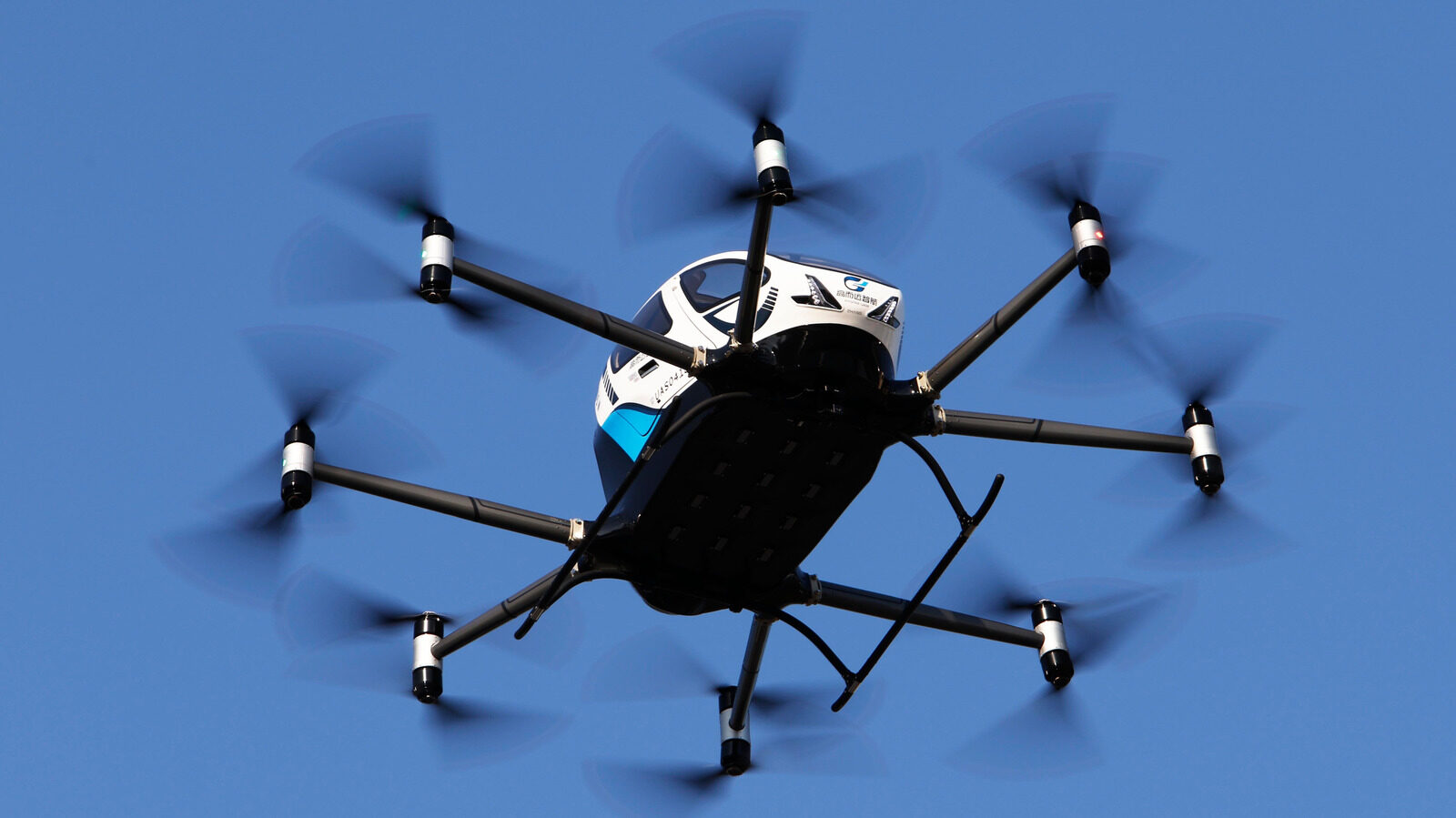
The rapid evolution of technology has led to innovative ideas that once existed only in the realm of science fiction. As we advance, concepts like flying cars are transitioning from imagination to reality. In this context, China is making significant strides in the development and deployment of flying taxis, which could revolutionize urban mobility in the coming years.
But what exactly does this mean? Are we truly on the brink of seeing flying vehicles zip through our skies? Let’s explore the current landscape of flying taxis in China, the technology involved, and what the next few years may hold.
China is already rolling out flying taxis
China is at the forefront of developing flying taxis, a venture actively supported by the government. The initiative aims to establish a robust low-altitude mobility economy, which encompasses aerial transportation below 1,000 meters (3,280 feet). This strategy was set into motion with the introduction of supportive regulations and policies in 2021.
As a result, various companies, such as AeroHT, have emerged, investing heavily in research and development. AeroHT, a subsidiary of Xpeng, recently obtained a license to manufacture its first flying car, marking a pivotal moment in the industry. The Chinese government’s proactive stance has resulted in:
- Encouragement for firms to invest in aerial transport technologies.
- Implementation of infrastructure to support flying vehicles.
- Licensing processes for commercial operations of flying taxis.
One of the most notable achievements is the granting of licenses for the commercial use of pilotless aerial vehicles. A senior executive from Ehang, a Chinese company specializing in autonomous aerial vehicles, anticipates that these flying taxis will become operational within the next three to five years. The initial deployments are expected to occur in cities like Guangzhou and Hefei, primarily targeting tourism and urban sightseeing.
What are the flying taxis in China really like?
The flying taxis being developed in China are primarily electric vertical takeoff and landing vehicles (eVTOLs). Unlike traditional cars, these vehicles operate more like large drones designed specifically for short to medium-distance travel at low altitudes. They are equipped with multiple propellers and are fully electric, an essential feature for sustainable urban transportation.
For instance, Ehang’s unmanned aerial vehicles (UAVs) not only emphasize safety but also efficiency, allowing for quick and convenient air travel without the need for a pilot. Some key characteristics of these eVTOLs include:
- Fully electric design, minimizing environmental impact.
- Unmanned operation, ensuring safety and efficiency.
- Designed for short to medium-distance travel, ideal for urban settings.
Moreover, competitors like the Guangzhou Automobile Group (GAC) are also entering the market. Their model, the Govy AirCab, debuted at the Hong Kong International Auto and Supply Chain Expo, showcasing the diversity in design and functionality within this emerging market sector.
Comparative overview of flying taxi models
| Vehicle Model | Company | Features | Charging Time |
|---|---|---|---|
| Ehang UAV | Ehang | Fully electric, unmanned, tourism-focused | 2 hours |
| Govy AirCab | Guangzhou Automobile Group | Electric, pilotless, includes smart features like voice assistant | 25 minutes |
These vehicles, while not resembling the flying cars depicted in sci-fi films, are nonetheless paving the way for a new era of transportation. They are designed to be practical, featuring elements such as:
- 5G connectivity for enhanced communication.
- Voice assistants for user-friendly operations.
- Smart controls for climate, music, and even scent within the cabin.
Challenges and considerations for flying taxis
Despite the exciting developments, the transition to widespread flying taxi use isn’t without challenges. Regulatory hurdles, technological limitations, and public acceptance are crucial factors that will shape the success of this industry.
Some of the notable challenges include:
- Establishing comprehensive safety regulations for aerial vehicles.
- Developing air traffic control systems to manage low-altitude flying.
- Addressing public concerns regarding safety and privacy.
As these flying taxis begin to operate, continuous improvements in technology and infrastructure will be necessary to ensure a seamless integration into existing urban transport networks. Furthermore, public education and outreach will be essential to foster trust in these innovative vehicles.
The global perspective on flying cars
While China is taking significant steps towards introducing flying taxis, similar initiatives are emerging worldwide. Countries like the United States, Japan, and several European nations are also exploring the viability of eVTOLs and autonomous aerial vehicles. Companies like Joby Aviation and Volocopter are leading efforts in the West, developing their models and technologies that mirror those being tested in China.
This global competition highlights a growing interest in reshaping urban mobility. The potential benefits of flying taxis include:
- Reduced traffic congestion in crowded cities.
- Faster travel times over traditional ground transportation.
- Environmental advantages through electric-powered vehicles.
As these technologies continue to develop, we can expect a vibrant ecosystem of aerial transportation solutions that may redefine how we navigate our cities.