

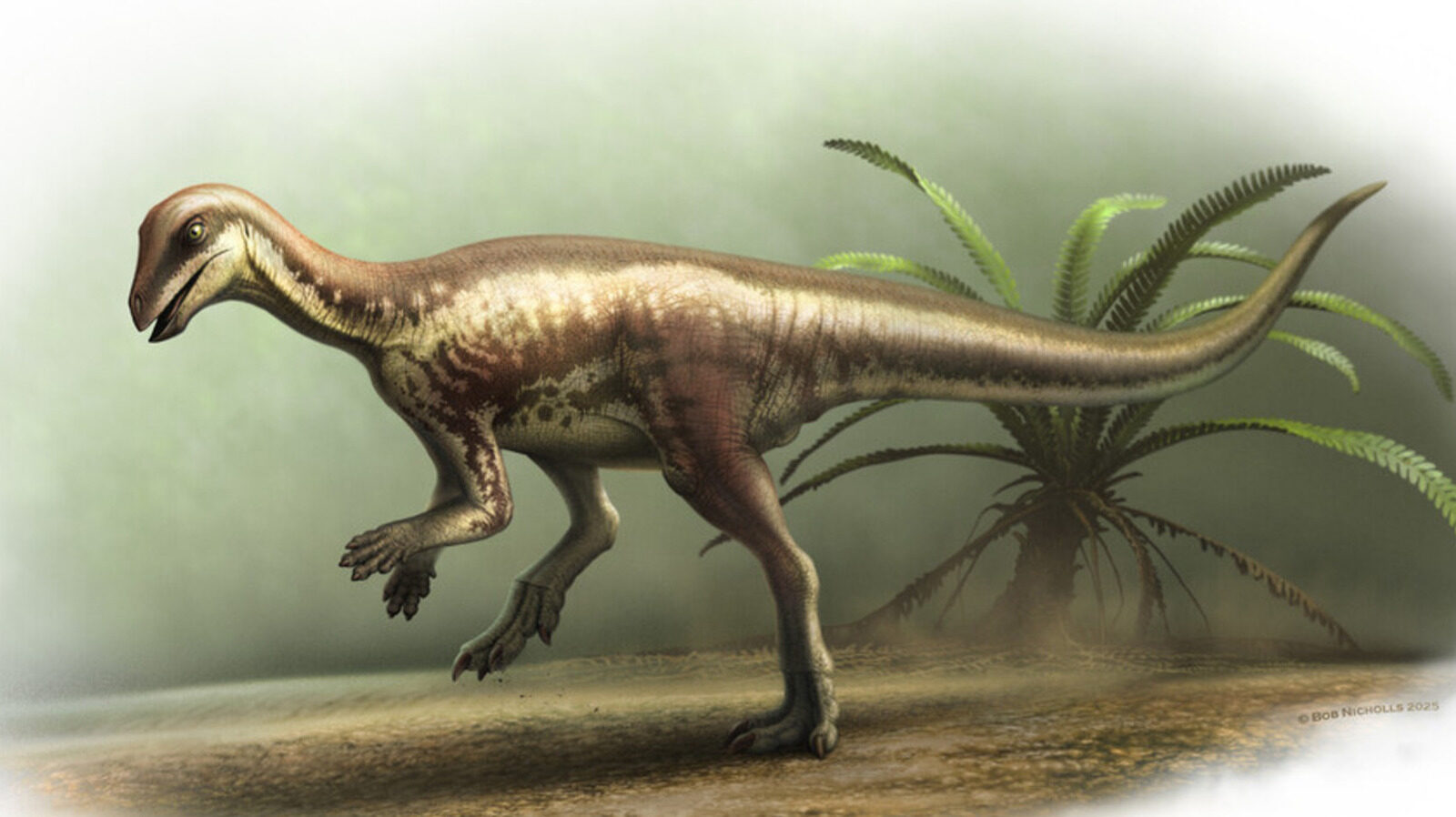

Recent discoveries in paleontology continue to astound us, shedding light on the mysteries of the past and revealing the intricate tapestry of life that existed millions of years ago. A recent breakthrough has unveiled a new dinosaur species that not only fills a significant gap in our understanding of dinosaur evolution but also challenges long-held scientific beliefs. Dive into the fascinating world of Enigmacursor mollyborthwickae, a small yet intriguing dinosaur that lived during the Late Jurassic period and offers new insights into the evolutionary history of these remarkable creatures.
Unraveling the secrets of a prehistoric mystery
The discovery of Enigmacursor mollyborthwickae marks a significant milestone in paleontology, revealing a previously unidentified species that resolves a long-standing enigma in the dinosaur lineage. Between 2021 and 2022, a series of fossils were excavated from private land in Colorado. Initially categorized as a member of the Nanosaurus genus, this small dinosaur, measuring just under six feet in length, drew the attention of notable paleontologists, Professors Susannah Maidment and Paul Barrett, at the Natural History Museum in London.
Upon further examination, it became clear that the fossils were not merely a new example of Nanosaurus but rather represented an entirely separate species. The realization that Nanosaurus may not have ever existed in the way previously thought led to the re-evaluation of the classification of small-bodied dinosaurs. This groundbreaking analysis was published in the June 2025 issue of Royal Society Open Science.
The significance behind the name Enigmacursor
The full designation of this newly recognized species, Enigmacursor mollyborthwickae, is rich with meaning. The term “enigma” derives from Greek and Latin, signifying “riddle,” which aptly reflects the puzzling classification of small dinosaurs that paleontologists have grappled with for decades. The second part of the name, “cursor,” translates from Latin as “runner,” indicative of the species’ strong, agile legs.
The specific epithet “mollyborthwickae” honors Molly Borthwick, the benefactor whose contributions enabled the Natural History Museum to acquire these pivotal fossils. Understanding the origins of these fossils leads us to the Morrison Formation, a renowned sedimentary rock formation famous for its rich fossil deposits from the Late Jurassic period, spanning from Montana to New Mexico. This geological formation has historically yielded some of the most well-known dinosaur fossils, yet the smaller species like Enigmacursor have often been overlooked.
As Maidment and Barrett compared the Colorado fossils with other specimens labeled as Nanosaurus, they highlighted the inconsistencies and inaccuracies in the classification of these small dinosaurs. Their findings, published in the April 2025 edition of the Bulletin of the Peabody Museum of Natural History, advocate for the discontinuation of the Nanosaurus classification altogether.
What was life like for Enigmacursor?
With the outdated label of Nanosaurus cast aside, researchers were able to analyze Enigmacursor in its own right, helping to construct a clearer picture of its physical characteristics and lifestyle. Measuring approximately 180 centimeters (roughly six feet) in length and 64 centimeters (about two feet) in height, this small dinosaur’s anatomy reveals a unique adaptation for speed.
The term “cursor” in its name suggests that Enigmacursor was a swift runner, supported by its long hind legs and large feet. One of the most notable features of its anatomy is the structure of its femur bones, which exhibit muscle attachment points not observed in other closely related dinosaurs. Understanding the locomotion of Enigmacursor is a key focus for researchers as they seek to differentiate this species from previously categorized small dinosaurs.
While Enigmacursor boasted powerful hind limbs designed for rapid movement, its forelimbs were notably short, reminiscent of the arms of a T. rex. However, unlike the carnivorous T. rex, Enigmacursor was an herbivore, equipped with flat, stubbly teeth suited for consuming ferns and cycads—plants that thrived in its environment before the arrival of grasses and flowering plants.
Understanding Enigmacursor’s place in the dinosaur family tree
The fossils of Enigmacursor date back to the Late Jurassic period, approximately 145 to 150 million years ago. This era was marked by a diverse array of dinosaur species, many of which cohabited the same ecosystems as Enigmacursor. Notable contemporaries included the iconic Stegosaurus, which could grow to be five times longer than Enigmacursor, and the massive Diplodocus, renowned for its significant length of around 85 feet—equivalent to nearly 15 Enigmacursor individuals!
This coexistence raises intriguing questions about the evolutionary relationships among these dinosaurs. Researchers are currently exploring how Enigmacursor relates to larger Jurassic herbivores, particularly considering the evolutionary transition from early bipedal dinosaurs to the enormous quadrupeds we recognize today. It is believed that the colossal Stegosaurus and Diplodocus evolved from ancestors similar to Enigmacursor, providing valuable insights into the evolutionary journey of these fascinating creatures.
The discovery of Enigmacursor not only enhances our understanding of smaller dinosaur species but also contributes to the broader narrative of dinosaur evolution, highlighting the importance of re-evaluating previously held assumptions about classification and relationships among species.