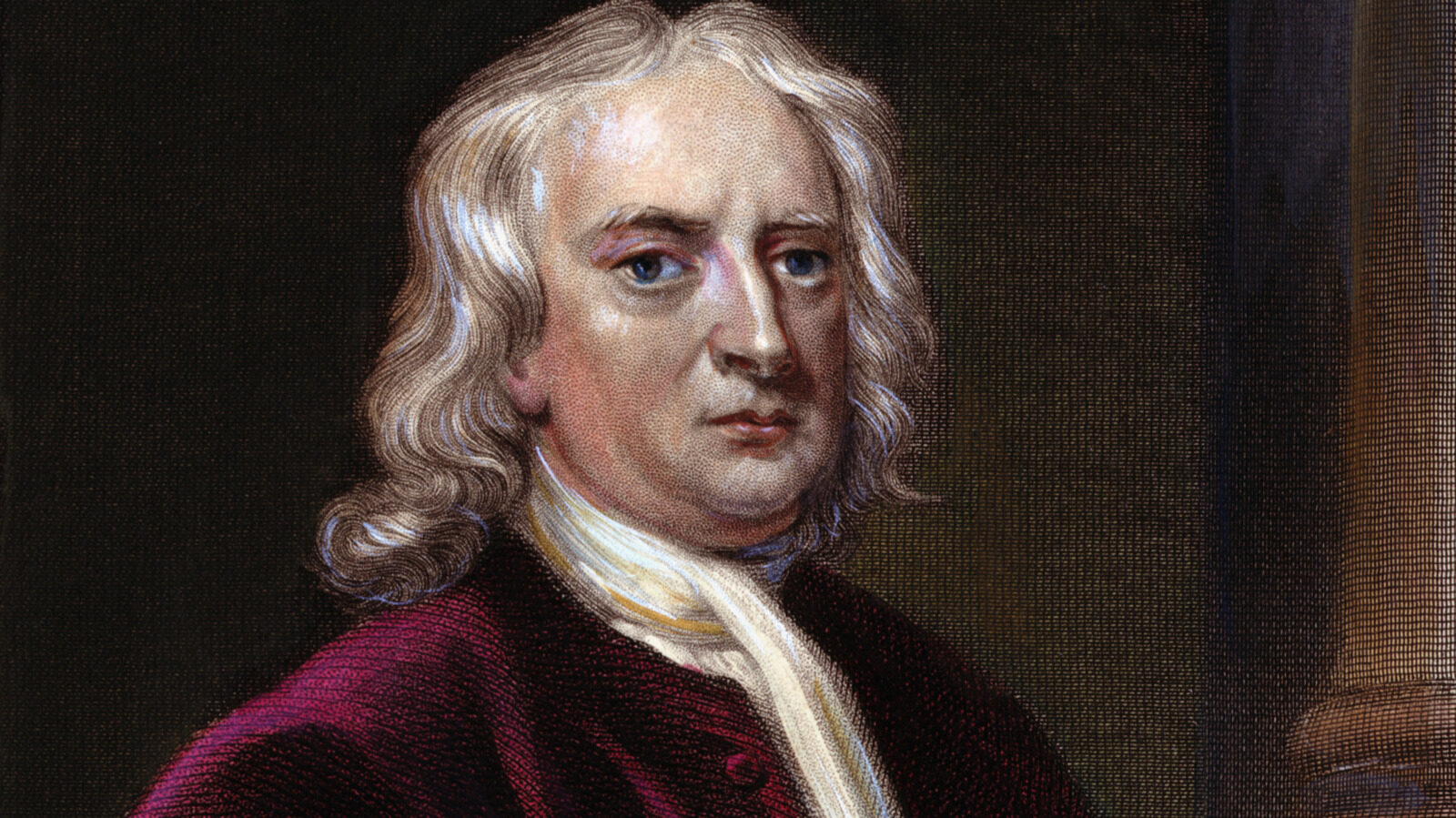
Sir Isaac Newton, a name synonymous with groundbreaking discoveries, is often celebrated for his contributions to physics and mathematics. However, his lesser-known religious beliefs and prophecies provide a fascinating insight into his complex character. Most intriguingly, Newton predicted that the world would end in 2060. But the reasoning behind this assertion reveals more about his spiritual convictions than about his scientific acumen.
This article delves into Newton’s religious views, the context of his prediction, and the calculations that led him to set this specific date for the end of the world. Understanding these aspects not only sheds light on Newton himself but also on the broader interplay between science and faith during his time.
Newton’s religious beliefs and their implications
Newton’s views on religion were deeply intertwined with his scientific inquiries. Unlike many of his contemporaries, who viewed science and faith as opposing forces, Newton saw them as complementary. His approach to natural philosophy—a term used to describe a blend of science and theology during the Middle Ages—allowed him to explore the universe while simultaneously seeking a deeper understanding of God.
His extensive writings on theology were kept largely private, primarily due to their controversial nature. He rejected the doctrine of the Trinity, which was a cornerstone of Anglican belief, asserting instead that God was singular and without equals. This perspective was not only radical but also dangerous; Newton understood the societal backlash he could face if his views were publicly known.
Upon his death in 1727, Newton’s theological writings were hidden away by his relatives, devout Anglicans who viewed his ideas as heretical. It wasn’t until decades later that these papers surfaced, revealing the extent of his religious thoughts and their connection to his scientific works. For instance, he believed that studying the natural world was a way to explore divine truths, and his investigations into gravity and motion were, in his mind, expressions of God’s laws.
Newton’s secretive theological works
Newton’s theological works were not just a hobby; they were a fundamental part of his intellectual life. He engaged with biblical texts using the same rigorous analytical methods he applied to mathematics and physics. Newton’s approach to the Bible was one of literal interpretation, leading him to explore prophecies and their implications for humanity.
His writings on biblical prophecy took on a life of their own once they were finally made public. For example, the discovery of Newton’s papers in the late 1930s revealed his calculations and interpretations of events described in the Book of Revelation and the Book of Daniel. Scholars were drawn to these works, uncovering a fascinating intersection of science, faith, and eschatology.
- Newton viewed biblical prophecies as literal predictions of future events.
- His rejection of the Trinity was a significant point of contention with the Anglican Church.
- His theological writings were kept secret due to their controversial nature.
- Many of his scientific inquiries were motivated by a desire to understand God’s creation.
The calculations behind the 2060 prediction
Newton’s prediction that the world would end in 2060 emerged late in his life, a period when he was reflecting on both his scientific and theological work. The exact timing of when he formulated this prediction remains uncertain, but it was found inscribed on a letter dated after he was knighted in 1705.
The reasoning he employed to arrive at this date was grounded in a specific interpretation of biblical texts. Newton believed that the world was under the influence of a corrupt religious system, which he identified as the Trinitarian churches, and he anticipated that this system would ultimately collapse in an apocalyptic event.
To determine the date of Armageddon, Newton focused on a prophetic period of 1,260 days mentioned in the scriptures. Unlike some scholars who viewed these days as literal, Newton interpreted them as representing years. His calculations proceeded as follows:
- He identified the beginning of the apostate system around the year 800 AD, coinciding with the rise of the Holy Roman Empire.
- By adding 1,260 years to this starting point, he arrived at the year 2060 as the projected time for the end of the world.
This method of interpretation was not unique to Newton; it was a common practice among biblical scholars of his time. However, the firm nature of his prediction stands out, especially considering his tendency to avoid making definitive forecasts in other areas of his work.
Newton’s legacy: Science and religion intertwined
The intersection of Newton’s scientific achievements and his religious beliefs paints a complex picture of one of history’s most influential figures. His conviction that the natural world was a manifestation of divine order led him to explore concepts that would shape modern science, all while maintaining a deep commitment to his faith.
This duality in Newton’s work serves as a reminder that the realms of science and religion are not necessarily mutually exclusive. Many of his contemporaries grappled with similar questions about the nature of God and the universe, engaging in a dialogue that continues to this day.
In the context of contemporary discussions about the compatibility of science and faith, Newton’s life offers valuable insights:
- His belief in a rational God influenced his scientific inquiries.
- He viewed scientific discovery as a means to uncover divine truth.
- Newton’s writings challenge the notion that science and religion cannot coexist.
Ultimately, Newton’s prediction for the end of the world in 2060 is not merely a curiosity of history; it is a reflection of his broader worldview—one that sought to harmonize faith with the empirical exploration of the universe. As we continue to ponder the mysteries of existence, Newton’s legacy reminds us of the profound questions that lie at the intersection of knowledge and belief.