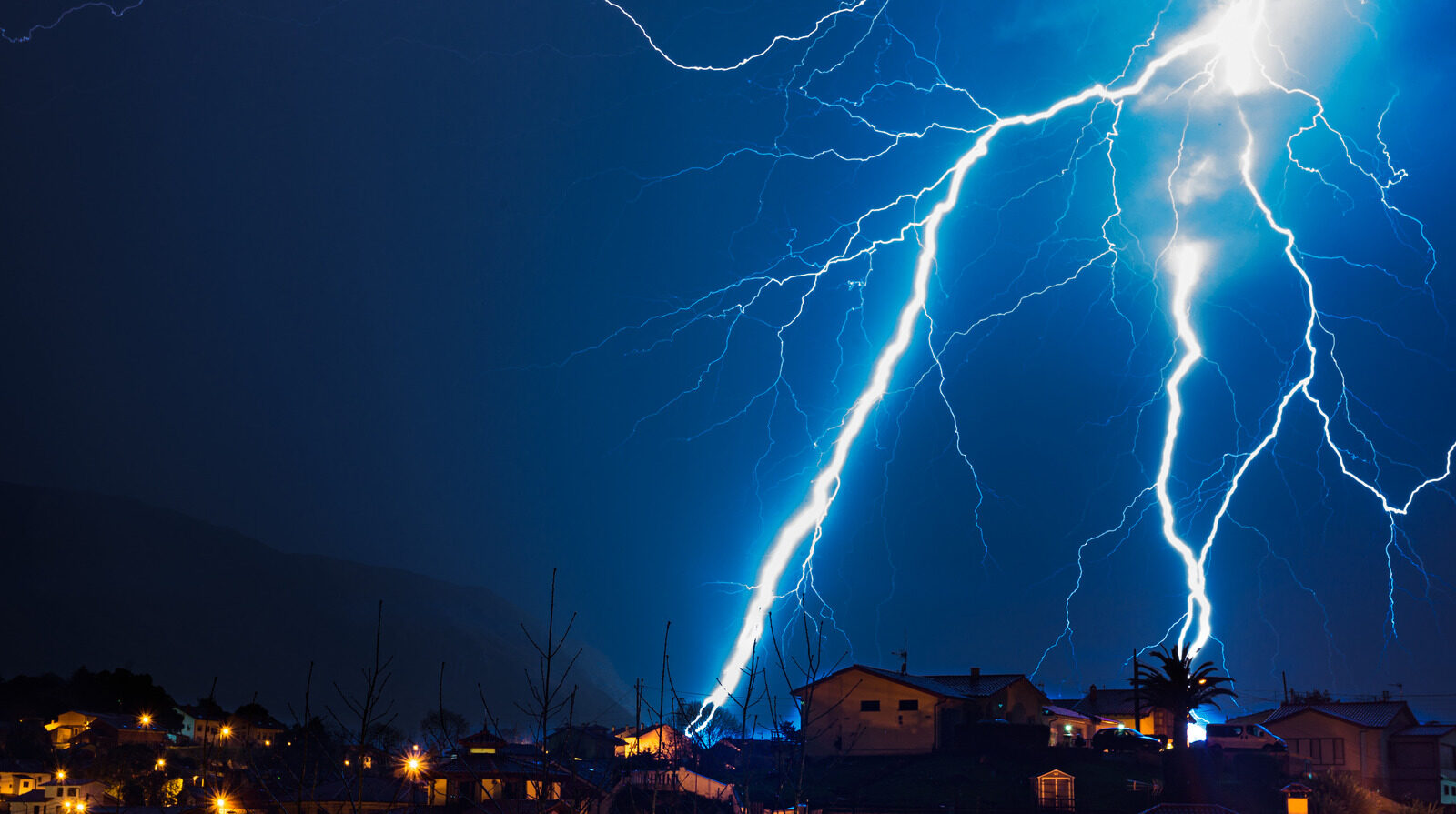

Lightning is one of nature’s most awe-inspiring phenomena, showcasing its raw power as it illuminates the sky in electrifying displays. However, with its frequent occurrence comes a plethora of myths and misconceptions that can mislead and endanger those who are unprepared. Understanding the truth about lightning is vital for safety, especially during storms. In this article, we will debunk 14 common myths surrounding lightning, providing clarity and essential safety tips for anyone caught in a storm.
Lightning can strike the same place multiple times
One of the most persistent myths is that lightning never strikes twice in the same place. This saying may serve as a comforting metaphor, but it is far from the truth. In reality, lightning is known to strike the same spot repeatedly, especially if that spot is elevated or isolated. For instance, the Empire State Building in New York City is struck by lightning nearly 25 times a year, illustrating how certain structures are frequent targets due to their height and location.
The physics behind this phenomenon is straightforward: lightning seeks the path of least resistance to the ground, often choosing the highest point available. In regions like Florida, known as “Lightning Alley,” the frequency of strikes is particularly high due to the geographical conditions and weather patterns. This myth likely originated as a way to comfort those experiencing a streak of bad luck, but it should not be relied upon when considering safety during storms.
Lightning targets only the tallest objects
While it is true that lightning often strikes taller objects, the notion that it only targets them is a dangerous oversimplification. Lightning can strike anywhere if the conditions are right, regardless of height. This means that lightning can hit the ground in open fields or even bypass towering structures to strike something much lower nearby.
Factors such as atmospheric conditions, temperature, and electrical charges in the air all play a role in determining where lightning will strike. So, being in a crowded area surrounded by tall buildings does not guarantee safety. It’s crucial to remember that lightning’s behavior is unpredictable and can vary based on numerous environmental factors.
Seeking shelter under a tree is safe during storms
Many people believe that taking cover under a tree during a thunderstorm is safer than having no shelter at all. This myth can lead to fatal consequences. Trees are often struck by lightning, and when they are, the electrical charge can spread through the ground, creating hazardous conditions for anyone nearby. In fact, the ground current from a lightning strike is one of the leading causes of electrical injuries.
The misconception likely arises from the idea that trees can act as natural lightning rods, diverting the strike away from people. However, standing under a tree exposes you to both the immediate dangers of falling branches and the electrical ground current. It’s always best to seek shelter in a sturdy building or a vehicle rather than relying on a tree for safety.
You are safe from lightning if you don’t see rain or clouds
Another dangerous myth is the belief that a lack of rain or clouds means you are safe from lightning. In reality, lightning can strike miles away from its parent storm. It is not uncommon for lightning to hit areas where the sky appears clear, as storms can produce lightning that travels horizontally for significant distances.
In fact, phenomena known as “bolts from the blue” can occur, where lightning strikes occur in clear skies far from any visible storm. If you hear thunder, even in the distance, it is a clear indication that you are within striking range of lightning and should seek shelter immediately.
Rubber tires on a car provide protection from lightning
There’s a common belief that the rubber tires of a car act as insulation, protecting occupants from lightning strikes. While it is true that hard-topped vehicles do provide safety during thunderstorms, the rubber tires play a minimal role. The real protective mechanism is the metal body of the car, which functions as a Faraday cage, allowing the electrical current to travel around the exterior and safely to the ground.
This myth may stem from a misunderstanding of how electricity behaves. While rubber is a poor conductor under normal circumstances, the tremendous voltage of a lightning strike can easily overwhelm any insulating properties it may have. Therefore, vehicles with soft tops or open designs like motorcycles are not considered safe during lightning storms.
Sneakers and rubber-soled shoes can protect you
Many people mistakenly think that wearing sneakers or shoes with rubber soles can protect them from lightning. Although rubber does resist electricity, the voltage from a lightning strike is so immense that it can easily jump through any insulative barrier, rendering the footwear ineffective. The key danger lies in the fact that if any part of your body touches the ground, the current can enter through that contact point.
Moreover, being in contact with water, which is an excellent conductor, can increase the risk significantly. If you find yourself outdoors during a storm, the best course of action is to find a secure shelter rather than relying on footwear for protection.
Swimming pools attract lightning
It is a common belief that being in a swimming pool during a storm increases the likelihood of being struck by lightning. While the water in a pool does not actively attract lightning, it can conduct electricity very well. If lightning strikes nearby, the electrical current can travel through the water, putting anyone swimming at risk.
It’s essential to exit the water immediately when a storm approaches. Lightning can strike the ground nearby and cause electrical surges that spread through any body of water, making it incredibly dangerous for swimmers. If you are unable to get out of the water, you should move to the deepest part available and avoid touching any metal objects until the storm passes.
Lie flat on the ground to avoid lightning
The idea that lying flat on the ground can protect you during a lightning storm is a dangerous misconception. In reality, this position increases your risk of being struck because it maximizes contact with the ground, which is a conductor of electricity. Lightning current spreads out horizontally when it hits the ground, increasing the chance that it will enter your body.
If you find yourself caught outside with no shelter, the safest position is to crouch down with your feet together, minimizing contact points with the ground. This reduces the risk of the current entering your body and can help protect you from severe injuries.
Touching a lightning strike victim is dangerous
A common myth suggests that touching someone who has been struck by lightning can result in electrocution. This is false; lightning strike victims do not retain an electrical charge after the strike. The current passes through them and dissipates almost immediately. Therefore, it is safe to assist a victim as long as the area is secure.
In fact, prompt medical attention is critical for lightning strike survivors. If you encounter someone who has been struck, check for breathing and a pulse, and call emergency services immediately. The sooner help is administered, the higher the chance of recovery.
Wearing metal attracts lightning
Many people worry that wearing metal jewelry or accessories will attract lightning. While metal is an excellent conductor of electricity, it does not attract lightning in the way a magnet attracts iron. What matters is the height and isolation of the object. Lightning prefers to strike the tallest and most isolated objects in a given area.
However, if lightning strikes a nearby metallic structure or object you’re touching, the electrical current can travel through that metal and potentially electrocute you. Therefore, while wearing metal jewelry during a storm is not inherently dangerous, it’s always best to seek shelter promptly rather than risk exposure.
Surge protectors can stop lightning strikes
Many individuals mistakenly believe that surge protectors can safeguard their electronics from lightning strikes. Although surge protectors can defend against minor electrical surges, they are not designed to handle the immense energy produced by a lightning strike, which can reach millions of joules. A typical surge protector can only manage around 1,000 joules, far less than what a lightning bolt produces.
To protect your devices, it is advisable to install a comprehensive lightning protection system that includes surge protectors and proper grounding. However, unplugging devices during a storm remains the safest option, as lightning can induce a surge even if it does not strike directly.
Thunder can occur without lightning
It is a misconception that thunder can precede lightning or occur independently. Thunder is a direct result of lightning. The intense heat generated by a lightning bolt causes the surrounding air to expand rapidly, creating a shockwave that we hear as thunder. Therefore, wherever there is thunder, lightning has also occurred.
In some cases, you may see lightning but not hear the thunder if the storm is too far away, which is often referred to as “heat lightning.” This indicates that you should remain cautious, as the storm may still pose a threat despite being distant.
Lightning can occur outside thunderstorms
While most lightning is associated with thunderstorms, it can also occur during other weather phenomena. One such occurrence is dry lightning, which can happen when thunderstorms produce enough electrical activity to generate lightning, but not enough moisture reaches the ground to produce rain. This can lead to dangerous wildfires, particularly in dry seasons.
Recognizing that lightning can strike far from visible storms is crucial for ensuring safety. Always be vigilant and aware of your surroundings, especially if you hear thunder in the distance.
Climate change may influence lightning frequency
The relationship between climate change and lightning is a complex and ongoing area of study. Some researchers believe that as global temperatures rise, so too does the potential for increased lightning activity due to more moisture and energy in the atmosphere. However, this is not yet fully understood, and the exact impact of climate change on lightning frequency remains debated.
Increased humidity and temperature may lead to more thunderstorms, but other factors could counteract this effect. The nuances of how climate change interacts with weather patterns make it essential to stay informed and prepared as research continues to evolve.