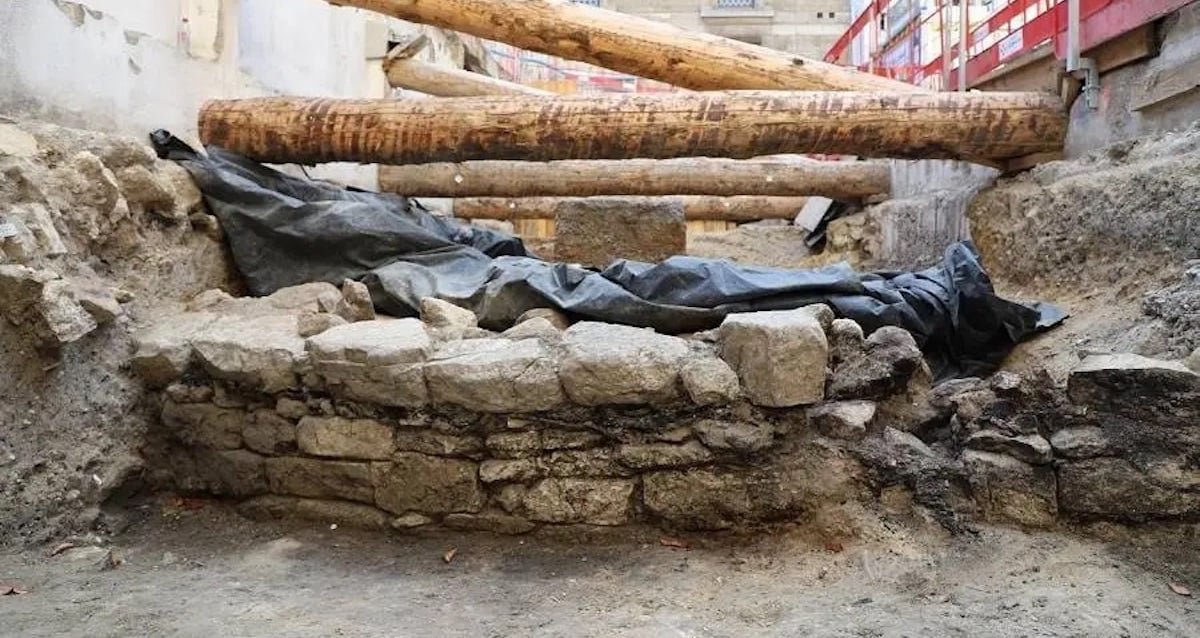
Archaeologists have uncovered a 72-foot ancient wall on the Île de la Cité in Paris, which is believed to be part of the original 2,200-year-old settlement of Lutetia. The structure, composed of stone and wood, is reinforced by sand and gravel layers seven feet thick, marking a significant discovery in the understanding of the city’s pre-Roman origins.
Structural Details of the Iron Age Wall
The discovery occurred during excavations in the courtyards of the Hôtel-Dieu hospital, which began in February 2026. The project, part of a hospital restructuring effort, aimed to find medieval remnants but instead revealed a structure dating back to the late Iron Age. The wall was constructed by the Parisii people, a Gallic tribe that lived along the river Seine.
The physical characteristics of the wall include:
- Length: 72 feet.
- Materials: A combination of stone and wood.
- Reinforcement: Seven feet of sand and gravel.
- Location: Île de la Cité, near the Notre Dame Cathedral.
Connection to Julius Caesar and the Gallic Wars
The site is believed to be linked to the events described in the Gallic Wars (58 to 50 B.C.E.). According to Julius Caesar’s writings, Lutetia was a town of the Parisii located on an island in the River Seine. For centuries, historians have sought physical evidence of this specific location.
In 52 B.C.E., Caesar’s troops fought the Battle of Lutetia. Historical records indicate that the Parisii, anticipating the Roman advance, set fire to their own town and destroyed the bridges to the island to prevent the Roman conquest. While the Romans eventually won, the settlement was already largely destroyed by fire.
Archaeological Evidence of Conflict
The newly unearthed wall provides physical evidence that aligns with these historical accounts. Researchers found charred wood fragments and burned seeds nearby, which carbon dating has placed between 200 and 10 B.C.E. This timeline matches the period of the Roman conquest of Gaul.
Further proof of military conflict was discovered at the foot of the wall: a Gallic spearhead. This find suggests the wall may have been part of the ramparts that Caesar’s army encountered during their campaign. According to a statement from France’s Ministry of Culture, the discovery is one of the most important remains ever found for understanding Gallic Lutetia.
Historical Significance of the Discovery
The Île de la Cité has long been considered a possible center for Lutetia, but hard archaeological evidence has been scarce. This discovery transforms the theoretical knowledge of ancient Paris into tangible evidence of the Parisii’s presence and the conflict with Rome. While the Ministry of Culture maintains a cautious approach toward the final verification of the chronology, the convergence of evidence—fire damage, military artifacts, and strategic location—strongly suggests that this is the original settlement of Paris.