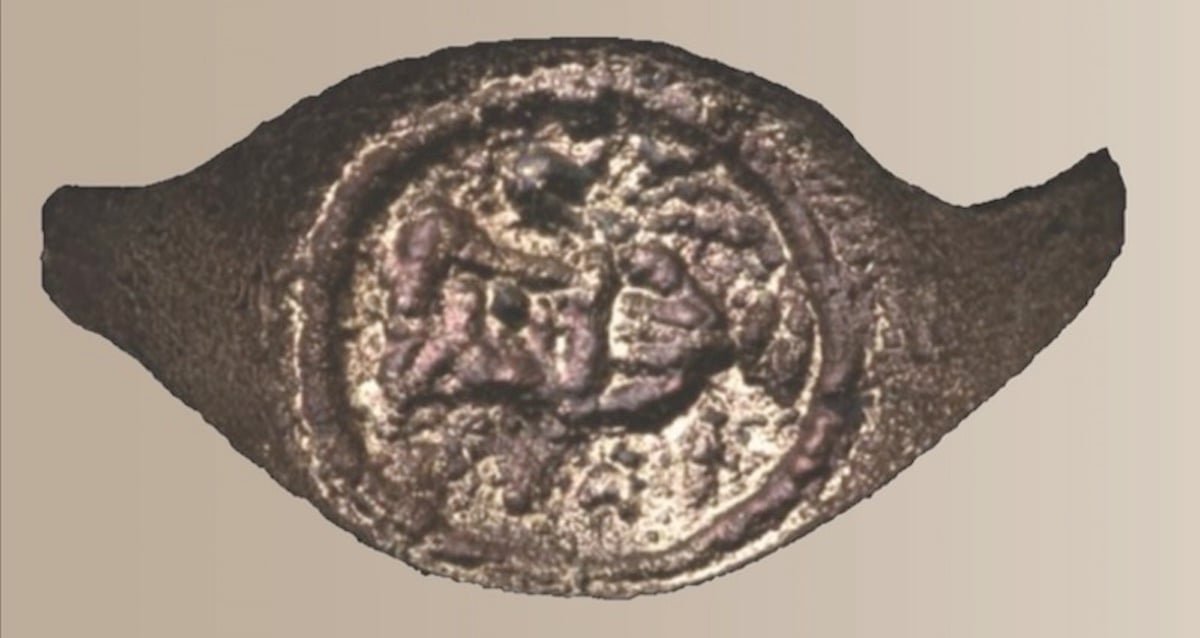

Archaeologists have identified a 2,000-year-old copper ring found at the Herodium fortress in the Judean Desert as a tool likely used by an employee of Pontius Pilate. The artifact, discovered in the 1960s but forgotten in storage until 2018, provides new insights into the administrative structure of Roman Judea, suggesting that local workers, including enslaved people, played a critical role in governing the region.
Administrative Role of the Ancient Ring
The ring is crafted from a copper alloy and features a Greek inscription and an image of a pottery vessel. Recent research, published in the Palestine Exploration Quarterly, suggests the object was not intended for personal adornment, but as a functional tool. It likely served as a signet ring to stamp clay or wax seals on materials destined for the Roman governor.
Material and Cultural Significance
Researchers have highlighted several key factors that distinguish this ring from typical Roman jewelry of the era:
- Material: The use of copper alloy instead of gold or silver indicates the owner was of a lower social class, ruling out the Pontius Pilate himself.
- Imagery: The pottery vessel engraving is a common Jewish motif, suggesting the owner was a local Judean resident rather than a Roman official.
- Inscription: The Greek text ΠΙΛΑΤΟ (PILATO) is interpreted as a transliteration of the Latin word for “for Pilate” or “to Pilate.”
Debate Over the Inscription
While initial theories in 2018 linked the ring to the Roman governor, a 2023 study challenged this, arguing the inscription consisted of two unrelated words. However, current research by Professor Catherine Bonesho has reaffirmed the connection to Pilate. Bonesho argues that the spelling irregularity—using the Greek omicron (O) instead of the omega (Ω)—is typical of a person with basic Latin knowledge living in a region recently under Roman rule.
According to a statement from the researcher, this discovery helps clarify how authority was distributed among the lower echelons of the Roman political structure in Judea. It demonstrates that the administrative work was not carried out exclusively by Romans, but by a diverse workforce of local employees and enslaved persons.
Historical Context of Herodium
The ring was found at Herodium, a mountaintop fortress known for its architectural significance in the Judean Desert. The artifact’s journey from discovery in the 1960s to its scientific re-evaluation in 2018 and beyond underscores the importance of archival research in archaeology. The ring now serves as a primary piece of evidence for the understanding of the daily lives and the bureaucratic processes of the Roman administration in the first century AD.