Picture this: a shimmering blue oasis in the heart of the California desert, attracting thousands with its promise of sun, sand, and relaxation. This was the Salton Sea in the 1950s, a man-made marvel that rivaled even Yosemite National Park in popularity. Celebrities like Frank Sinatra flocked to its shores, while world speedboat records were shattered on its waters. But what seemed like paradise was built on a fragile foundation, and the cracks began to show.
The problem? The Salton Sea had no natural outlet to the ocean. This meant that over time, salt accumulated in its depths, making it increasingly hostile to most life forms. Think about it: imagine being unable to drink water because it’s too salty – that’s what happened to the fish and other creatures who called the Salton Sea home. The ever-rising salinity, combined with scorching temperatures, low oxygen levels, and rampant algae blooms, created a perfect storm of environmental disaster.
This downward spiral had devastating consequences, not just for the wildlife but for the entire region. The creepy Salton Sea 1950s became synonymous with decline, as tourism plummeted and businesses shuttered their doors. It’s a cautionary tale about the delicate balance of nature and the potential for human actions to have unintended and far-reaching consequences.
A Paradise Lost: The Salton Sea’s Golden Age
You might be surprised to learn that the Salton Sea wasn’t always a desolate wasteland. In its heyday, during the 1950s and early 60s, it was a vibrant hub of activity, a true “paradise lost.” Imagine bustling beaches lined with colorful resorts, families picnicking under the warm sun, and the thrill of speedboat races across the shimmering water. It was a place where people came to escape the everyday grind and create memories that would last a lifetime.
The Salton Sea’s charm wasn’t just in its scenery; it was a destination for entertainment and relaxation. You could catch a show at the luxurious hotels, enjoy a delicious meal overlooking the water, or simply soak up the sun on the beach. Even Hollywood took notice, featuring the Salton Sea as a backdrop in several films and television shows. It truly felt like a slice of paradise amidst the vast California desert.
And who wouldn’t want to be part of that scene? The stars certainly did! Celebrities like Frank Sinatra, Dean Martin, and Judy Garland all made appearances at the Salton Sea, adding to its allure. Imagine sharing a cocktail with your idols while enjoying the breathtaking sunset over the lake – it was an experience unlike any other. It’s no wonder that for many, the creepy Salton Sea 1950s remains a bittersweet memory of a bygone era.
Salinity Crisis: Ecological Collapse
You can’t talk about the Salton Sea’s downfall without addressing the core issue: salinity. As I mentioned before, it had no natural outlet to the ocean, meaning that the water evaporated and left behind all the salt. Over time, this made the lake increasingly salty – way saltier than seawater!
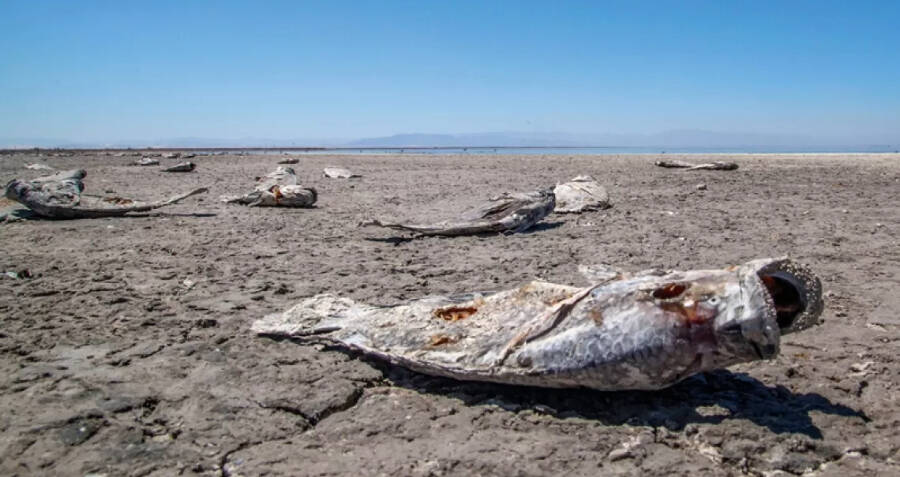
Think of it like adding more salt to your soup until it becomes undrinkable. That’s what happened to the Salton Sea. The ever-rising salinity became a death sentence for most aquatic life. Fish couldn’t survive in such an extreme environment, and their disappearance had a cascading effect on the entire ecosystem.
Birds that relied on fish as a food source dwindled in number, and other plant and animal species struggled to adapt. This ecological collapse wasn’t just about losing a few fish; it was a whole web of interconnected life forms being disrupted. The creepy Salton Sea 1950s became a stark reminder of how delicate the balance of nature truly is, and how human actions can have devastating consequences for entire ecosystems.
Environmental Deterioration and Economic Decline
The environmental woes didn’t stop at the water itself; the Salton Sea’s surrounding land also suffered. Shoreline flooding became a constant threat, eroding beaches and damaging homes and businesses. Add to that fertilizer runoff from nearby farms, which further contaminated the water, and you have a recipe for disaster.
This decline had a direct impact on the local economy. Tourism, once the lifeblood of the region, plummeted as people stayed away from the increasingly polluted shores. Businesses closed their doors, jobs vanished, and the once-thriving towns around the Salton Sea felt the pinch. It’s a sad story of how environmental degradation can lead to economic hardship, leaving communities struggling to survive.
The creepy Salton Sea 1950s became a symbol of this struggle – a reminder that ecological health and economic prosperity are deeply intertwined. The lessons learned from the Salton Sea’s decline offer a stark warning about the consequences of neglecting environmental protection.
Struggling for Survival: Revitalization Efforts
Despite the dire situation, there have been attempts to breathe life back into the Salton Sea. California launched the Salton Sea Management Program in 2003, aiming to address the environmental issues and find sustainable solutions. This program included a 10-year plan focused on habitat restoration projects and dust suppression efforts. It’s a long road to recovery, and progress has been slow, but it shows that there’s still hope for this once vibrant oasis.
There are some success stories, too! Projects like the Sonny Bono Salton Sea National Wildlife Refuge have helped create vital habitats for migratory birds, offering a glimmer of hope amidst the challenges. It’s inspiring to see people working tirelessly to protect what remains of this fragile ecosystem.
However, funding and political will remain major hurdles in the fight to revitalize the Salton Sea. The region faces complex socio-economic issues that complicate the situation, highlighting the need for comprehensive and long-term solutions. Despite the challenges, people continue to advocate for the Salton Sea, hoping to turn the tide from creepy Salton Sea 1950s ghost town to a thriving ecological haven once again.
Dust Bowl Legacy: Socioeconomic Impacts
As the Salton Sea shrank, a new problem emerged: dust. The exposed lakebed became incredibly dry and cracked, turning into a massive source of particulate matter that whipped up in the wind. This created a “dust bowl” effect, blanketing nearby towns and communities in a fine layer of silt.
This dust wasn’t just an annoyance; it had serious health consequences for residents. Breathing in these tiny particles could irritate lungs, trigger asthma attacks, and even lead to more severe respiratory problems. It also caused damage to crops and property, further impacting the already struggling economy.
The Salton Sea’s legacy of dust highlights a crucial point: environmental issues often disproportionately affect marginalized communities. The residents around the Salton Sea, many of whom are low-income and minority groups, bear a heavier burden from the health impacts of this ecological disaster. It underscores the need for equitable solutions that prioritize the well-being of all affected communities.