
As we navigate through the complexities of our existence on Earth, it is essential to ponder not just our present, but also the long-term outlook of life itself. The scientific community continually unravels the mysteries surrounding the fate of our planet and its inhabitants. Recent advancements have shed light on exactly when life on Earth may come to a catastrophic end, a prediction that, while unsettling, serves as an urgent reminder of our planet’s fragility.
The interplay between cosmic events and life on Earth is a vast field of study, leading researchers to forecast how celestial dynamics will affect our home in the coming eons. Through supercomputing and rigorous modeling, scientists have attempted to delineate the timeline of Earth’s demise, igniting crucial conversations about sustainability and our role in preserving life.
Understanding the life cycle of the Sun and its implications
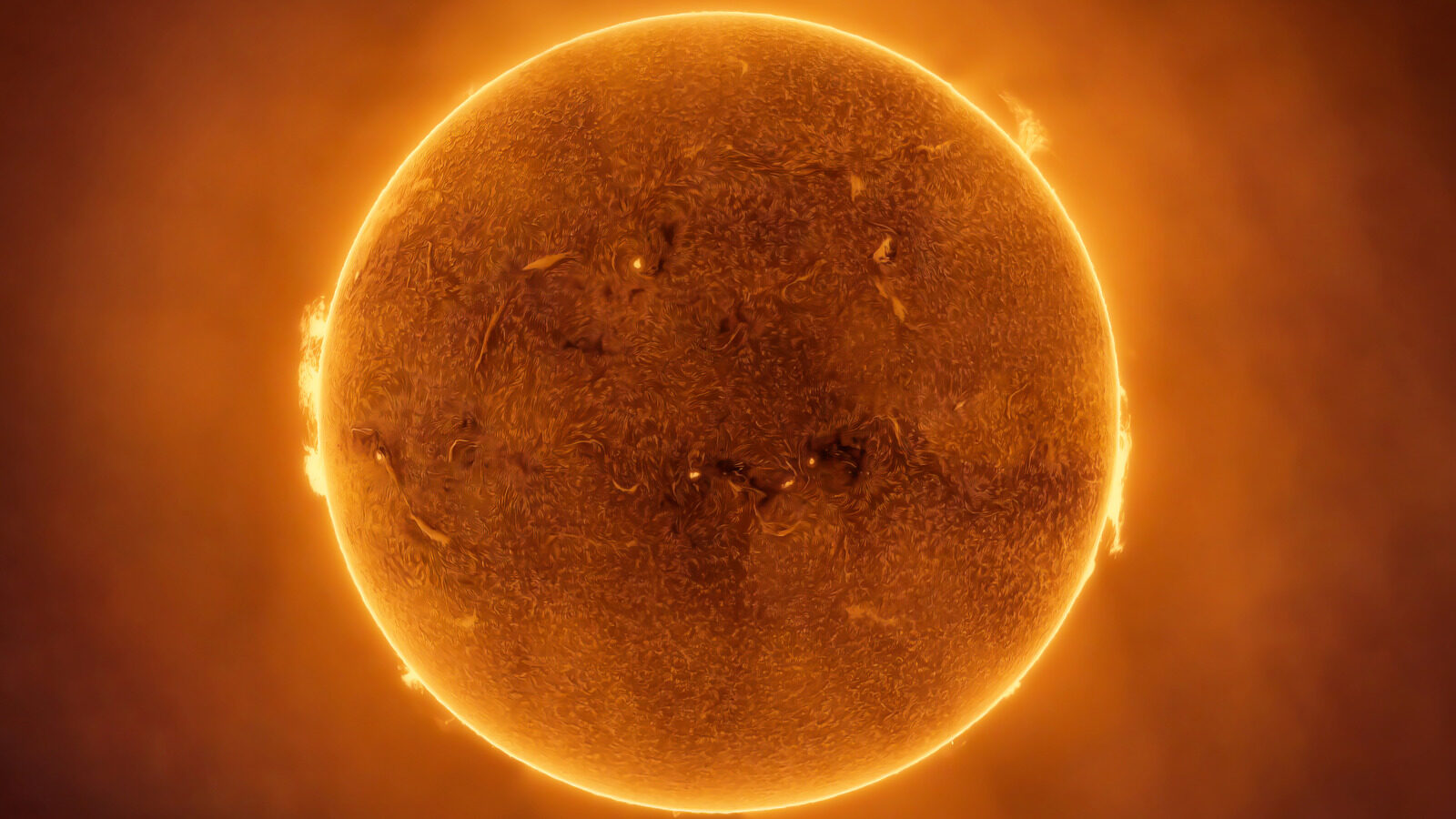
The Sun, our closest star, is at the heart of Earth’s ecological balance. As a massive ball of hydrogen undergoing nuclear fusion, it generates the energy that sustains life. However, this process is not eternal. Scientists estimate that the Sun is about halfway through its approximately 10-billion-year life cycle. This means we have roughly another 5 billion years before the Sun enters its red giant phase, a transition that will profoundly alter the solar system.
During the red giant phase, the Sun will expand to such an extent that it could engulf the inner planets, including Earth. But even before reaching this stage, the Sun’s gradual changes will render our planet increasingly inhospitable. Some of the imminent effects include:
- Temperature Rise: As the Sun ages, its luminosity increases, leading to higher temperatures on Earth.
- Oxygen Depletion: The potential reduction of solar fluxes will impact atmospheric oxygen levels.
- Climate Change: Escalating temperatures will exacerbate climate change, affecting ecosystems and biodiversity.
- Extreme Weather Patterns: Increased solar activity will likely lead to unpredictable and severe weather events.
Understanding these impending changes allows humanity to prepare for a more sustainable existence, giving us time to adapt before the cosmic clock runs out.
Predicting when Earth will become uninhabitable
In a groundbreaking study published in Nature, a team of NASA scientists and researchers from the University of Toho in Japan employed advanced mathematical modeling and supercomputing to predict when life will become untenable on our planet. Their findings estimate that Earth will be uninhabitable by the year 1,000,002,021.
To arrive at this sobering conclusion, the researchers utilized a combined biogeochemistry and climate model that analyzed various atmospheric conditions over extended time frames. Their predictions suggest that:
- Decreasing Solar Flux: Over time, the Sun’s energy output will gradually decrease, impacting the atmosphere’s ability to support life.
- Rising Temperatures: The increase in temperature will make it increasingly difficult for many species to survive.
- Atmospheric Changes: A significant reduction in oxygen levels will threaten all aerobic life forms.
- Long-Term Consequences: Without intervention or adaptation, life as we know it will cease to exist within a billion years.
While this timeline seems distant, it is much closer than the estimated 5 billion years until the Sun becomes a red giant. This stark reality serves as a reminder of our planet’s precarious situation and emphasizes the need for proactive measures to ensure life continues as long as possible.
The role of solar activity in Earth’s viability
In recent times, the Sun has exhibited increased activity, raising concerns about its potential effects on Earth. A significant event occurred in May 2024, when Earth experienced a severe “G5” level geomagnetic storm, the first of its kind in over two decades. This storm was triggered by eruptions on the Sun’s surface, which released charged particles into the solar system.
Impacts of such geomagnetic storms can be severe, including:
- Thermospheric Heating: These storms can cause abnormal heating of Earth’s thermosphere, affecting satellite operations.
- Infrastructure Damage: Overheated transformers and disrupted GPS systems can lead to widespread technological failures.
- Visual Phenomena: Increased solar activity can produce stunning auroras, showcasing the Sun’s influence on Earth.
The Carrington Event of 1859, the most powerful solar storm recorded, serves as a cautionary tale. If a similar event were to occur today, it could cripple communication networks and electrical grids, leading to chaos in modern society.
Preparing for an uncertain and challenging reality
The predicted timeline for Earth’s uninhabitability and the increasing frequency of solar storms underscore the urgent need for humanity to adapt and prepare for these challenges. Some key areas of focus include:
- Sustainable Practices: Transitioning to renewable energy sources can help mitigate climate change.
- Technological Advancements: Investing in robust infrastructure capable of withstanding solar storms is essential for maintaining our way of life.
- Space Exploration: Initiatives aimed at colonizing other planets could provide alternative habitats for humanity.
- Global Cooperation: Collaborative efforts among scientists, policymakers, and communities can foster resilience against impending threats.
As we confront the realities of our planetary fate, it is essential to embrace a proactive approach. The understanding of cosmic events and their implications for life will not only guide scientific endeavors but also shape our collective responsibility to safeguard the future of our planet.