

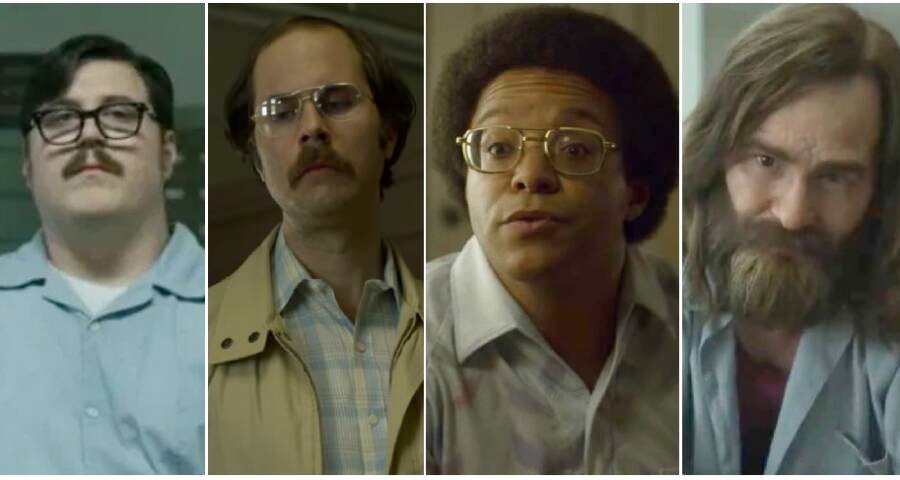
The Netflix series Mindhunter explores the early days of the FBI’s Behavioral Science Unit. Based on real-life events, the show depicts the formation of a specialized unit tasked with interviewing convicted serial killers to understand their psychology. This process allowed investigators to solve active cases by creating psychological profiles of unknown offenders.
The Real Profilers Behind the Show
The character of Holden Ford is based on John E. Douglas, a former FBI agent who joined the Behavioral Analysis Unit in 1979. Douglas’s career trajectory mirrors the same path as Ford’s in the series. He began as an instructor on hostage negotiations before transitioning into the same investigative techniques that defined the early era of criminal profiling.
Working alongside agent Robert Ressler, Douglas traveled across the United States to interview incarcerated serial killers. Their goal was to understand the psychological imperatives that drove these offenders. By identifying patterns in their patterns of behavior, they could predict a killer’s next move or exploit psychological triggers to catch them.
John Douglas interviewed some of the most notorious criminals in American history, including Ted Bundy, Charles Manson, and John Wayne Gacy. These interviews provided the data needed to build powerful psychological profiles. John Douglas’s work eventually led to the establishment of a full-fledged operational unit by the mid-1980s, which grew from investigating 59 open cases in 1979 to over 1,000 by 1995.
The Role of Academic Research in Criminal Profiling
The character of Dr. Wendy Carr is inspired by Ann Burgess, a professor of psychiatric mental health nursing at Boston College. While the series portrays Carr as an FBI agent, the real Ann Burgess never joined the FBI in Quantico, Virginia. Instead, she provided the academic framework necessary to turn raw interview data into a formalized system for criminal profiles.
In the 1970s, Burgess conducted foundational research on rape trauma, which came to the attention of the FBI. After being referred to her work by a detective in the Los Angeles Police Department, the FBI approached her as an expert. She helped Douglas and Ressler transform their interviews into a formal study of criminal behavior, which was published in 1980, and later in the book Sexual Homicide: Patterns and Motives (1988).
In an interview with the Pittsburgh Post-Gazette, Burgess noted that the show’s first season is approximately 80% accurate in terms of substantive facts. She also clarified that the character’s personal life, including her closeted homosexuality, was a creative license taken by the producers to make the story more dramatic for the audience.
Is Mindhunter Based on True Crime?
Yes, the series is based on the true-crime stories of some of the most violent offenders of the past several decades. It is a dramatic representation of the FBI’s efforts to develop the Behavioral Science Unit. While some characters’ names were changed and some scenes were fictionalized for entertainment, the core premise—interviewing killers to understand the psychology of serial offenders—is based on factual history.
Did Holden Ford and Bill Tench Exist?
The characters of Holden Ford and Bill Tench are fictionalized versions of John Douglas and Robert Ressler. While their interactions and specific dialogue are dramatized, their professional roles and the overall mission of the FBI unit were real. The process of interviewing convicted killers like Ed Kemper, Jerry Brudos, and Richard Speck was a central part of the real-life investigation process.
Why Was the Netflix Show Mindhunter Cancelled?
While the official reason for the production was could be related to production costs and viewership numbers, the process of recreating the real-life interviews was highly demanding. The actors, such as Cameron Britton, who played Ed Kemper, provided a performance that stayed close to the real-life recordings of the same killer. The effort required to maintain this level of detail in the same way as the real tapes of these killers was significant.
Real Killers Portrayed in the Series
- Edmund Kemper: A notorious serial killer who assisted the FBI in providing insights into the series of crimes he motive.
- Jerry Brudos: A serial rapist and murderer whose interviews helped the FBI identify patterns of behavior.
- Richard Speck: A murderer whose crimes were committed with extreme brutality.
- Ed Gein: A serial killer whose crimes influenced the rest of the profiling era.
The FBI’s Behavioral Science Unit established a system where investigators could identify the same psychological needs that drove a killer to commit a crime. By understanding these psychological triggers, the FBI could identify the predict the profile of a killer’s next victim or their mistake that would lead to them.