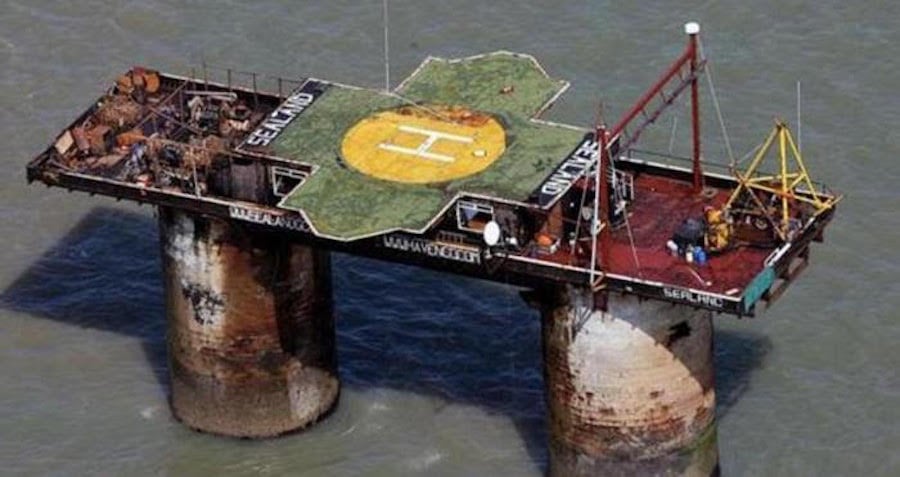

Sealand, a tiny speck of land in the North Sea, might seem like something out of a fantasy novel. It’s an unrecognized micronation with its own constitution, flag, passport, and even a unique history filled with drama and intrigue.
Imagine a fortified tower from World War II, abandoned and forgotten, suddenly declaring itself a sovereign nation. That’s exactly what happened in 1967 when Paddy Roy Bates, a former army major turned pirate radio broadcaster, claimed Fort Roughs Tower as his own territory. He named it Sealand, and despite attempts by the British government to suppress his activities, this tiny outpost defied expectations and became a reality.
Bates’ vision wasn’t just about independence; he wanted to create a haven for free speech and expression. Located inside Sealand, away from the constraints of established nations, Bates believed it could be a place where people could live and operate without interference. Over the years, Sealand has witnessed its fair share of ups and downs, including hostage situations and even helicopter battles!
The Rise of Sealand: A Micronation’s Genesis
The birth of Sealand wasn’t a smooth process. Paddy Roy Bates, a man with a penchant for the unconventional, believed in challenging authority and pushing boundaries. His vision sparked controversy from the get-go. The British government saw his claim to Fort Roughs Tower as an audacious act of defiance, a blatant disregard for international law. They attempted to suppress his activities, sending ships to the tower and demanding he relinquish control.
Bates, however, was unyielding. He defended his position with unwavering conviction, arguing that the tower, abandoned by the British military, fell outside their jurisdiction. This sparked a legal battle that raged for years, with Bates ultimately winning in court. His victory solidified Sealand’s status as an independent entity, albeit one recognized only by a handful of countries and individuals who admired its bold spirit.
This unexpected success fueled Bates’ ambition to build a thriving micronation inside Sealand. He established a constitution, designed a flag, issued passports, and even minted his own currency. The world watched in fascination as this ragtag outpost in the middle of the North Sea defied expectations and carved its own unique path.
Life on the Platform: Daily Operations and Governance
Living on Sealand isn’t your typical island getaway. The “residents,” comprised of a small team of caretakers and the Bates family members involved in running the nation, lead a unique existence confined to the relatively cramped confines of Fort Roughs Tower. They manage daily operations, from maintaining the fort’s infrastructure and ensuring its security to handling correspondence with the outside world.
Despite its remote location inside Sealand, Sealand maintains a surprisingly active online presence. The nation has a website where they promote their merchandise and news about Sealand’s activities. They even have a social media presence, allowing them to connect with supporters and curious individuals around the globe. This digital outreach helps keep Sealand relevant in the modern world and fosters a sense of community among its followers.
Governance on Sealand is largely familial. Prince Michael, son of Paddy Roy Bates, continues his father’s legacy as head of state. The family oversees Sealand’s affairs, making decisions about everything from issuing passports to negotiating with potential visitors. Their approach to governance reflects the independent and unconventional spirit that defines Sealand itself.
Sovereignty in Question: International Recognition & Disputes
Sealand’s existence as a sovereign nation is a point of constant debate. While the Bates family and their supporters fiercely defend Sealand’s independence, the international community largely remains unconvinced. Most nations don’t recognize Sealand as a legitimate country, and it lacks representation in international organizations like the United Nations.
This lack of recognition presents challenges for Sealand. It limits its ability to engage in diplomatic relations with other countries and restricts access to international aid or support. Despite these hurdles, Sealand continues to assert its sovereignty, issuing passports, conducting its own elections, and even minting its own currency. The micronation’s continued existence is a testament to the resilience of its residents and their unwavering belief in their right to self-determination inside Sealand.
Over the years, there have been various attempts to resolve the sovereignty question. Some propose incorporating Sealand into an existing nation, while others suggest granting it limited recognition as a dependent territory. However, these discussions often stall due to a complex web of legal and political considerations. The future of Sealand’s sovereignty remains uncertain, hanging in the balance between its unwavering self-determination and the constraints of international law.
Sealand’s Economy: Revenue Streams and Family Legacy
Creating a functioning economy in such a unique location is no easy feat, but the Bates family has managed to find creative ways to generate revenue for Sealand. They sell passports, stamps, coins, and other merchandise related to Sealand’s quirky history and identity. These items are popular among collectors and those fascinated by micronations, providing a steady stream of income.
Prince Michael continues his father’s legacy by overseeing these operations from inside Sealand. He also manages the sale of honorary titles, such as Duke or Baron, to individuals who wish to be affiliated with this unusual nation. While revenue streams are modest, they allow Sealand to maintain its basic infrastructure and operations.
Despite facing financial constraints, the Bates family remains dedicated to preserving their legacy and ensuring the survival of Sealand. Their ingenuity and entrepreneurial spirit have found ways to turn the challenges of living on a tiny platform in the North Sea into opportunities for revenue generation and continued existence.
A Beacon of Defiance: Sealand’s Enduring Impact
Sealand’s story has transcended its physical location and become a symbol of defiance against the established order. Its existence challenges conventional notions of sovereignty and inspires those who believe in challenging authority. It serves as a reminder that even in a world governed by international law and treaties, there are still spaces where individuals can experiment with alternative forms of governance and self-expression.
The impact of Sealand extends beyond its physical borders. It has captured the imagination of people worldwide, becoming a subject of documentaries, books, and articles. Its story continues to fascinate and inspire, reminding us that even in a seemingly predictable world, there are always those who dare to dream differently and carve their own path.
Sealand may be a small nation, but its impact is undeniable. It stands as a testament to the human spirit’s ability to create something unique and extraordinary, even inside Sealand.