

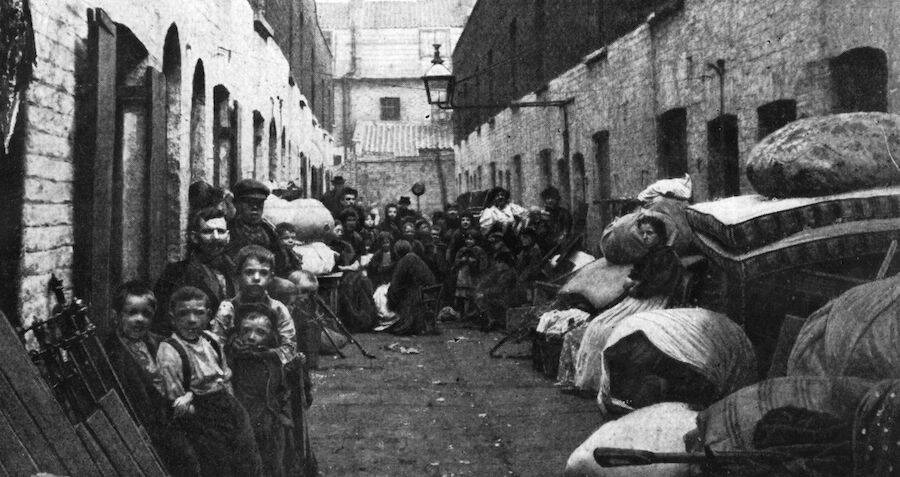

Victorian London was a city of stark contrasts. While the wealthy enjoyed lavish lifestyles and grand architecture, a shadow hung over much of the metropolis: poverty. A staggering 35% of Londoners lived in dire circumstances within the slums of London. These overcrowded and unsanitary areas were far removed from the glittering world of high society. Life in these communities was a constant struggle for survival.
Imagine narrow, cramped streets teeming with people and refuse. Homes built hastily on marshy ground were prone to collapse, offering little protection from the elements. Disease ran rampant, with cholera being a particularly deadly threat. Residents faced limited job opportunities and long hours of backbreaking labor. For many, escaping poverty seemed an impossible dream.
The plight of these forgotten Londoners captured the attention of social reformers who sought to shed light on their harsh realities. They documented the conditions within the slums in London, revealing a hidden world of suffering that needed urgent attention.
Poverty in Victorian London
Poverty in Victorian London was a pervasive issue that affected all aspects of life. The gap between the rich and poor was vast, with the wealthy enjoying extravagant lifestyles while millions struggled to survive on meager wages.
Unemployment was high, particularly among unskilled workers, leaving many families desperate for work. Working conditions were often dangerous and exploitative, with long hours and low pay being the norm. Child labor was rampant, with young children forced into hazardous jobs at a tender age. This cycle of poverty trapped generations in a struggle for basic necessities.
The harsh realities of poverty led to widespread social problems. Crime rates soared as desperation drove individuals to desperate measures. Public health suffered as inadequate sanitation and lack of access to healthcare fueled the spread of infectious diseases. The poor often faced discrimination and prejudice from those better off, further marginalizing them within society.
Life in the Slums
Life in the slums of London was a constant battle against hardship and despair. Imagine cramped, windowless rooms where families shared a single bed and cooked over open fires. Sanitation was non-existent, leading to the spread of disease and unbearable living conditions. The stench of refuse and human waste permeated the air, making it difficult to breathe.
Days were filled with the clamor of traffic, street vendors, and desperate pleas for work. Residents faced limited access to clean water and food, relying on meager rations or what they could scavenge. Children often went barefoot, their clothes tattered and worn. The constant threat of illness hung over them like a dark cloud.
Despite the grim reality, communities within the slums often provided a sense of shared struggle and mutual support. Neighbors looked out for one another, sharing resources and offering comfort during times of need. Religion played a significant role, providing solace and hope in the face of adversity. Yet, the harsh realities of slum life left an indelible mark on those who endured it.
Social Perceptions and Responses
The stark reality of London’s slums divided public opinion. While some wealthy residents remained indifferent, attributing the problems to poverty and perceived immorality, others felt a growing sense of responsibility towards those less fortunate. Newspaper reports often sensationalized the conditions within the slums in London, fueling public fascination and sometimes endangering those who ventured into these impoverished areas.
Social reformers like Henry Mayhew and Charles Booth emerged as prominent voices, conducting extensive research and documenting the plight of the urban poor. They argued that poverty was a complex issue stemming from systemic inequalities, not simply individual failings. Their work shed light on the human cost of social injustice and spurred calls for reform. Philanthropic organizations also sprang up to provide assistance, ranging from food banks and shelters to educational programs and medical care.
The growing awareness of the slum dwellers’ suffering led to a gradual shift in public perception. While deep-seated prejudices lingered, there was a growing recognition that poverty was a societal problem requiring collective action. This paved the way for future reforms aimed at improving sanitation, housing conditions, and access to education within London’s slums.
Reform Efforts and Progress
The late Victorian era witnessed a gradual push for reform as public awareness of the plight of London’s poor grew. While progress was slow and met with resistance from those who benefited from the status quo, significant advancements were made in addressing the challenges faced by slum dwellers. Public health initiatives focused on improving sanitation and providing clean water access, which helped curb the spread of infectious diseases.
New housing regulations aimed to improve building standards and provide more adequate living conditions. The establishment of new schools offered opportunities for children to receive an education, breaking the cycle of poverty that often trapped families within the slums for generations. These reforms were not without their flaws, as they often fell short of addressing the root causes of poverty. Nonetheless, they marked a turning point in London’s history, signaling a commitment to social change and a recognition that improving the lives of its poorest citizens was essential for the well-being of the city as a whole.
The efforts of philanthropic organizations also played a crucial role in providing direct assistance to those in need. Charities offered food banks, soup kitchens, clothing donations, and medical care to alleviate suffering within the slums.
These organizations often worked alongside local governments and social reformers to advocate for policies that would create lasting change. While challenges remained, the combined efforts of these various actors contributed to a gradual improvement in the lives of London’s poorest residents during this period.
Beyond the Shadows
Though Victorian London’s slums were a stark reminder of societal inequalities, they also served as a crucible for resilience and innovation. Within these communities, residents developed strong social networks, mutual aid systems, and cultural traditions that provided solace and strength in the face of adversity. They found ways to celebrate life, nurture hope, and create beauty even amidst hardship.
The stories of individuals who emerged from the slums serve as testaments to their indomitable spirit. Many went on to become successful artists, writers, activists, and entrepreneurs, defying the limitations imposed by poverty and prejudice. Their journeys highlight the human capacity for growth, perseverance, and triumph over adversity. The legacy of Victorian London’s slums reminds us of the importance of fighting for social justice, addressing systemic inequalities, and ensuring that all members of society have the opportunity to thrive.
While the conditions within these impoverished areas were undeniably challenging, they also fostered a sense of community, resilience, and an unwavering belief in the possibility of a better future.