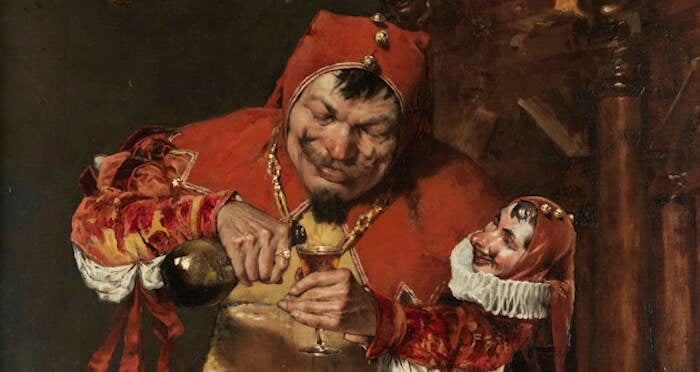

Triboulet is a name whispered with intrigue and admiration in the halls of Renaissance history. This French court jester, beloved by Kings Louis XII and Francis I, entertained with quick wit and biting humor that often exposed the hypocrisy swirling around him.
Despite facing challenges due to congenital disabilities, including microcephaly, Triboulet rose above adversity to become a legend. His comedic talent was undeniable, and his ability to find humor in even the most serious situations captivated audiences. He wasn’t afraid to speak truth to power either, sometimes using his sharp tongue to land jabs at the very people who held authority over him.
One story recounts how Triboulet saved himself from execution by delivering an insult so clever and amusing that it left King Francis I roaring with laughter. This incident alone speaks volumes about his comedic genius and the unique position he held within the court. His legacy echoes through time, inspiring legendary works like Victor Hugo’s play Le Roi sAmuse and Giuseppe Verdi’s opera Rigoletto. These masterpieces cemented Triboulet’s place in history as a pivotal figure in entertainment and served to immortalize his story for generations to come.
Life at the French Court
Life as a court jester was never dull, and Triboulet’s time at the French court was no exception. Imagine bustling halls filled with nobles vying for attention, gossip swirling like perfume in the air, and the constant hum of intrigue woven into every conversation. Amidst this whirlwind, Triboulet thrived.
His sharp wit and comedic timing cut through the pomp and circumstance, often leaving even the most stoic courtiers chuckling. He wasn’t just there to entertain; he was a keen observer of human nature, using his platform to expose hypocrisy and social injustices with a wink and a grin. Think of him as a Renaissance-era stand-up comedian, delivering cutting remarks about power dynamics and societal norms.
He walked a fine line, always careful not to offend those in power too greatly, but never shy away from poking fun at the absurdity he witnessed. His cleverness and courage made him both a beloved figure among commoners and a thorn in the side of some high-ranking officials. Triboulet’s stories are filled with tales of elaborate pranks, witty repartee, and daring insults that somehow always managed to land without causing irreparable harm.
Triboulet’s Gift for Satire
Triboulet possessed a gift for satire that transcended mere humor. His jokes weren’t just funny; they were sharp observations about the world around him, cleverly disguised as lighthearted entertainment. He understood the power of laughter to expose hypocrisy and challenge societal norms.
Think of him as a social commentator using wit as his weapon of choice. He targeted everything from political corruption to the pretentiousness of the aristocracy with equal measure. His jokes often carried a sting, but they were so cleverly delivered that even those on the receiving end couldn’t help but chuckle. It was this blend of humor and social commentary that made him such a popular figure among commoners, who saw in him a voice speaking truth to power.
His ability to make people laugh while simultaneously making them think is what elevates his work beyond simply being funny. Triboulet’s satire wasn’t just about getting a chuckle; it was about starting conversations and pushing people to question the status quo. This legacy of insightful humor continues to inspire artists and comedians even today.
A Jester Saved by Wit
One story stands out as a testament to Triboulet’s quick wit and resilience: the tale of how he escaped execution thanks to his comedic genius. Word has it that he angered a powerful figure at court, leading to a serious accusation and a death sentence. Facing his final moments, Triboulet refused to be cowed by fear.
Instead, he chose to meet his fate head-on with humor. Before the executioner could strike, Triboulet delivered a biting insult so clever and unexpected that it left King Francis I roaring with laughter. The king, impressed by Triboulet’s audacity and wit, pardoned him on the spot. This story highlights Triboulet’s ability to navigate dangerous situations with his trademark blend of humor and intelligence.
It also shows how powerful a weapon wit could be in the courtly world, where appearances mattered just as much as actions. This anecdote cemented Triboulet’s reputation as a jester who could not only make people laugh but also save himself from harm through the sheer power of his words.
Legacy and Artistic Inspiration
Triboulet’s story didn’t end with his time at court. His legend lived on, inspiring artists and writers for centuries to come. His name became synonymous with the archetype of the jester: a figure who uses wit and humor to challenge authority and entertain the masses. Even today, the word “triboulet” is sometimes used to describe a red-clad Renaissance fool, cementing his place in popular culture.
The most enduring tributes to Triboulet are perhaps Victor Hugo’s play Le Roi sAmuse and Giuseppe Verdi’s opera Rigoletto. Both works draw heavily on the jester character archetype made famous by Triboulet’s story, exploring themes of loyalty, betrayal, and the power dynamics within a court. These masterpieces ensured that Triboulet’s name would forever be linked with those of other legendary figures in theatre history, solidifying his legacy as an influential figure who continues to inspire creative works even today. His story serves as a reminder that humor can have a lasting impact, transcending time and leaving behind a legacy that continues to entertain and enlighten audiences around the world.
The Enduring Symbol of Triboulet
Triboulet’s legacy extends far beyond his time in the French court. He has become a symbol of wit, resilience, and the enduring power of laughter to challenge authority. His story continues to resonate with audiences today, reminding us that humor can be a powerful tool for social commentary and personal liberation.
The image of the red-clad jester, often associated with Triboulet, evokes both amusement and contemplation. It represents a figure who dared to speak truth to power through wit and satire. His story serves as an inspiration for anyone who has ever felt marginalized or silenced, showing that even in the face of adversity, humor can be a weapon against injustice. The triboulet cause of death is a reminder that life is fragile, but it’s also a testament to the power of legacy and how one person’s story can continue to inspire generations long after they are gone.