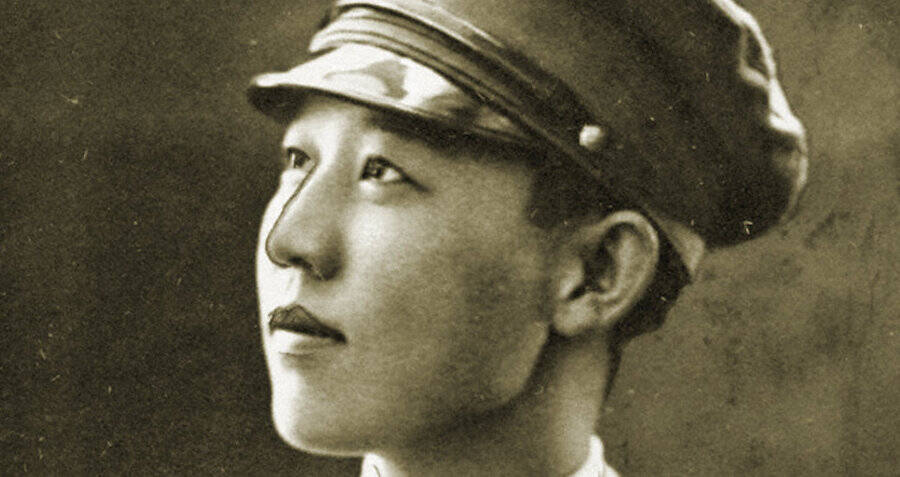
Yoshiko Kawashima is a figure shrouded in intrigue and controversy. Born into the Aisin Gioro clan of China as Princess Aisin Gioro Xianyu in 1907, her life took a dramatic turn following the fall of the Qing Dynasty. Sent to live with her Japanese friend Naniwa Kawashima, she adopted the name Yoshiko and embraced a non-conforming lifestyle that defied traditional expectations. This upbringing would shape her path, leading her on an extraordinary journey from princess to spy, musician, and ultimately, a fallen icon.
Kawashima’s aspirations extended beyond a life of personal liberation. She yearned to restore her family’s lost power and was deeply inspired by Joan of Arc, the legendary French heroine who defied societal norms and led armies against overwhelming odds. This yearning for influence, coupled with Japan’s growing military ambitions in Asia during the Second Sino-Japanese War, set the stage for Kawashima’s involvement in espionage. She became a vital asset to Japanese General Kenji Doihara, working tirelessly to establish the puppet state of Manchukuo, leveraging her connections and mastery of disguise.
Her influence even extended to persuading the deposed Qing Emperor Puyi to become the figurehead ruler of Manchukuo, further solidifying her position within Japan’s complex web of power struggles and ambitions. However, Princess Kawashima‘s outspoken nature and rumored drug addiction ultimately proved to be her undoing.
From Princess to Yoshiko Kawashima
Yoshiko Kawashima’s transformation from a Chinese princess to the enigmatic Yoshiko Kawashima was a dramatic departure from her upbringing as Aisin Gioro Xianyu. Sent to live with her Japanese friend Naniwa Kawashima following the Qing Dynasty’s fall, she embraced a new identity that transcended traditional gender roles and expectations.
This period of her life was marked by self-discovery and rebellion against societal norms. She adopted the name Yoshiko and began cross-dressing, defying the rigid social structures of both China and Japan. This bold choice signaled a desire to forge her own path, independent of the confines imposed upon her by birthright and circumstance. It also hinted at a rebellious spirit that would later manifest itself in her daring exploits as a spy and public figure.
Within this new identity, she cultivated a persona that was both alluring and unconventional. She pursued interests that were considered unorthodox for women of her time, immersing herself in music and performance. This multifaceted approach to life foreshadowed the complex and captivating individual Princess Kawashima would become, a woman who defied categorization and left an indelible mark on history.
A Life of Espionage and Deception
As Japan’s imperial ambitions grew in the 1930s, Yoshiko Kawashima found herself drawn into the world of espionage and deception. Her connections to both China and Japan, coupled with her understanding of cultural nuances, made her a valuable asset to General Kenji Doihara, a key figure in Japanese military strategy. She was tasked with gathering intelligence, cultivating informants, and orchestrating covert operations within Chinese territories.
Kawashima’s expertise lay not only in her network but also in her mastery of disguise. She could seamlessly blend into different social circles, adopting various personas to conceal her true identity and mission. This chameleon-like ability allowed her to move undetected through enemy lines, gathering critical information about military movements and political developments. Her work often involved delicate negotiations with Chinese officials, diplomats, and even resistance groups, navigating a treacherous landscape of loyalty and betrayal.
During this period, she played a pivotal role in the creation and consolidation of Manchukuo, the puppet state established by Japan in Northeast China. She utilized her charm and influence to persuade key figures within the Qing Dynasty to support the new regime, demonstrating her political acumen and ability to manipulate events to Japan’s advantage. This marked a turning point in Kawashima’s life, thrusting her into the heart of international power struggles and cementing her legacy as a cunning operative.
The Puppet State of Manchukuo
The establishment of Manchukuo in 1932 represented a significant geopolitical shift in East Asia, and Yoshiko Kawashima was instrumental in its creation and subsequent administration. This puppet state, established by Japan and ostensibly governed by the deposed Qing Emperor Puyi, served as a strategic tool to secure Japanese control over Manchuria’s resources and undermine Chinese sovereignty.
Kawashima played a crucial role in persuading Puyi to accept the position of Manchukuo’s emperor, leveraging her personal connections and understanding of his political ambitions. She deftly navigated the complex web of negotiations between Puyi, Japanese officials, and various factions within Manchukuo, ultimately ensuring Puyi’s compliance and solidifying Japan’s control over the region.
While Manchukuo officially operated as an independent state, it was heavily influenced by Japan, serving primarily as a base for military operations and resource extraction. Kawashima, despite her controversial methods, became a prominent figure within Manchukuo’s court, wielding considerable influence over policy decisions and social reforms. Her presence there underlined the intricate connection between espionage, political maneuvering, and the construction of this artificial state, highlighting the complexities of power dynamics in the region during this tumultuous period.
From Fame to Treason: Kawashima’s Fall
Kawashima’s fame in Japan reached new heights during the 1930s and early 40s. She appeared on radio shows, captivated audiences with her music, and became a recognizable public figure. Her daring persona and controversial past added to her allure, turning her into a symbol of both rebellious spirit and Japanese national pride. However, this celebrity status masked growing tensions between Kawashima and the Japanese military establishment.
Her outspoken nature, coupled with rumors of drug addiction, made her a liability in the eyes of military officials who valued loyalty and discretion above all else. They viewed her as unpredictable and potentially damaging to Japan’s carefully constructed image. This shift in perception led to her gradual isolation from influential circles and ultimately resulted in house arrest.
Kawashima’s fate took a dramatic turn when the tide of war began to turn against Japan. Chinese authorities, aware of her past activities and incensed by Manchukuo’s existence, accused her of treason. She was captured and tried for her alleged crimes, facing accusations of espionage, collaboration with the enemy, and betrayal of her Chinese heritage. The trial concluded with a guilty verdict, and in 1948, Princess Kawashima met her end at the hands of Chinese executioners, marking a tragic end to a life that had been both glamorous and deeply conflicted.
Legacy of a Complex Figure
Yoshiko Kawashima’s legacy remains a complex and debated topic, shrouded in both admiration and condemnation. She is remembered as a trailblazer who defied societal norms and challenged traditional gender roles, embracing a life of adventure and intrigue. Her courage and resourcefulness in navigating the treacherous world of espionage have earned her a place in history as a cunning operative.
However, her actions also remain deeply controversial. Her collaboration with Japan during the Second Sino-Japanese War, particularly her role in establishing Manchukuo, casts a dark shadow over her achievements. She is seen by some as a traitor to her Chinese heritage and a pawn in Japan’s imperial ambitions. The complexities of her motivations, driven by personal ambition, political expediency, and perhaps even a genuine desire to restore her family’s honor, continue to be debated by historians and biographers.
Ultimately, Princess Kawashima’s story serves as a reminder of the moral ambiguities inherent in historical events. She was a product of her time, navigating a world defined by war, political upheaval, and shifting power dynamics. While her life may be viewed through contrasting lenses, it undoubtedly offers a fascinating glimpse into a tumultuous era and the complexities of individual agency within the larger context of history.