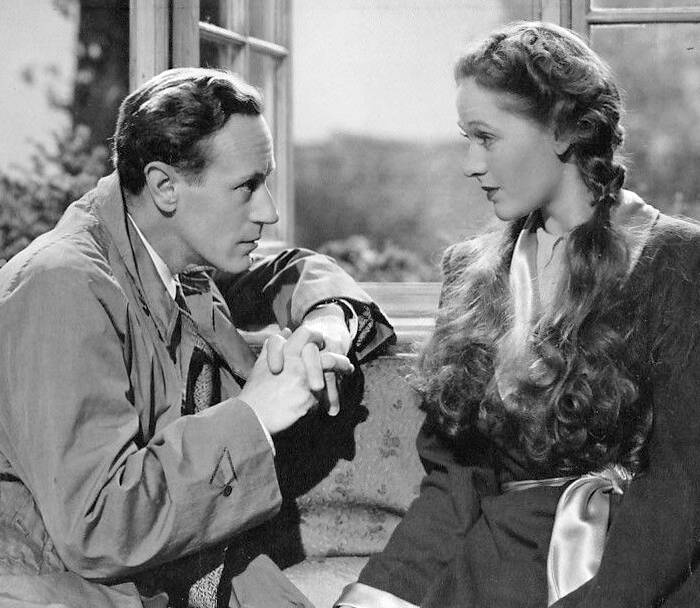
Leslie Howard, a name synonymous with classic cinema, carries a legacy that transcends his roles on screen. Known for his poignant performances and undeniable charm, his life took a dark turn during World War II, leading to speculation about his involvement in espionage. This article delves into his multifaceted career, his contributions to the war effort, and the tragic circumstances surrounding his death.
Leslie Howard: The Hollywood Star Who Became a Target
On June 1, 1943, a civilian aircraft, BOAC Flight 777, tragically met its end when it was shot down by Nazi planes over the Atlantic Ocean, resulting in the deaths of all 17 individuals on board, including the renowned actor Leslie Howard. While his film career flourished with memorable performances in classics like Gone With The Wind, his life and death have sparked theories suggesting he may have been targeted due to covert activities during the war.
Born Leslie Howard Steiner on April 3, 1893, in London, Howard’s journey began far from the silver screen. His early career as a bank clerk was interrupted by World War I, where he served as a soldier. The harrowing experiences of war left him with shell shock, prompting a physician to recommend acting as a therapeutic outlet. This shift set the stage for his rise in the performing arts, eventually leading to Broadway and Hollywood fame.
The Early Life and Career of Leslie Howard
Howard’s transition from a soldier to a celebrated actor is remarkable. After starting his career in London theater, he made a significant impact on Broadway before debuting in Hollywood in 1930 with Outward Bound. His talent quickly garnered attention:
- In 1933, he starred in Berkeley Square, earning an Academy Award nomination.
- His performance alongside Bette Davis in The Petrified Forest (1936) solidified his status as a leading man.
- In 1938, he received another Oscar nod for his role in Pygmalion.
- Finally, his portrayal of Ashley Wilkes in Gone With The Wind (1939) remains one of his most iconic roles.
Despite his success, Howard felt compelled to leave Hollywood when World War II erupted, seeking to contribute to the war effort in Britain.
How Leslie Howard Supported the War Effort
During the tumultuous years of World War II, Leslie Howard became an outspoken advocate for the Allied cause, channeling his celebrity status into meaningful contributions:
- He delivered impactful radio broadcasts that galvanized public support for the war.
- Howard took on roles in anti-Nazi films, using his platform to spread awareness and rally support.
- In 1941, he starred in 49th Parallel, aimed at persuading the United States to join the war effort.
- He produced, directed, and starred in Pimpernel Smith, a film that inspired real-life efforts to rescue Jews from Nazi persecution.
- In 1942, he created The First of the Few, a biographical film about the Spitfire’s creator, which resonated deeply with British audiences.
However, his outspoken opposition to the Nazis did not go unnoticed. Joseph Goebbels, the Nazi propaganda minister, reportedly took offense to Howard’s portrayals, potentially inciting a vendetta against the actor.
The Circumstances Surrounding Leslie Howard’s Death
On that fateful day in June 1943, Howard boarded BOAC Flight 777 with a sense of foreboding. He confided in his wife about a “queer feeling” regarding the flight, yet he proceeded with the trip, showcasing his fatalistic attitude. As the flight embarked from Portugal to England, it was not without danger:
Unknown to Howard, the aircraft had previously been targeted by Nazi planes, but civilian flights were generally spared. However, this time was different. Eight German Junkers Ju-88 aircraft were dispatched from occupied France, and shortly before 1 p.m., they began pursuing the flight. The pilot’s distress signal, sent in Morse code, requested assistance, stating, “I am attacked by enemy aircraft.”
The assault was relentless, resulting in the plane crashing into the ocean. Tragically, all on board perished, and the Nazi pilots documented their success with photographs of the wreckage.
Theories on Why BOAC Flight 777 Was Targeted
In the aftermath of the war, some German pilots claimed ignorance regarding the civilian nature of the flight, suggesting a possible misidentification. Yet, their statements are met with skepticism, raising questions about the motivations behind the attack:
- One theory posits that Howard was indeed the target due to his activities as a secret British agent.
- Rumors circulated that he had traveled to Lisbon to dissuade Spanish dictator Francisco Franco from siding with the Nazis, leveraging connections through his former lover, Conchita Montenegro.
- Another speculation is that Goebbels was simply enraged by Howard’s propaganda efforts, leading him to personally orchestrate the attack.
- There’s also a theory suggesting that Howard’s manager, Alfred Chenhalls, bore a resemblance to Winston Churchill, leading to a mistaken identity scenario.
- Additionally, other notable passengers with ties to British intelligence may have also been targets, complicating the narrative further.
The ambiguity surrounding Howard’s death has fueled ongoing speculation about his involvement in espionage and the reasons behind the attack on Flight 777.
Legacy of Leslie Howard: Actor or Spy?
Leslie Howard’s legacy is multifaceted, blending his achievements in cinema with the intrigue of potential espionage. While the records surrounding his activities during the war remain classified, the questions linger:
- Was he a mere actor who fell victim to the war’s brutality, or was he a spy whose life was cut short due to his covert operations?
- What other contributions did he make to the war effort that remain unrecognized?
- Can we ever fully understand the complexities of his life and the motivations behind his tragic end?
Leslie Howard’s story serves as a poignant reminder of the intertwining paths of art and conflict, leaving us to ponder the hidden facets of life behind the silver screen.