
The world of birds of prey is full of fascinating creatures, but few are as captivating and somewhat intimidating as the griffon vulture. These majestic scavengers soar through the skies of Europe, Asia, and Africa, their impressive wingspan easily visible against the backdrop of mountains and landscapes. With a keen eye for carrion, they play a vital role in maintaining healthy ecosystems by cleaning up nature’s mess.
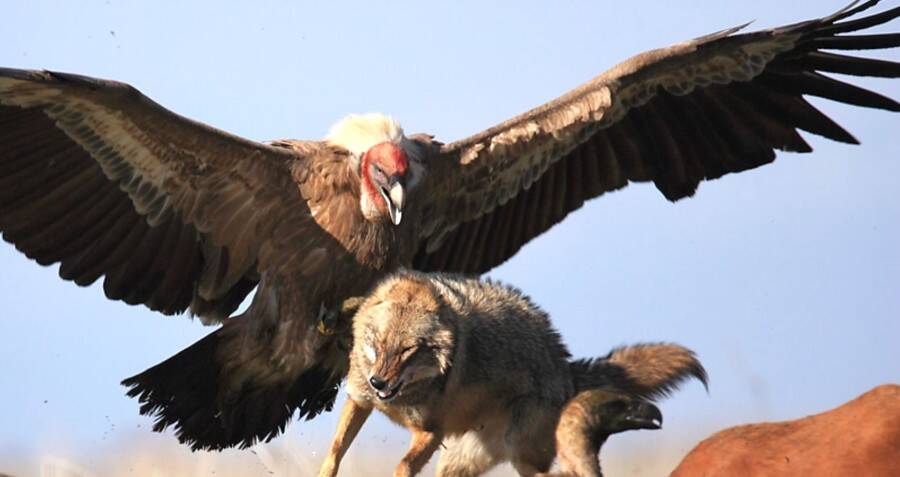
Their distinctive appearance adds to their allure. A creamy-white ruff frames their gray heads and necks, contrasting beautifully with their pale brown bodies. Their hooked beaks are perfectly adapted for tearing flesh, while their darker flight feathers and tail add a touch of elegance to their silhouette. But it’s not just their looks that make them remarkable. Griffon vultures possess an incredible sense of smell, allowing them to detect carcasses from miles away. They are also incredibly social birds, often congregating in large colonies, their raucous calls echoing through the air.
Their role as scary vultures is not born out of malice, but rather necessity. They are perfectly adapted for a life of scavenging, utilizing their sharp claws and powerful beaks to efficiently consume carrion. While some may find their appearance unsettling, it’s important to remember that these birds are essential to our planet’s balance. They are nature’s clean-up crew, working tirelessly to ensure that ecosystems remain healthy and thriving.
Physical Characteristics and Habitat
Griffon vultures are truly impressive creatures with a striking appearance that sets them apart from other birds of prey. As the second largest vulture in Europe, they boast an impressive wingspan that can reach up to 9 feet across! Their long necks allow them to easily access carcasses, while their hooked beaks are perfectly designed for tearing flesh. The contrast between their creamy-white ruff and gray head and neck against their pale brown bodies is quite striking, making them easily identifiable in the sky.
These magnificent birds prefer a variety of habitats, from mountainous plateaus and shrubland to grasslands and even semi-deserts. They thrive in areas where there is ample food available, often congregating near areas with livestock grazing or where human activity results in carrion. Their ability to soar high above the ground allows them to survey vast distances, searching for potential meals with their keen eyesight.
Their home range can be quite extensive, stretching up to 100 square miles depending on food availability. Interestingly enough, they are highly adaptable and have even been known to nest in urban areas where access to carrion is plentiful. This adaptability has contributed to their success as a species, allowing them to thrive across diverse landscapes around the world.
Diet and Hunting Behavior
As nature’s ultimate recyclers, griffon vultures play a crucial role in maintaining the balance of ecosystems by consuming carrion.
Their diet primarily consists of deceased livestock, particularly those that have died from natural causes or injuries. They are opportunistic feeders, readily taking advantage of any medium-sized carcass with soft tissue. While they prefer fresh kills, they are also known to scavenge on older carcasses, even bones stripped bare by other scavengers. Their powerful beaks and sharp claws allow them to efficiently tear through flesh and extract nutrients from even the most decomposed remains.
Their hunting behavior relies heavily on teamwork and keen observation. They often soar high in the sky, utilizing their exceptional eyesight to spot potential food sources from miles away. When a carcass is located, they communicate with each other through hisses and chattering calls, gathering together in a swirling vortex before swooping down to feast. This cooperative approach ensures that no morsel goes uneaten, maximizing their chances of securing a meal. Some might find this scavenging behavior unsettling, but it’s essential to remember that these birds are nature’s cleanup crew, diligently performing a vital service that benefits the entire ecosystem.
Communication and Social Structure
Griffon vultures are highly social creatures with a complex communication system that allows them to interact effectively within their colonies. Their calls range from loud hisses and chattering sounds to softer croaks and whistles, each conveying different messages depending on the context. During feeding frenzies, their raucous calls can be heard echoing across vast distances, serving as a warning to other vultures and potential competitors.
When it comes to territorial defense, they become even more vocal, utilizing their strong voices to establish boundaries and deter intruders. Interestingly enough, young griffon vultures are known to mimic the calls of adults, learning the nuances of their communication system from an early age. This social learning plays a crucial role in their ability to integrate into the colony and participate effectively in foraging and other activities.
Their colonies can be quite large, sometimes consisting of up to 150 pairs! Within these densely populated groups, individuals establish complex social hierarchies based on factors such as age, experience, and dominance. These intricate social structures ensure that resources are distributed fairly and that conflicts are resolved peacefully within the colony.
Reproduction and Life Cycle
Griffon vultures are known for their strong pair bonds, often mating for life and forming lifelong partnerships. During breeding season, males and females engage in elaborate courtship displays, circling each other high in the sky before landing on a shared perch. They communicate through a variety of calls and gestures, strengthening their bond before embarking on the next stage of their relationship: raising a family.
Their nesting sites are carefully chosen to provide protection from predators and harsh weather conditions. They prefer inaccessible cliffs or rocky outcrops, building large nests composed primarily of sticks, branches, and leaves. Once a nest is established, the female lays a single egg, which is incubated by both parents for approximately two months. Upon hatching, the chick is entirely dependent on its parents for food and protection.
After about four months, the young griffon vulture takes flight, embarking on its journey of independence under the watchful eye of its parents. They continue to rely on their parents for guidance and support for several more months until they are fully capable of surviving on their own. This extended period of parental care ensures that the next generation of scary vultures is well-equipped to navigate the challenges of life in the wild.
Conservation Status and Future Prospects
Thankfully, the griffon vulture’s global population is currently considered stable and even increasing in some areas. Their adaptability to a variety of habitats and their role as nature’s clean-up crew have contributed to their resilience.
However, these magnificent birds still face several threats that could potentially impact their populations in the future. Habitat loss due to human development and agricultural expansion remains a significant concern. Additionally, they are sometimes poisoned by lead contamination from discarded ammunition or other sources. These threats highlight the importance of ongoing conservation efforts to protect their habitats and ensure their continued survival.
Organizations worldwide are working to raise awareness about the plight of griffon vultures and implement measures to mitigate threats. These efforts include promoting sustainable land management practices, reducing the use of lead in ammunition, and establishing protected areas where these birds can thrive undisturbed. By supporting conservation initiatives and raising awareness among the public, we can help ensure that future generations will continue to marvel at the majestic sight of griffon vultures soaring through the skies.