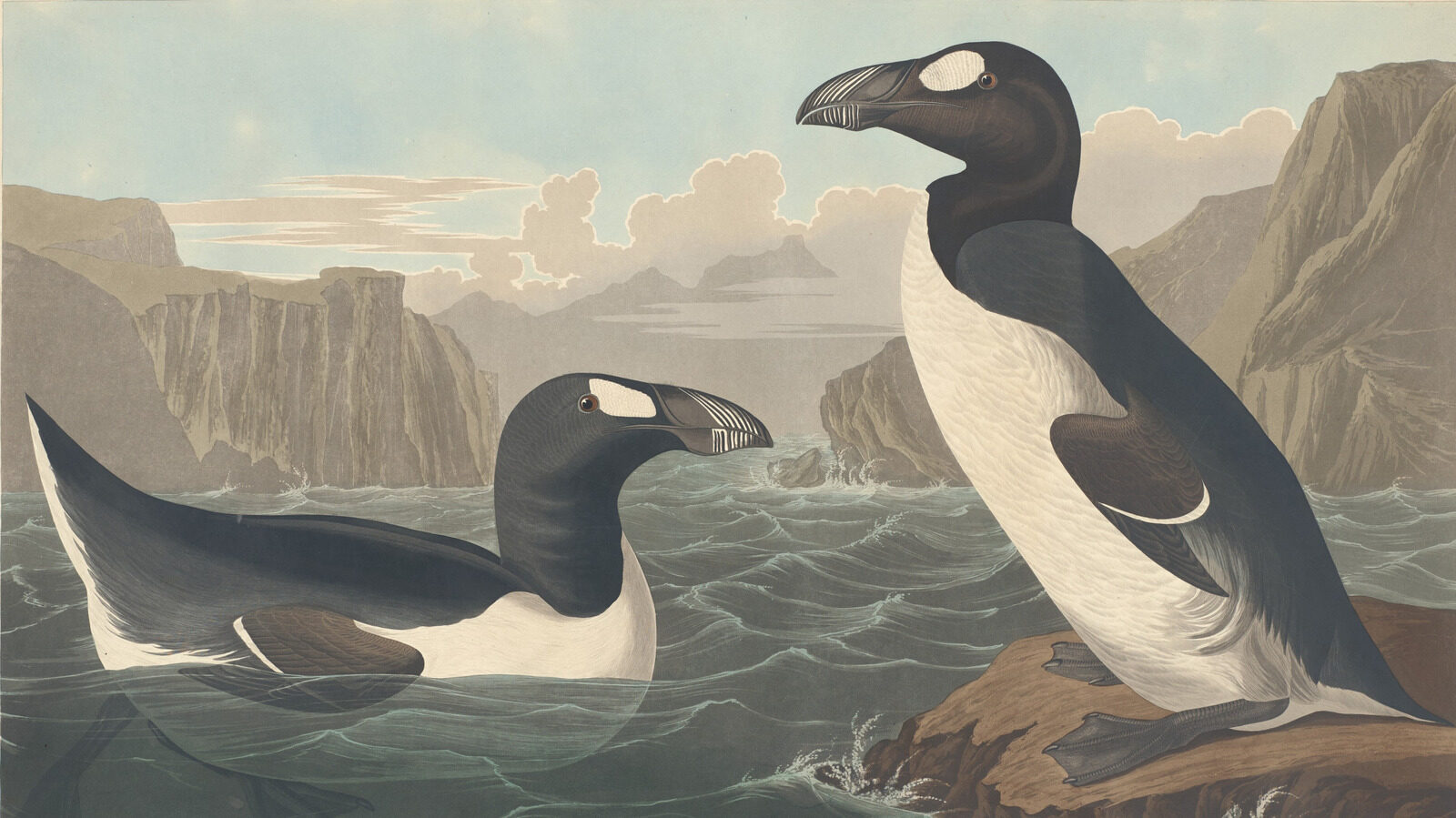

The story of the great auk serves as a poignant reminder of the impact humans can have on the environment and the species that share our planet. Often overshadowed by tales of the dodo, the great auk’s extinction highlights the consequences of overexploitation and the indifference towards biodiversity. Understanding its tragic fate can help foster a greater appreciation for conservation efforts today.
Once a prominent seabird that thrived along the icy shores of the North Atlantic, the great auk was a remarkable example of adaptation and survival. However, its tale ended abruptly due to human intervention. In this article, we delve into the factors that led to the extinction of the great auk and explore the broader implications of its loss.
Understanding the great auk: a unique seabird
The great auk, or Pinguinus impennis, was a flightless bird that could reach lengths of up to 30 inches, making it twice the size of modern puffins. Its resemblance to penguins is no coincidence; the name “penguin” was originally derived from the term used for great auks. The scientific name reflects its unique characteristics, with “impennis” indicating its lack of flight capability.
This seabird was well adapted to its cold, aquatic environment. Great auks possessed a thick layer of fat that provided insulation in icy waters, complemented by a dense coat of down feathers. These adaptations not only ensured their survival but also made them highly sought after by humans.
Initial human interactions with the great auk
The first significant human interactions with the great auk occurred in the early 16th century, primarily through European explorers and fishermen arriving in Newfoundland. Prior to this, the indigenous Beothuk people hunted these birds minimally, mainly for their eggs, which held cultural significance.
With the arrival of European sailors, however, the dynamics changed dramatically. The great auk’s dense down feathers and rich fat reserves became valuable commodities, leading to widespread hunting. The sailors often saw these birds as a source of food and resources, which marked the beginning of the end for the great auk.
The hunting frenzy: a tragic escalation
As the population of great auks dwindled due to human activity, the methods of hunting became increasingly brutal. Sailors would engage in mass hunts, making it easy to capture these clumsy birds as they waddled on land. The following factors contributed significantly to their decline:
- Overhunting: With the demand for feathers, meat, and eggs rising, sailors engaged in indiscriminate slaughter, often taking entire colonies in one expedition.
- Clumsiness on land: Despite being excellent swimmers, great auks were awkward on land, making them easy targets for hunters.
- Cultural significance: The eggs of great auks became popular collector’s items, leading to further hunting pressure on dwindling populations.
By the mid-19th century, the consequences of this exploitation became starkly evident. The last known breeding pair of great auks was killed on July 3, 1844, in Iceland. Although a solitary male was sighted in Newfoundland in 1852, this marked the end of the great auk as a species.
Lessons learned from the great auk’s extinction
The extinction of the great auk serves as a cautionary tale about the fragility of ecosystems and the impact of human actions on wildlife. Several lessons can be drawn from this tragedy:
- Conservation awareness: It is crucial to raise awareness about the importance of biodiversity and the role of each species in an ecosystem.
- Regulation of hunting: Implementing strict regulations on hunting and trade can prevent the overexploitation of vulnerable species.
- Restoration projects: Engaging in habitat restoration and rehabilitation can aid in the recovery of endangered species.
Efforts to protect existing seabird populations and their habitats are essential to prevent further losses. Organizations worldwide are working tirelessly to conserve marine ecosystems and educate the public on the importance of biodiversity.
The legacy of the great auk in modern conservation
Today, the great auk’s story resonates within the conservation community. Its extinction is often cited as a warning against the reckless exploitation of natural resources. In response to this legacy, various conservation initiatives have emerged, focusing on:
- Research and monitoring: Ongoing research helps track the health of seabird populations, ensuring early intervention if populations decline.
- Habitat protection: Safeguarding critical habitats is vital for the survival of many seabird species that face similar threats.
- Community engagement: Educating local communities about sustainable practices can lead to better stewardship of natural resources.
The story of the great auk is not just a historical account of a lost species; it is a reminder of the responsibility humans have towards the environment. By learning from past mistakes, we can work towards a more sustainable future for all species sharing our planet.