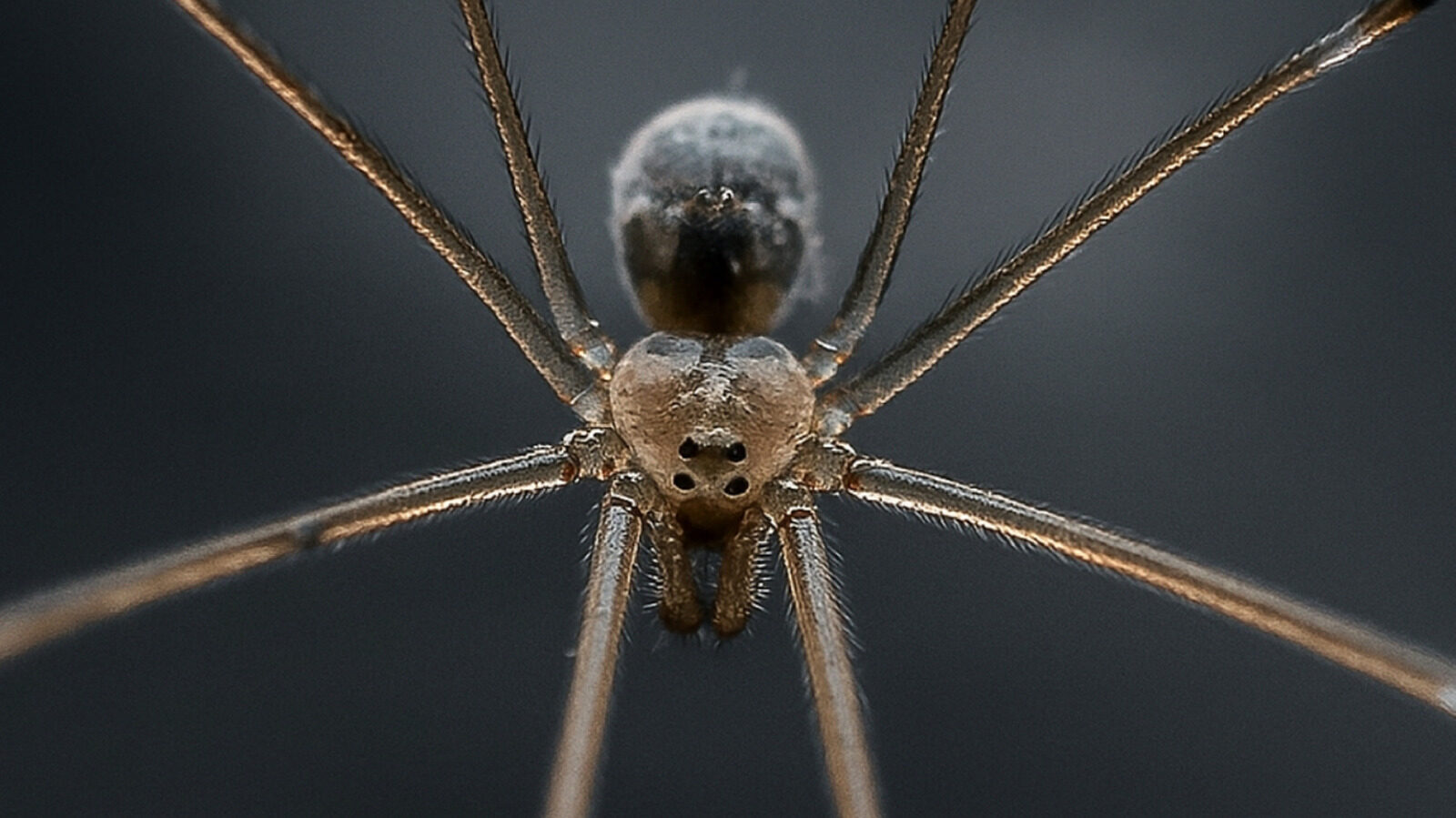
Have you ever encountered a daddy longlegs and wondered why these peculiar arachnids walk on just three pairs of legs? Despite their resemblance to spiders, these fascinating creatures belong to a different order entirely and display some unique adaptations that set them apart. Let’s delve into the mysteries surrounding daddy longlegs and discover their remarkable features.
While many people think of daddy longlegs as spiders, they actually belong to the order Opiliones. These creatures exhibit fascinating differences in anatomy and behavior that make them a subject of interest for biologists and arachnid enthusiasts alike. Understanding the biology and adaptations of daddy longlegs not only enlightens us about their ecological role but also sheds light on the diversity of the arachnid world.
Understanding the biology of daddy longlegs
Daddy longlegs, or Opiliones, are often misidentified as true spiders due to their eight legs and general appearance. However, they are a distinct group of arachnids with unique characteristics:
- Single body segment: Unlike spiders, which possess two body segments (the cephalothorax and abdomen), daddy longlegs have a fused body structure, making them appear more compact.
- Eyes: They typically have only two eyes, contrasting sharply with the eight eyes found in most spider species.
- Absence of venom: Opiliones do not produce venom, which is a key feature of true spiders, making them harmless to humans.
- Lack of silk: Daddy longlegs do not spin webs for hunting or shelter, relying instead on their agility and other hunting strategies.
With approximately 6,660 species of Opiliones identified worldwide, their adaptability to various environments is impressive. These arachnids can be found in numerous habitats, from forests to grasslands, and have evolved to fulfill diverse ecological roles.
How daddy longlegs sense their environment
One of the most remarkable aspects of daddy longlegs is their ability to use their long legs to sense their surroundings. Each of their long legs is equipped with sensitive receptors that help them navigate through their environment. This adaptation is particularly significant given their relatively poor eyesight.
Harvestmen employ their third pair of legs as feelers, waving them around to detect vibrations and chemical signals in the air. This ability allows them to gather crucial information about potential prey and predators in their vicinity. Some key points about their sensing mechanism include:
- They rely on tactile and chemical cues to assess their environment.
- Their pedipalps, or second pair of legs, serve multiple functions, including sensing and food manipulation.
- The long legs act as an extended sensory apparatus, compensating for their limited vision.
In a fascinating study published in Current Biology, researchers demonstrated that the sensory capabilities of Opiliones are enhanced by their unique leg morphology. The study highlighted how some species use their legs in a similar manner to antennae, allowing them to effectively forage for food and detect predators.
The unique leg structure of daddy longlegs
The legs of daddy longlegs are not only long but also exceptionally articulate. Unlike the legs of most spiders, which are relatively rigid, daddy longlegs possess a segmented structure that allows for enhanced flexibility and movement. This articulation is predominantly observed in their pedipalps, which are the longest of their legs.
The segmented structure of their legs comprises tarsomeres, small units that can pivot and rotate independently. This design provides several advantages:
 Uninhabited Islands: Exploring Worlds Without People
- Prehensile capabilities: The articulation allows them to grasp and manipulate objects, aiding in climbing and escaping from predators.
- Complex movements: The legs can perform a wide range of motions, enhancing their agility.
- Assistance in courtship: During mating rituals, the elaborate movements of their legs play a role in attracting mates and establishing dominance.
A 2021 study published in Proceedings of the Royal Society B provided insights into the evolutionary significance of the leg structure in daddy longlegs, emphasizing that species with more articulate legs tend to have broader distributions. This adaptability may help them thrive in various environments, making them more resilient to ecological changes.
Variability among species: The case of pedipalps
The pedipalps of daddy longlegs exhibit significant variability among species, showcasing a range of adaptations. These appendages can vary in size, shape, and functionality, contributing to the diversity of behavior within the Opiliones order. Some notable features include:
- Sensory adaptations: Certain species have developed sensory hairs on their pedipalps that enhance their ability to detect environmental changes.
- Prey capture: In some cases, pedipalps are equipped with glandular structures that produce adhesive substances, allowing harvestmen to immobilize prey.
- Defensive mechanisms: The complex structure of their legs can also serve as a defense mechanism, as they can swiftly escape when threatened.
These adaptations illustrate how daddy longlegs have evolved to exploit their environment efficiently. Their versatility in using their legs for various tasks — from foraging to reproduction — highlights the ecological significance of this unique group of arachnids.
The ecological role of daddy longlegs
Understanding the ecological importance of daddy longlegs provides insight into their role in maintaining ecosystem balance. As detritivores, they contribute to the decomposition of organic matter, aiding nutrient cycling in their habitats.
Furthermore, as prey for various predators such as birds, amphibians, and other arthropods, daddy longlegs serve as a vital part of the food web. Their presence indicates a healthy ecosystem, making them essential for biodiversity. Key ecological roles include:
- Decomposing organic material, thus enriching the soil.
- Serving as a food source for larger predators, which maintains population dynamics.
- Acting as bioindicators, reflecting the health of their habitats.
In conclusion, daddy longlegs are not merely peculiar arachnids; they are complex creatures with unique adaptations that help them thrive in the natural world. Their fascinating biology, including their distinctive leg structure and sensory capabilities, allows them to play crucial roles in their ecosystems while challenging our perceptions of what it means to be an arachnid.