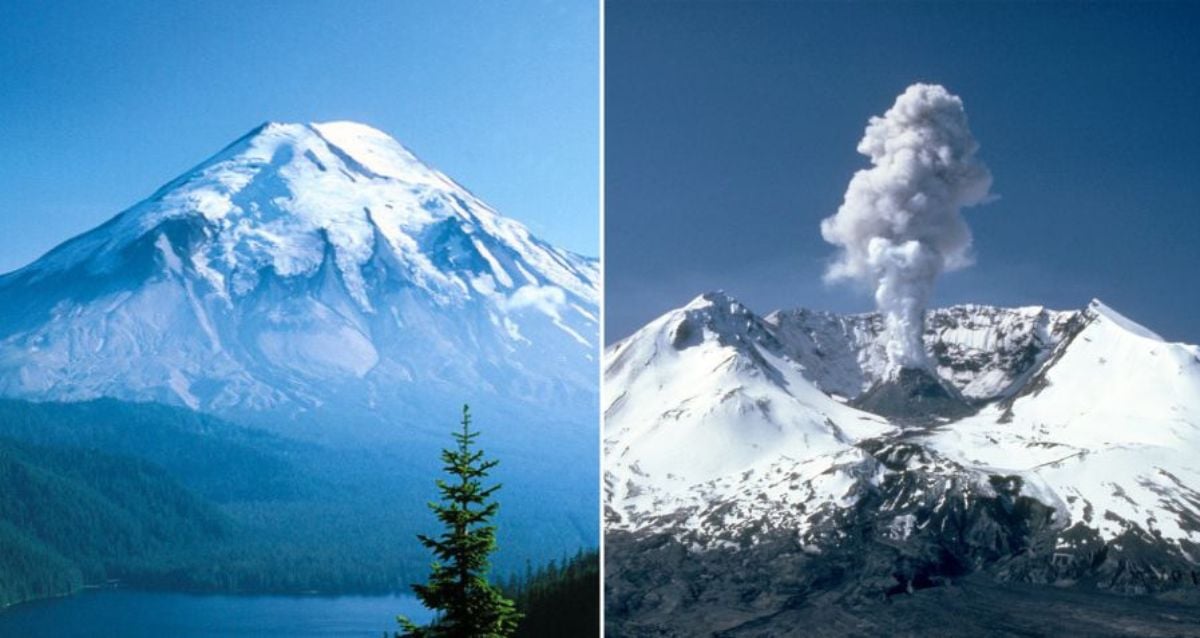
Imagine a magnificent mountain towering over the lush forests of Washington state. This was Mount St. Helens before its infamous 1980 eruption. Pictures of Mt St Helens before and after show a stark contrast between the vibrant ecosystem that once thrived around the volcano and the desolate landscape it created.
The area surrounding the mountain was a paradise, teeming with old-growth forests, pristine waterways like Spirit Lake, and cozy human settlements nestled amidst the natural beauty. However, beneath this idyllic surface lurked a sleeping giant. Mount St. Helens had experienced several eruptions throughout history, but none as devastating as the one that would forever change its story.
On May 18, 1980, the mountain roared back to life with a catastrophic blast that shattered the peace and irrevocably altered the landscape.
Life Before the Eruption
Before the eruption, Mount St. Helens was a vibrant hub of life. The slopes were covered in lush forests, home to an abundance of diverse plant and animal species. Imagine towering trees reaching for the sky, their branches laden with moss and ferns.
The surrounding area teemed with wildlife. Elk grazed peacefully in meadows, while black bears roamed the woods searching for berries and insects. Birdsong filled the air, a constant symphony of nature’s beauty. Spirit Lake, nestled at the base of the mountain, shimmered like a sapphire jewel, reflecting the majestic peak above. Local communities thrived around Mount St. Helens, their livelihoods intertwined with the land.
People enjoyed hiking and fishing in the area, taking in the awe-inspiring views and enjoying the tranquility of nature. The region was a paradise, a testament to the resilience and beauty of the natural world.
The Devastating 1980 Eruption
On May 18, 1980, at 8:32 am, the peaceful existence around Mount St. Helens was shattered by a colossal eruption that would forever scar the landscape. A massive lateral blast, unlike any seen before, ripped through the mountain’s north face with unimaginable force, sending a towering cloud of ash and debris skyward. The ground trembled violently as trees were instantly uprooted and tossed aside like twigs in a hurricane.
This catastrophic event unleashed unimaginable destruction. A staggering 230 square miles of forest was obliterated, reduced to a desolate wasteland of ash and rubble. The force of the blast flattened everything in its path, leaving behind a haunting silence where life once flourished. Imagine driving along a road, only to be abruptly confronted with a wall of ash and debris, completely blocking your way forward.
This is the reality that faced countless people who witnessed the eruption’s devastating power. 57 individuals lost their lives as a result of the blast, swept away by the sheer force of nature. The once vibrant ecosystem was instantly transformed into a scene of utter devastation, leaving behind a landscape that seemed to have been ripped from the pages of a nightmare.
Aftermath and Destruction
The aftermath of the eruption was a stark reminder of nature’s immense power. A thick blanket of ash covered everything for miles around, burying entire towns and forests under its weight. Imagine looking out your window to see an eerie gray landscape where vibrant green once thrived. Rivers and streams were choked with debris, their waters transformed into murky torrents carrying the remnants of the devastation.
The iconic Spirit Lake, a picturesque gem before the eruption, was buried under a thick layer of volcanic mud and ash, its surface forever altered. This catastrophic event not only reshaped the physical landscape but also had profound consequences for the local communities. Homes were destroyed, infrastructure crumbled, and livelihoods were shattered.
Many people who had called this area home found themselves displaced, forced to rebuild their lives in a dramatically changed world.
Regrowth and Resilience
While the eruption caused immense destruction, nature’s remarkable ability to heal and regenerate began almost immediately. Within weeks of the eruption, hardy pioneer plants started to sprout through the ash, their tenacious roots finding purchase in the barren soil. Imagine a carpet of bright green emerging from the gray landscape, a symbol of hope and resilience amidst the devastation.
The return of insects, birds, and small animals followed quickly. They played a vital role in breaking down the volcanic debris and enriching the soil, paving the way for larger plants to take root. Over time, new trees began to grow, replacing the lost giants. The area slowly transformed from a desolate wasteland back into a vibrant ecosystem, showcasing nature’s incredible capacity for renewal.
Even though some species haven’t returned, the pictures of Mt St Helens before and after reveal that life found a way. It serves as a powerful reminder that even in the face of catastrophic events, nature has an extraordinary ability to heal and thrive again.
Rebirth of an Ecosystem
The eruption of Mount St. Helens, while catastrophic, also acted as a catalyst for a new beginning. The volcanic debris, over time, enriched the soil, creating a fertile foundation for a diverse ecosystem to re-emerge. Imagine a landscape sculpted by nature’s hand, where newly formed lakes and ponds shimmered like jewels amidst the vibrant green of regrowing forests.
The area is now home to a unique assemblage of plants and animals that have adapted to thrive in this post-eruption environment. New species have taken hold, while others have returned to reclaim their territory. Birdsong fills the air once more, a symphony of life echoing through the valleys. The eruption might have reshaped the landscape dramatically, but it also created an opportunity for a new chapter in the story of Mount St. Helens.
The rebirth of this ecosystem is a testament to nature’s resilience and adaptability, showcasing the awe-inspiring power of life to find a way even in the face of adversity.