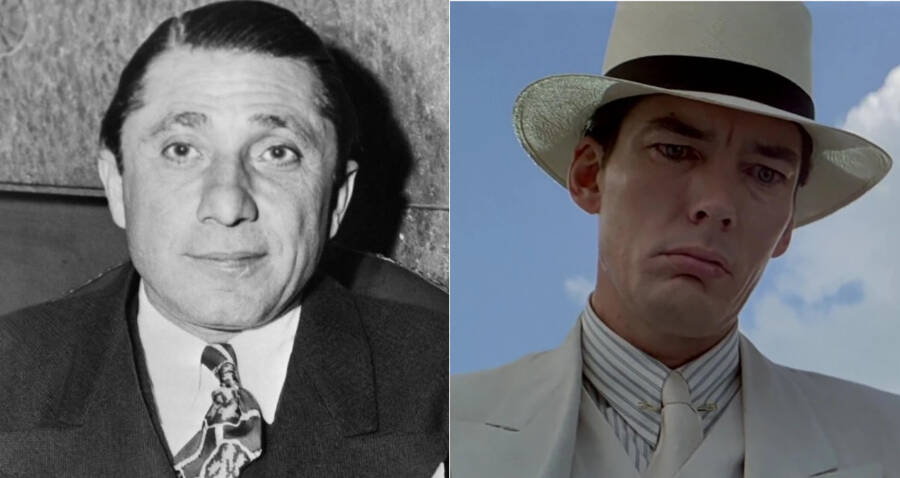
Frank Nitti was a man of many contradictions. A ruthless enforcer who earned the moniker “The Enforcer” for his brutal efficiency, he also possessed a surprisingly cunning intellect and a knack for navigating the complex world of organized crime. Born in Italy as Francesco Raffaele Nitto, he immigrated to the United States where he quickly rose through the ranks of the Chicago Outfit, becoming Al Capone’s trusted lieutenant and financial mastermind.
Nitti’s story is a fascinating tale of ambition, violence, and ultimately, tragedy. He managed Capone’s vast illegal empire, orchestrating murders, manipulating businesses, and ensuring loyalty within their ranks. He even survived an assassination attempt, showcasing his resilience and ability to outwit his enemies. But the shadow of frank nitti died loomed large over his life, a constant reminder of the precarious nature of his existence.
The weight of his actions, combined with the ever-present threat of law enforcement, took a toll on Nitti. When Capone was imprisoned for tax evasion in 1931, Nitti stepped into the leadership void. He expanded the Outfit’s reach through bootlegging and extortion, even venturing into Hollywood studios to shake down producers. However, his grip on power began to weaken as legal challenges mounted, culminating in indictments for extortion and tax evasion. Facing a lengthy prison sentence, Nitti chose a different path, taking his own life in 1943 in an act of desperation fueled by claustrophobia.
The Enforcer’s Rise to Power
Nitti’s ascent through the ranks of the Chicago Outfit was nothing short of meteoric. He started as a small-time loan shark, gradually proving himself to be both ruthless and cunning. His ability to manage money efficiently and his willingness to eliminate perceived threats quickly caught the attention of Al Capone, who recognized in Nitti a valuable asset.
Capone entrusted Nitti with managing his finances, a responsibility that involved navigating the complex world of illegal gambling, bootlegging, and prostitution. Nitti excelled at this task, proving himself to be both a shrewd businessman and a master manipulator. He built relationships with corrupt officials, intimidated rivals, and ensured Capone’s financial empire remained strong. His reputation as “The Enforcer” solidified as he ruthlessly eliminated any obstacle in Capone’s path, sending a clear message that loyalty was paramount and dissent would be met with swift and brutal consequences.
As the Outfit’s power grew under Capone’s leadership, so too did Nitti’s influence. He became Capone’s right-hand man, involved in all aspects of the organization’s operations. When a police raid aimed at dismantling the Outfit went awry, it was Nitti who calmly orchestrated the escape and ensured their operation remained intact. This incident cemented his status as a formidable figure within the Chicago underworld.
Orchestrating Violence and Managing Finances
Nitti’s duality as a ruthless enforcer and a meticulous financial manager was key to his success within the Chicago Outfit. He understood that violence was sometimes necessary to maintain control, but he also recognized the importance of order and efficiency in managing their vast criminal enterprise.
He oversaw countless violent acts, often personally carrying out executions or directing hitmen. His methods were brutal and efficient, designed to instill fear and ensure obedience within the ranks. But he also possessed a keen business mind, meticulously tracking finances, negotiating deals, and expanding the Outfit’s reach into new areas of illegal activity. He understood that money was power and used his financial acumen to secure Capone’s empire and fuel its growth.
This combination of violence and pragmatism made him a formidable figure within the underworld. He could be just as comfortable planning an ambush as he was balancing a ledger, always striving for both dominance and profitability. It was this duality that led to his nickname “The Enforcer,” a title that perfectly encapsulated his role in maintaining Capone’s rule through fear and financial shrewdness.
 Who Stopped Bonnie and Clyde: Frank Hamers Legacy
Leadership Under Pressure
When Al Capone was finally imprisoned for tax evasion in 1931, Frank Nitti stepped into the leadership void, inheriting a vast and complex criminal empire. This marked a new chapter in Nitti’s life, demanding not only his ruthlessness but also his strategic acumen. He faced immense pressure to maintain the Outfit’s power and influence while navigating an increasingly hostile legal landscape.
Nitti proved himself capable of handling this burden. He expanded the Outfit’s reach into new territories, consolidating power through a combination of intimidation, bribery, and shrewd business deals. He oversaw a shift in focus from bootlegging to other illegal activities, including gambling and narcotics trafficking, recognizing the changing needs of the times. His leadership was characterized by both caution and ambition, balancing the need for stability with the drive for expansion.
However, the constant threat of law enforcement loomed over Nitti’s tenure as leader. He faced numerous raids and investigations, narrowly escaping capture on several occasions. This pressure took a toll on him, fueling his anxieties and ultimately contributing to his tragic end. The weight of frank nitti death would ultimately crush him, driven by the fear that he was being slowly consumed by the very system he had so carefully sought to manipulate.
A Downward Spiral
The legal net tightening around Nitti began to constrict his already precarious existence. He faced a series of setbacks, starting with a botched police raid in 1939 that yielded damaging evidence against him and the Outfit. He was eventually indicted on charges of extortion and tax evasion, mirroring the fate of Al Capone years earlier. The walls were closing in, leaving Nitti with few options to escape the looming threat of imprisonment.
Knowing a lengthy prison sentence awaited him, he became increasingly paranoid and isolated. The constant fear of capture gnawed at his mind, exacerbating his claustrophobia – a condition that had always plagued him. He began to withdraw from those around him, consumed by anxiety and dread.
The weight of his past sins, the ever-present threat of justice, and the encroaching darkness of his impending fate all conspired to create an unbearable pressure on Nitti. He felt trapped, both physically and mentally, with no escape from the consequences of his actions. The once cunning and ruthless enforcer was now a broken man, desperately seeking a way out of the inescapable trap he had built for himself.
Beyond the Bars
On a fateful day in 1943, Nitti’s desperation culminated in tragedy. Faced with the prospect of a lengthy prison sentence and consumed by his crippling claustrophobia, he chose to end his life rather than face confinement. He went to the Union Station train depot in Chicago, where he took out his revolver and fired two shots into his own head, ending his reign of terror and leaving behind a legacy of violence and ambition.
News of frank nitti death shocked the nation, sending ripples through the criminal underworld and beyond. It served as a stark reminder that even those who seem invincible are ultimately vulnerable to their own demons. Nitti’s story became a cautionary tale, illustrating how power, greed, and fear can lead even the most cunning individuals down a destructive path.
His final act was a desperate attempt to escape the inescapable consequences of his actions, a tragic end for a man who had once held such sway over the criminal underworld of Chicago. Though he might have sought anonymity in death, Nitti’s life and legacy continue to fascinate and intrigue us, serving as a reminder of the complexities of human nature and the ever-present struggle between ambition and self-destruction.