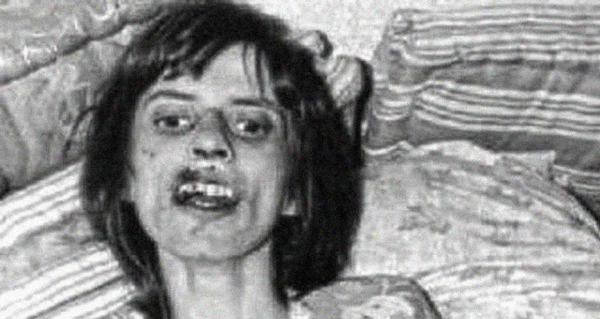
The story of Anneliese Michel is a deeply unsettling one, a tragic intersection of faith, mental illness, and the desperate search for healing. In 1976, this young German woman died after undergoing sixty-seven exorcisms over a period of ten months. Her case, shrouded in controversy and speculation, continues to fascinate and horrify people to this day. Anneliese’s tragic demise raises profound questions about the limits of religious belief, the complexities of mental health, and the potential dangers when these two domains collide.
Anneliese believed she was possessed by six demons, a conviction that deeply affected her behavior and well-being. Her family, fearing for her safety and seeking solace, turned to the Catholic Church for help. Two priests, Ernst Alt and Arnold Renz, took on the task of performing exorcisms on Anneliese, believing they were battling supernatural forces. However, medical professionals had diagnosed her with temporal lobe epilepsy and psychosis, suggesting that her symptoms stemmed from treatable illnesses rather than demonic possession. Despite these diagnoses, the exorcism rituals continued, culminating in a devastating conclusion: how did Anneliese Michel die? The answer is both tragic and disturbing: she succumbed to malnutrition and dehydration as a result of the prolonged and intense exorcisms.
Let us delve deeper into this complex case, exploring the circumstances that led to Anneliese’s death, the ethical dilemmas it presented, and its lasting impact on popular culture through films like The Exorcism of Emily Rose, which loosely draws inspiration from Michel’s story while adding fictional elements.
The Possessed: Anneliese Michel’s Story
Anneliese Michel was born in 1952 into a devout Catholic family in Germany. From a young age, she displayed a strong faith and participated actively in church activities. However, as she entered her twenties, disturbing changes began to manifest in her behavior. She experienced intense visions, auditory hallucinations, and bouts of uncontrollable rage. These episodes grew more frequent and severe, leading to growing concern among her family and friends.
Anneliese believed she was possessed by multiple demons, each with its own influence over her thoughts, actions, and emotions. She described feeling an overwhelming sense of dread, intense physical pain, and a constant battle against unseen forces within her. Her symptoms mirrored those of temporal lobe epilepsy and psychosis, conditions that can cause hallucinations, personality changes, and seizures. Yet, despite these medical possibilities, Anneliese remained convinced of demonic possession and sought spiritual intervention through the Catholic Church. This belief, fueled by her unwavering faith and the increasingly frightening nature of her experiences, ultimately set in motion a tragic chain of events.
Her family, desperate to help their beloved daughter, turned to two priests, Ernst Alt and Arnold Renz, who agreed to perform exorcisms on Anneliese. They believed they were battling a powerful spiritual force seeking to control her mind and body. This decision, made out of love and desperation, would have devastating consequences for both Anneliese and those closest to her. The question that continues to haunt us is: how did Anneliese Michel die?
Exorcisms and Suffering
The exorcisms Anneliese underwent were a deeply disturbing spectacle, driven by the priests’ belief that she was possessed by multiple demons. They performed these rituals over ten months, conducting sixty-seven sessions in total. During each exorcism, Anneliese endured prayers, incantations, and physical restraints as the priests attempted to expel the alleged demonic entities from her body.
The procedures were grueling and often violent, causing Anneliese immense pain and suffering. She reportedly screamed throughout the rituals, pleaded for mercy, and exhibited disturbing behavior that terrified those present. Despite these harrowing experiences, the priests believed they were witnessing a genuine battle between good and evil, convinced that their actions were necessary to save Anneliese’s soul. This conviction, however misguided, fueled their persistence in performing the exorcisms even as Anneliese’s physical condition deteriorated.
The tragic consequence of these prolonged rituals was how did Anneliese Michel die. She died a slow and painful death due to malnutrition and dehydration. Her desperate need for nourishment was ignored during the exorcism sessions, and she was often prevented from eating or drinking. This neglect, coupled with the intense physical and emotional strain of the rituals, ultimately proved fatal.
 Aqua Tofana Poison: The Deadly Secret of 17th-Century Italy
Medical Explanations vs. Spiritual Belief
Anneliese Michel’s tragic tale raises a fundamental question: how do we reconcile medical explanations with spiritual beliefs when dealing with unexplained phenomena? While the priests who conducted her exorcisms were convinced she was possessed by demons, medical professionals diagnosed her with temporal lobe epilepsy and psychosis. Both conditions can cause hallucinations, seizures, and personality changes, symptoms that mirrored Anneliese’s experiences.
It is crucial to understand that mental illness is a complex condition often influenced by biological, psychological, and social factors. Epilepsy, for example, arises from abnormal electrical activity in the brain, leading to seizures and neurological disturbances. Psychosis, on the other hand, involves a detachment from reality, characterized by hallucinations, delusions, and disorganized thinking. In Anneliese’s case, these medical conditions likely contributed to her disturbing experiences and behavior.
However, it is also important to acknowledge that many people find solace and meaning in religious faith even when faced with challenging circumstances. The priests who conducted the exorcisms were deeply committed to their beliefs and genuinely sought to help Anneliese through spiritual intervention. The Exorcism of Emily Rose, a fictional horror film loosely inspired by Michel’s story, explores this complex intersection of faith and medicine, highlighting the ethical dilemmas that can arise when these two domains collide.
Legal Ramifications and Public Outcry
The death of Anneliese Michel sent shockwaves through Germany and sparked a national outcry. Public opinion was divided, with some condemning the priests for their role in her demise while others defended their actions as an earnest attempt to save her soul. The case became a media sensation, fueling debates about religious freedom, medical ethics, and the limits of spiritual intervention.
The German authorities launched a criminal investigation into Anneliese’s death, focusing on whether the priests were negligent in their treatment of her. After a lengthy trial, both Ernst Alt and Arnold Renz were found guilty of negligent homicide. However, they received lenient sentences due to mitigating circumstances, including their genuine belief that they were acting in Anneliese’s best interests.
This case had lasting legal ramifications. It highlighted the need for greater transparency and accountability within religious institutions, particularly when dealing with vulnerable individuals seeking spiritual guidance. The tragedy also prompted a review of existing laws surrounding exorcisms and the role of the clergy in providing medical and psychological care.
The Legacy of Anneliese Michel
Anneliese Michel’s story continues to haunt and fascinate people around the world. Her tragic death serves as a chilling reminder of the dangers of religious extremism and the importance of seeking professional medical help for mental health issues. While some view her as a victim of misguided faith, others believe she was genuinely possessed by demons and that the exorcisms were a necessary attempt to save her soul.
The case has been widely debated in academic circles, prompting discussions about the intersection of religion, psychology, and law.
The Exorcism of Emily Rose, a popular horror film loosely inspired by Michel’s story, further cemented her place in popular culture, although it often sensationalizes and fictionalizes aspects of her life. Despite the controversy surrounding her death, Anneliese Michel remains a complex and enigmatic figure whose story continues to raise profound questions about faith, suffering, and the human condition.
Her grave has become a pilgrimage site for some Catholics who believe she was a saintly figure who endured unimaginable torment for her unwavering devotion. However, the Catholic Church later stated that Anneliese suffered from mental illness and that her case should not be seen as an example of divine intervention. The enduring fascination with Anneliese Michel’s story speaks to our collective curiosity about the unknown and our ongoing struggle to reconcile faith with reason in a world filled with both wonder and darkness.