
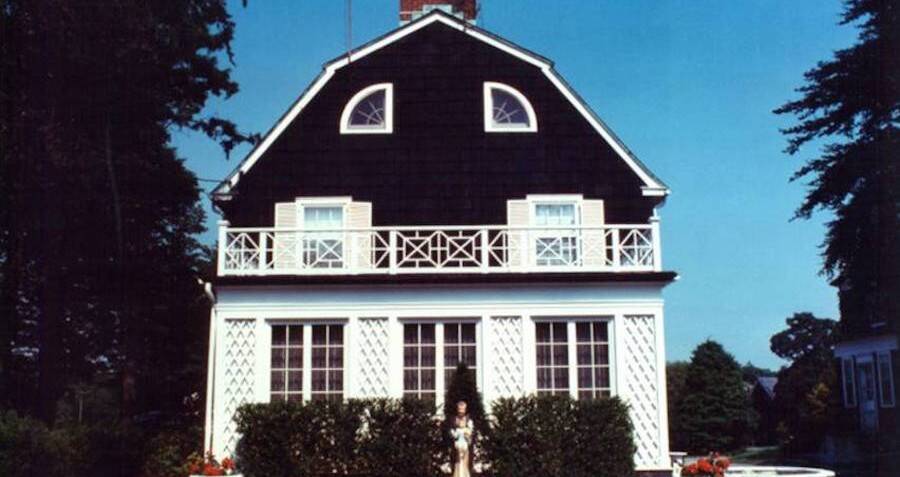
The chilling tale of the DeFeo family home in Amityville has become a modern legend, a story that continues to grip our imaginations and spark debate about the reality of the paranormal. Nestled on Ocean Avenue, this unassuming house became synonymous with horror when, in 1974, Ronald DeFeo Jr. brutally murdered his entire family within its walls. He claimed to have been driven by voices and a malevolent presence within the house itself, planting the seeds for a narrative that would soon blossom into full-blown terror.
The tragic murders left an indelible mark on the property, casting a long shadow over its future inhabitants. Just a year later, the Lutz family moved in, unwittingly stepping into a vortex of paranormal activity. They reported chilling experiences: green slime oozing from walls, levitating objects, and unsettling visions that plagued their every waking moment. These terrifying encounters were meticulously documented in the bestselling book “The Amityville Horror” by Jay Anson, which catapulted the story into mainstream consciousness and spawned a popular film franchise.
Despite the widespread fascination with the Lutz family’s claims, controversy continues to swirl around this infamous house. Some argue that the entire narrative was a fabrication orchestrated by George Lutz for financial gain, questioning the authenticity of their experiences. Yet, regardless of whether one believes in the paranormal or views the events as a carefully constructed hoax, the DeFeo Family Home remains a captivating enigma, drawing ghost hunters and horror enthusiasts alike to its doorstep.
The DeFeo Murders
The DeFeo murders, as they came to be known, shocked the nation and forever stained the idyllic facade of Amityville. On November 13th, 1974, Ronald DeFeo Jr., a troubled young man living in the DeFeo Family Home, unleashed unimaginable violence upon his entire family. He methodically killed his parents, Louis and Catherine DeFeo, as well as his four siblings, Dawn, Marc, Allison, and Michael.
Ronald’s motives remain shrouded in mystery. He claimed to have been driven by voices emanating from within the house itself, convinced that an evil presence had taken control of him. This chilling explanation added another layer of horror to the already gruesome events. He confessed to the murders and was sentenced to six consecutive 25-year terms, effectively ensuring he would spend the rest of his life behind bars.
The brutality of the act sent shockwaves through the community, leaving many struggling to comprehend such senseless violence. The idyllic suburban neighborhood where the DeFeos lived transformed into a crime scene, forever tainted by the tragedy that unfolded within its walls.
The Lutz Family’s Ordeal
Just a year after the DeFeo murders, another family dared to cross the threshold of 112 Ocean Avenue. The Lutz family, seeking a fresh start in their new home, were ill-prepared for the horrors that awaited them. From the moment they moved in, strange and unsettling occurrences began to plague their lives. The house seemed alive with an oppressive energy, casting a pall over their every step.
George Lutz, the father, became increasingly agitated, reporting vivid nightmares and terrifying visions. His wife, Kathy, described feeling an overwhelming sense of dread and claimed to have been physically assaulted by unseen forces. The children, too, were affected by the malevolent presence that permeated the house. Reports of levitating objects, disembodied voices whispering their names, and unexplainable cold spots filled their days with a palpable sense of fear.
Their ordeal escalated rapidly, culminating in the horrifying discovery of green slime oozing from the walls and an eerie feeling of being constantly watched. Eventually, unable to bear the oppressive atmosphere any longer, the Lutz family fled the house after only 28 days, leaving behind the DeFeo Family Home with its dark secrets etched into its very foundations.
 Angela Simpson Case: Brutal Torture and Murder Confession
Amityville Horror: Book and Film
The chilling account of the Lutz family’s experiences quickly gained national attention, capturing the public’s imagination and solidifying their place in American horror lore. Jay Anson, a talented writer with a knack for uncovering gripping stories, was commissioned to pen a book that would delve into the depths of their terrifying ordeal. Published in 1977, “The Amityville Horror” became an instant bestseller, catapulting the story into the mainstream consciousness and cementing its place as a modern classic.
Anson’s meticulously crafted narrative, filled with vivid descriptions of the Lutz family’s encounters with the paranormal, resonated deeply with readers. It tapped into our primal fears, exploring themes of haunted houses, demonic possession, and the thin veil separating reality from nightmare. This literary success quickly paved the way for a cinematic adaptation in 1979, directed by Stuart Rosenberg and starring James Brolin as George Lutz. The film further amplified the story’s popularity, becoming a box office sensation and spawning numerous sequels that continue to explore the dark secrets lurking within the walls of Amityville.
The enduring legacy of “The Amityville Horror” is a testament to its power as a cultural phenomenon. It has transcended its origins as a true crime tale, becoming an iconic symbol of paranormal horror that continues to captivate and terrify audiences decades later.
Controversy and Legacy
Despite its enduring popularity, “The Amityville Horror” has never been without its share of controversy. Many skeptics argue that the entire story is a fabrication orchestrated by George Lutz for financial gain. They point to inconsistencies in his accounts, questionable motives, and the lack of any concrete physical evidence to support the paranormal claims. This debate continues to rage on, dividing fans into those who believe every chilling detail and those who see it as a cleverly constructed hoax.
However, even if one dismisses the Lutz family’s experiences as an elaborate fabrication, the legacy of Amityville remains undeniable. The house itself has become a notorious landmark, attracting hordes of curious visitors each year eager to glimpse the site of alleged paranormal activity. Its history continues to inspire countless books, films, and television shows, solidifying its place in popular culture as a symbol of haunted houses and supernatural terror.
Ultimately, whether you believe in ghosts or view the story as a work of fiction, “The Amityville Horror” has undeniably left an indelible mark on our collective imagination. It serves as a reminder of the enduring power of storytelling to captivate our fears and explore the shadowy corners of human experience.
A Haunting Endures
The story of the DeFeo Family Home and the Lutz family’s terrifying ordeal continues to resonate with audiences decades later. It serves as a chilling reminder that some places seem to hold onto darkness, their walls whispering tales of tragedy and unseen presences. While skeptics may dismiss the events as mere coincidence or elaborate hoaxes, there’s something undeniably eerie about the persistent rumors and accounts of paranormal activity surrounding 108 Ocean Avenue.
Perhaps it’s the weight of history that lingers within its walls, a chilling echo of past horrors unable to be fully erased. Or maybe it’s the human fascination with the unknown, our inherent desire to believe in something beyond the tangible world. Whatever the explanation, the Amityville legend endures, proving that some stories refuse to fade away, their grip on our collective imagination remaining as strong as ever.
The house itself has changed hands numerous times since the Lutz family fled. But despite attempts to renovate and reclaim it from its dark past, a sense of unease seems to linger around the property, drawing in paranormal investigators and curious onlookers alike. Whether or not you believe in ghosts, the story of Amityville stands as a testament to our enduring fascination with the macabre and our willingness to confront the unsettling mysteries that lie just beyond the veil of everyday life.