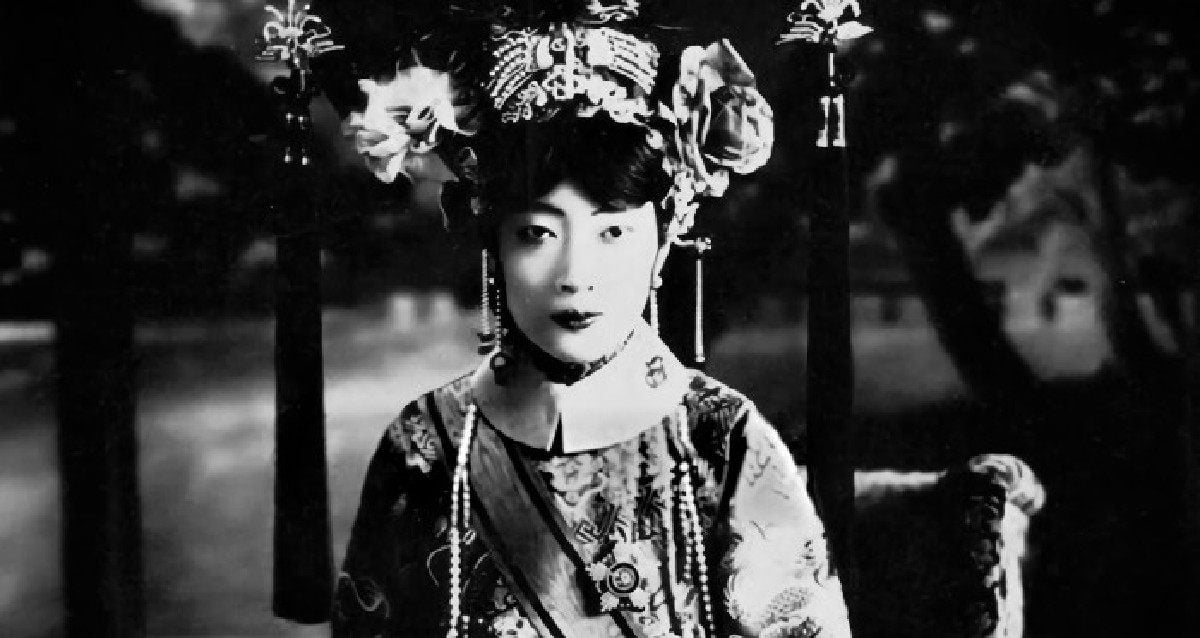
Empress Wanrong holds a tragic place in history as China’s last empress. Born Gobulo Wanrong in 1906, her life was intricately woven with the tumultuous decline of the Chinese imperial dynasty. Chosen by Emperor Puyi as one of his wives in 1922, she entered into a marriage that proved to be loveless from the start.
Wanrong faced constant challenges, including competition from Puyi’s other consort, Wenxiu, which led to feelings of isolation and resentment. These pressures, coupled with political turmoil, pushed Wanrong towards opium addiction and mental health struggles. The eventual fall of the Qing dynasty forced her and Puyi into exile in the Japanese-controlled puppet state of Manchukuo.
Her time there was marked by surveillance and attempts at escape, underscoring the precariousness of her existence. Tragedy continued to follow her as affairs, a stillborn child, and increasing opium use further deteriorated Wanrong’s already fragile condition.
A Loveless Marriage
Despite being chosen by Emperor Puyi, Wanrong’s marriage quickly turned into a loveless arrangement. She faced constant competition from Wenxiu, Puyi’s other consort, who was favored for her intelligence and gentle nature. This rivalry created a deeply unhappy environment for Wanrong, leaving her feeling isolated and undervalued within the confines of the Forbidden City.
Adding to her woes, Wanrong struggled with traditional expectations placed upon imperial wives. She was expected to be subservient, obedient, and focused solely on producing an heir. This pressure, coupled with the lack of affection from Puyi, took a toll on her mental well-being. The already fragile bonds of their marriage were further strained by political upheaval and the looming shadow of China’s impending revolution.
The seeds of discontent sown within this loveless union would ultimately contribute to Wanrong’s tragic fate as China’s last empress.
Life Under Japanese Control
The fall of the Qing dynasty forced Puyi and Wanrong into exile in 1932, becoming pawns in a complex geopolitical game orchestrated by Japan. They were relocated to the puppet state of Manchukuo, where Puyi was installed as the figurehead emperor under Japanese control. This marked a new chapter of hardship for Wanrong, one characterized by surveillance, restrictions, and constant fear.
Life in Manchukuo was far from luxurious. The once-revered empress found herself confined to a gilded cage, her movements restricted and scrutinized by Japanese authorities. She yearned for freedom and the comforts of her former life, but escape seemed impossible. Wanrong’s attempts to flee were thwarted, leaving her trapped in a suffocating reality where she was both a prisoner and a political pawn.
The constant presence of Japanese officials and their influence over every aspect of their lives further exacerbated the sense of isolation and despair that had already taken root within Wanrong. Under these oppressive circumstances, her mental state continued to deteriorate, adding another layer of tragedy to the last empress of China’s story.
 Essie Dunbar: The Woman Who Came Back From the Dead
Wanrong’s Decline
The hardships endured in Manchukuo took a profound toll on Wanrong’s physical and mental well-being. Her opium addiction, which had begun as a coping mechanism for the pressures of her marriage and political upheaval, spiraled out of control. This further strained her already fragile health and exacerbated her declining mental state.
Wanrong became increasingly withdrawn and despondent, finding solace only in her fleeting moments with opium. Her attempts to navigate this turbulent period were often met with despair and frustration. Rumors circulated about affairs and broken promises, adding another layer of complexity to the empress’s already tragic story. The birth of a stillborn child further shattered her hopes for happiness and stability within this tumultuous existence.
By the time of the Soviet invasion of Manchuria in 1945, Wanrong was a shadow of her former self. Physically weakened by malnutrition and opium withdrawal, she was trapped in a cycle of despair with no escape from the pain that had consumed her life.
The End of an Era
As the tide of war turned against Japan, Puyi fled Manchuria in 1945, abandoning Wanrong to her fate. She was captured by Chinese communist forces and imprisoned, marking a final chapter of tragedy for China’s last empress. Left to languish in squalor, she was denied proper medical attention and care.
Wanrong’s health continued to deteriorate rapidly. Malnutrition and opium withdrawal ravaged her frail body. The once-elegant empress, reduced to a mere shadow of her former self, was left on the prison floor in her own urine. Her life, already marked by hardship and loss, came to an abrupt end in 1946 at the age of 39.
The circumstances surrounding Empress Wanrong’s death remain shrouded in mystery, but it is clear that she was a victim of circumstance, caught in the crossfire of political turmoil and personal tragedy. Her story serves as a poignant reminder of the human cost of war and revolution, leaving behind a legacy of sorrow and unanswered questions.
Legacy of Tragedy
Empress Wanrong’s life and death continue to fascinate historians and the public alike. Her story is a tragic reminder of the fragility of power and the human cost of historical upheaval. Though she ascended to the throne during a turbulent period in Chinese history, her reign was marked by personal loss, political turmoil, and ultimately, a desperate struggle for survival.
Despite being remembered primarily as a victim of circumstance, Wanrong’s legacy is complex. She was a product of her time, caught between traditional expectations and the changing tides of modernity. Her story sheds light on the struggles faced by women in positions of power during a period of immense social and political transformation.
Even though Empress Wanrong never had the opportunity to leave a lasting mark on Chinese history through policy or reform, her life serves as a poignant reminder of the human spirit’s resilience in the face of adversity. Her story continues to resonate with audiences today, prompting reflection on the complexities of power, duty, and the enduring search for happiness amidst chaos.