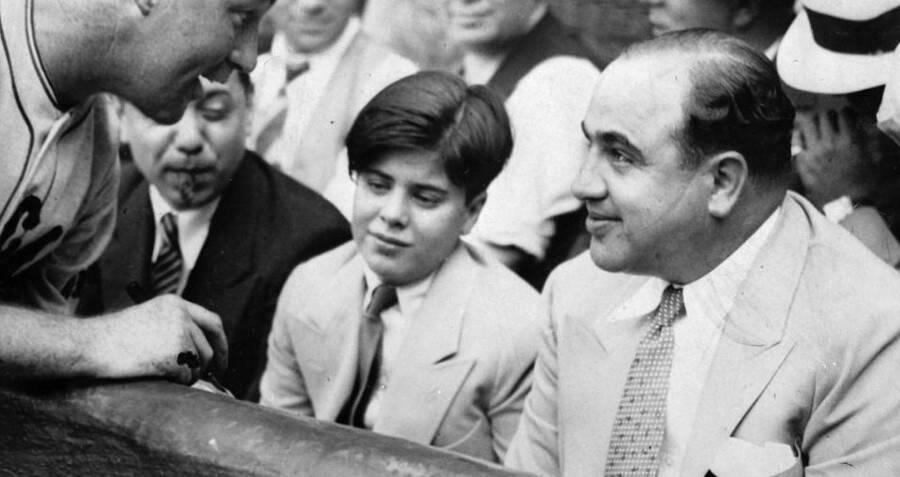
Albert Francis Sonny Capone stepped into a world forever shadowed by his father’s infamy. Born in 1918, he was the only child of Al Capone, the notorious gangster who ruled Chicago’s underworld during Prohibition. Sonny’s early life was marked by both privilege and hardship. While his father spared no expense on his education and healthcare, Sonny struggled with complications stemming from his father’s untreated syphilis, a legacy that cast a long shadow over their family.
Despite this difficult start, Sonny yearned for a normal life, far removed from the violence and intrigue that defined his father’s career. He attended prestigious schools like St. Patrick School in Miami Beach, where he even befriended the future star Desi Arnaz. Later, he pursued higher education at Notre Dame and the University of Miami, seeking to forge his own path independent of Al Capone’s son legacy. Sonny’s quest for normalcy led him down various career paths, from used car salesman and apprentice printer to restaurant employee and tire distributor. He even adopted the name Albert Francis Brown, distancing himself further from his infamous family name, particularly after facing legal battles stemming from the portrayal of his father in the popular television series “The Untouchables.”
Life Under the Shadow of a Legend
Living under the weight of his father’s infamous legacy wasn’t easy for Sonny. The shadow of Al Capone loomed large over every aspect of his life. Newspapers constantly hounded him for interviews, eager to pry into the personal details of Al Capone’s son. Even casual encounters often turned into awkward moments as strangers recognized him and bombarded him with questions about his infamous father. It was a constant tug-of-war between wanting to forge his own identity and being forever tethered to the notorious gangster who was his parent.
Despite these challenges, Sonny remained determined to carve out his own path. He embraced opportunities that allowed him to step away from the spotlight. Working as a used car salesman, an apprentice printer, and in various other roles helped him build a sense of normalcy and independence. It might seem like a far cry from the roaring twenties underworld that defined his father’s life, but for Sonny, it was a way to create a life separate from the violence and notoriety that had become synonymous with the Capone name.
Education and Early Career
Sonny’s pursuit of a normal life extended to his education. His father, despite his criminal activities, valued learning and wanted the best for his son. Sonny attended St. Patrick School in Miami Beach, where he even formed a friendship with the future star Desi Arnaz. This early exposure to a diverse social environment helped shape Sonny’s outlook on life, showing him that there was more to the world than just the confines of his family’s legacy.
After completing his primary education, Sonny continued his studies at Notre Dame and later the University of Miami. He wasn’t compelled by any particular field, but rather sought knowledge for its own sake. This intellectual curiosity mirrored a desire to break free from who is Al Capone’s son label and establish himself as an individual with his own interests and aspirations.
Despite these academic pursuits, Sonny ultimately chose not to pursue a traditional career path. He found fulfillment in a variety of jobs that allowed him to connect with people and experience different aspects of life.
Seeking Distance from His Father’s Name
As Sonny grew older, the weight of his father’s name became increasingly burdensome. He craved anonymity, a simple life where he wasn’t constantly judged or defined by Al Capone’s legacy. This desire for distance led him to make some significant changes. He adopted the alias Albert Francis Brown, hoping to shed the notorious association and start anew.
Legal battles stemming from the portrayal of his father in “The Untouchables” further fueled Sonny’s need to separate himself from the Capone image. He realized that even a lifetime away from Chicago couldn’t fully escape the shadow of his family name. By changing his identity, he aimed to reclaim some control over his own narrative and carve out a life based on his own merits, not those inherited from his infamous father.
 The Strange Life of Amou Haji: Worlds Dirtiest Man
Facing Legal Battles and Personal Struggles
Sonny’s efforts to distance himself from his past weren’t always successful. He faced legal challenges related to the portrayal of his father in “The Untouchables,” a popular TV series that brought Al Capone’s story back into the public eye. These battles served as a constant reminder of the inescapable legacy he carried, even when trying to forge a new identity for himself.
Adding to these external pressures, Sonny also grappled with personal struggles throughout his life. He battled alcoholism and faced difficulties in maintaining stable relationships. In 1965, he was arrested for petty theft, further pushing him away from the path of normalcy he so desperately sought. This incident served as a turning point, leading Sonny to retreat even further from public life and seek solace in quieter surroundings.
Legacy and Reflections on a Complex Life
Sonny Capone’s life was a complex tapestry woven with threads of privilege, hardship, and an enduring struggle for identity. He lived in the shadow of his father’s infamy, yet yearned to be seen as more than just Al Capone’s son. His story is a reminder that even those born into extraordinary circumstances can strive for normalcy, seeking solace in simple joys and personal pursuits.
His life ultimately ended peacefully in California in 2004, leaving behind multiple children and grandchildren who inherited his legacy – not of crime or notoriety, but of a man who fought to carve his own path despite the immense weight of history. Sonny’s story serves as a poignant reminder that every individual, regardless of their lineage, deserves to be remembered for their own unique journey and contributions to life.