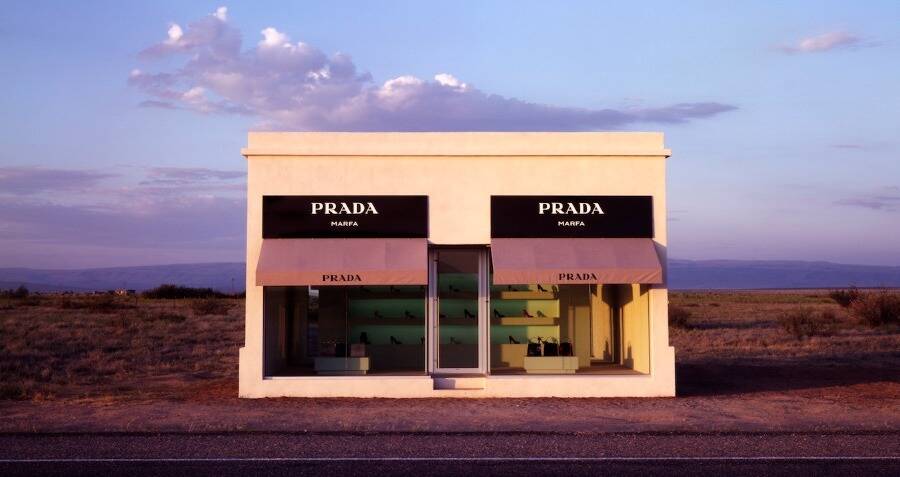
Nestled in the vast expanse of the Texas desert, a peculiar sight awaits those who venture off the beaten path: a pristine Prada store seemingly plucked from an upscale shopping district and dropped into this unexpected setting. This isn’t some misplaced mirage or a forgotten relic; it’s a carefully curated art installation titled “Prada Marfa,” conceived by Danish artists Michael Elmgreen and Ingar Dragset.
Created in 2005, the store in the middle of nowhere was envisioned as a social commentary on the allure and absurdity of luxury consumerism. Filled with genuine Prada merchandise, it was meant to slowly succumb to the relentless desert environment, becoming one with the landscape over time. Yet, fate had other plans for this peculiar piece of art.
Despite its seemingly remote location and destined decay, “Prada Marfa” quickly garnered attention, transforming into an unlikely tourist destination. People flocked from far and wide to witness this bizarre juxtaposition of high-end fashion against the stark backdrop of the desert. Its unexpected popularity has turned it into a testament to how our perception of experiences can be shaped by technology and social media buzz.
Prada Marfa: A Desert Art Installation
The installation itself is a minimalist marvel. The store’s façade mimics that of a typical Prada boutique, complete with the iconic logo and sleek storefront windows. Inside, shoppers would be met with rows of neatly displayed merchandise – handbags, shoes, clothing – all real Prada goods carefully curated to create an authentic shopping experience. Yet, this illusion comes with a twist: the desert sun relentlessly beats down on the store’s exterior, slowly fading its vibrant colors and causing the materials to weather and crack.
This planned decay is central to Elmgreen and Dragset’s artistic concept. They wanted to explore the fleeting nature of material possessions and how our desire for luxury often clashes with the harsh realities of time and nature. The juxtaposition of a fragile, high-end store against the unforgiving Texan landscape highlights this tension beautifully.
“Prada Marfa” becomes a commentary on consumerism’s superficiality and the relentless pursuit of status symbols that ultimately fade away. Its placement in a store in the middle of nowhere further emphasizes the disconnect between our manufactured desires and the natural world, forcing viewers to confront these contradictions head-on.
The Artists’ Social Commentary
Elmgreen and Dragset’s intent with “Prada Marfa” was never simply to create a visually striking installation; they aimed to provoke thought and spark conversations about the pervasive influence of consumer culture in our society. The artists cleverly use the familiar allure of Prada—a brand synonymous with luxury and exclusivity—to highlight the absurdity of valuing material possessions above all else.
By placing this symbol of extravagance in such an unexpected location, they challenge viewers to reconsider their relationship with consumption and status symbols. Is it possible to find meaning and value in experiences rather than constantly chasing fleeting trends and materialistic desires? Elmgreen and Dragset encourage us to look beyond the surface gloss and contemplate the deeper implications of our consumer choices.
“Prada Marfa” acts as a mirror reflecting back at us our own societal values and anxieties. It’s a poignant reminder that true fulfillment can’t be found in acquiring more things, but rather in cultivating meaningful connections, appreciating the simple pleasures of life, and finding purpose beyond the constant pursuit of material gain.
Decay and Unexpected Popularity
The artists initially envisioned “Prada Marfa” as a temporary installation, destined to gradually succumb to the relentless forces of the desert environment. They imagined it fading into obscurity, becoming just another weathered relic swallowed by the landscape. However, fate had other plans for their peculiar creation.
Instead of disappearing quietly, “Prada Marfa” gained unexpected notoriety and became a popular tourist destination. People from all over the world flocked to this store in the middle of nowhere, drawn to its intriguing juxtaposition of luxury fashion against the stark desert backdrop. The store’s popularity defied expectations, turning it into an unlikely landmark that continues to draw visitors even today.
Despite facing vandalism and acts of defiance – including a notorious incident where it was splattered with blue paint and plastered with TOMS advertisements – “Prada Marfa” has endured. Now maintained by art organizations, it stands as a testament to the enduring power of public fascination and how unexpected art pieces can capture our imagination in surprising ways.
Vandalism and Preservation Efforts
While “Prada Marfa” has undeniably become a popular tourist attraction, its popularity hasn’t been without its controversies. The installation has faced several instances of vandalism over the years, with individuals expressing their dissent or simply aiming to leave their mark on this peculiar piece of art. From blue paint splatters to guerrilla advertising campaigns, these acts of defiance have challenged the pristine facade of the store and sparked debates about artistic ownership and public perception.
One particularly memorable incident involved a group who covered the entire store with blue paint, effectively transforming it into a completely different entity. While some saw this as a destructive act, others viewed it as a form of performance art, adding another layer to the already complex narrative surrounding “Prada Marfa.” These acts of vandalism, while controversial, have undoubtedly contributed to the installation’s enduring mystique and fueled public discourse about its meaning and purpose.
Thankfully, despite these challenges, “Prada Marfa” has persisted. Now maintained by art organizations, it receives regular care and restoration to ensure its continued survival in the harsh desert environment. This ongoing preservation effort reflects the growing recognition of “Prada Marfa” as a significant piece of contemporary art history, one that continues to provoke thought and inspire conversations about consumerism, artistic expression, and the ever-changing relationship between art and the public.
Technological Influence on Perception
What initially started as a fleeting artistic experiment has evolved into something far more complex and enduring thanks to the power of technology and social media. “Prada Marfa” has become a viral sensation, with countless photographs and videos shared online, amplifying its reach and transforming it into a global phenomenon.
This unexpected fame speaks volumes about how our perception of experiences is increasingly shaped by digital platforms. The store’s remote location in the desert becomes less significant when people can experience it virtually through curated images and stories shared online. It highlights how technology allows us to connect with art and ideas in new and unprecedented ways, blurring the lines between physical and virtual realities.
“Prada Marfa” serves as a powerful reminder that the impact of art can extend far beyond its physical presence. Its longevity and success are intertwined with the digital age, demonstrating how technology has transformed the way we engage with creativity and shape our understanding of the world around us.